



Lessons from Churchill: Their Finest Hour… Was Ahead of Them
The film Darkest Hour is one of a number that recounts the pivotal role of Winston Churchill in the Second World War. They include Dunkirk in which the Prime Minister is a background character, and Churchill, which focusses on his personality and role.
Each is historical – but each takes poetic licence with the truth. Perhaps the most egregious example of the latter is the scene in Darkest Hour of Churchill conducting a focus group on the London Underground before defiantly informing Parliament, the nation and the world that ‘we will fight on the beaches, we shall fight on the landing grounds, we shall fight in the fields and in the streets, we shall fight in the hills; we shall never surrender.’
Indeed, Churchill is reported to have said, when advised that leaders should “keep their ear to the ground”, that the British people would not take kindly to their Prime Minister being found in such an ungainly posture!
Films about historical figures tend to reflect, at least to some extent, the sensitivities of their modern audiences: Darkest Hour is no different in this respect. While historians may quibble with some of the alleged events, if only because most viewers would not know otherwise, and therefore form an inaccurate view of the past, the film does highlight the power of individual courage, perseverance and fortitude.
Strong Leaders
Sir Winston Churchill is now praised as perhaps the greatest British leader of all time, the man who provided moral leadership at the gravest moment in the centuries-long history of the nation; who withstood the inclination to appease the enemy; and who suffered the lonely plight of misunderstanding, criticism and alienation, especially from his own.
Decades after the Second World War, it is easy to forget that Churchill was widely distrusted prior to becoming Prime Minister. He was blamed, rightly or wrongly, for the Gallipoli disaster of World War I, and other military failures. Yet, he led Britain through its greatest challenge.
Churchill’s story is echoed elsewhere. Australia’s two longest-serving Prime Ministers, Robert Menzies and John Howard, succeeded after having been dismissed as yesterday’s men. Menzies, as United Australia Party leader, lost to Labor, before regrouping and forming the modern Liberal Party. And Howard was dismissed by the critics, including many in his own Party, before winning the 1996 election and governing successfully for over a decade.
Despite the negativity surrounding their earlier roles, their finest hour was ahead of them. We should learn from history. As Churchill said:
“Success is not final; failure is not fatal. It is the courage to continue that counts.”
___
Republished with thanks to Kevin Andrews. Image courtesy of Wikimedia Commons.
Recent Articles:
7 October 2026
1.5 MINS
Across the Middle East, North Africa and Anatolia, Christianity once shaped entire civilisations. Could Britain’s Christian heritage likewise become a memory rather than a reality?

29 September 2026
15.9 MINS
Western Christians must carefully consider Palestinian Christian claims about Israel, the legacy of dhimmitude, and how fear and persecution may shape today’s political narratives.

25 September 2026
3.1 MINS
Australian and New Zealand mounted troops continued their Holy Land campaign beyond Beersheba, culminating in the fierce battle at Semakh and the defeat of Ottoman forces by the Australian Lighthorse and the New Zealand Mounted Rifles.
24 September 2026
3.4 MINS
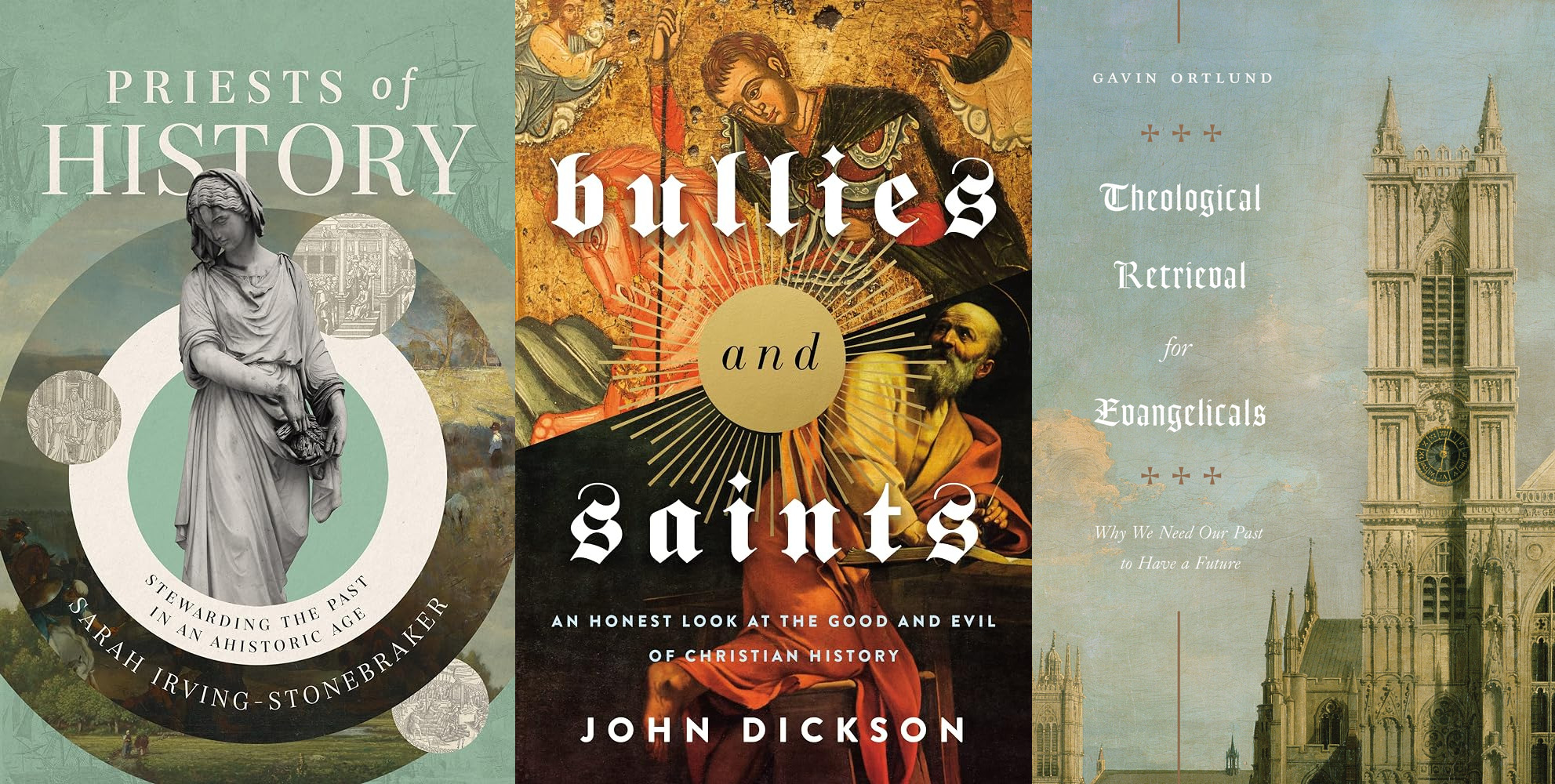
Rediscover the rich story of Christianity with two accessible histories that help evangelicals recover their heritage, confront the Church’s failures, and deepen their understanding of the faith.

23 September 2026
4.7 MINS
John Anderson challenges Nyadol Nyuon’s rejection of Anglo-Celtic culture, arguing that immigration, social cohesion, shared values and economic pressures cannot be separated.

22 September 2026
6.3 MINS
A remarkable journey to Mount Ebal explores Joshua’s altar, fascinating archaeological discoveries and the enduring biblical significance of Samaria and Israel’s ancient heritage.

21 September 2026
4.4 MINS
Forgiveness is a choice, not a feeling. That was the message Danny Abdullah brought to London's ARC conference, sharing how he and his wife chose to forgive the man who killed three of their children.


