



Book Review: Unshaken Allegiance — Living Wisely as Christians with Diminishing Religious Freedoms
Prof. Patrick Parkinson’s Unshaken Allegiance is a courageous, insightful call for Christians to live faithfully amid shrinking religious freedoms—combining legal expertise, biblical conviction, and practical wisdom for today’s cultural challenges.
I have long been an admirer of Prof. Patrick Parkinson and his work. The Emeritus Professor of Law and former Dean of the University of Queensland has courageously been outspoken in his Christian faith and especially in his defence of religious liberty. And so my interest was significantly piqued when I heard about his new book Unshaken Allegiance: Living wisely as Christians with diminishing religious freedoms (St Matthias, 2025).
Unshaken Allegiance is divided into three sections: Part 1 – Understanding the Problem. Part II – Law and Faith, and then finally Part III – When Law Comes into Conflict with Ministry. The book is clearly written, and Prof. Parkinson has an engaging writing style which nearly everyone will find accessible and readable.
The layout of Unshaken Allegiance is clear, and there are many excellent illustrations scattered throughout the book. Prof Parkinson’s area of expertise is his understanding and explanation of the place of legislation, as one would expect from a former University Professor of Law.
However, what I appreciated most was his clear commitment to being a follower of the Lord Jesus Christ. This permeates Unshaken Allegiance and gives it an authenticity and relevance that keep it from being dry and academic. Indeed, his writing on the subject reminds me of the verse in Proverbs which says, “Like the useless legs of one who is lame is a proverb in the mouth of a fool.” (26:7)
Prof. Parkinson is no spiritual invalid. This is clear from the very beginning of the introduction of the book, where he outlines his experience with the underground Christian church in Czechoslovakia in the early 1980s, as well as the professional persecution for his faith he experienced while being Dean of an Australian tertiary institution.
Part I: Understanding the Problem
The opening section does a good job at explaining how we got to where we are today legally and culturally, especially in the West. Until recently, liberal democracies championed freedom of speech and religion, but that has obviously now changed. Prof. Parkinson explains how anti-vilification laws have been ‘weaponised’, especially against people of faith. This causes a ‘chilling effect’ where public debate is stymied by political activists.
Prof. Parkinson gives us a number of pertinent examples, which I will briefly mention below. However, what was noticeably missing was probably the most important of them all, involving Israel Folau. Due to the magnitude of the case—both nationally and internationally—I found it surprising that this incident was overlooked. That said, Prof. Parkinson gives four important illustrations of how freedom of religion and speech has become threatened.
1. Is the Bible’s Teaching on Marriage ‘Hate Speech’?
The first illustration involves Julian Porteous, the former Roman Catholic Archbishop of Tasmania. Faced with the increasing likelihood of the government redefining the meaning of marriage, Archbishop Porteous published a small booklet to the people within his own diocese, defending the traditional Christian understanding of marriage. In response, a sole complainant—who also happened to be a candidate for a political party at the time—appealed to the Human Rights Commissioner.
While Prof. Parkinson writes that, “The basis was only that the complainant had been offended by ideas either expressed in the publication or said to be implied in the Church’s defence of a traditional view of marriage as between a man and a woman”, situation was even more serious. I personally travelled to Tasmania at the time of the incident (sponsored by the Presbyterian Church of New South Wales) to interview Archbishop Porteous, as well as the Rev. Campbell Markham, who was the subject of a similar charge. They reported to me that the complainant was not personally offended, but rather argued that someone possibly could be by what was published.
Both men rightly recognised that the process was the punishment, as they perceived the real goal was not their ultimate prosecution but to silence any future debate. Hence, as Prof Parkinson rightly concludes:
What is remarkable about this case is not that it was brought, for anyone is entitled to use legal processes to address their grievances… what is troubling is that it was accepted by the Anti-Discrimination Commissioner, who saw it as a potentially valid complaint under the legislation. Eventually the complaint was dropped but not before the Archbishop had had to utilise his time and resources defending a claim that should have been immediately rejected on the ground that the complaint was unreasonable, given Australia’s commitment to freedom of religion and speech. [1]
2. Can Biological Blokes use Women’s Change Rooms?
The second example Prof. Parkinson gives involved that of Senator Claire Chandler, who was also brought before the Anti-Discrimination Commissioner for expressing “… the view that women’s sports changing rooms and toilets were designed for those of the female sex and should remain that way.”
Significantly, the complainant did not even identify as transgender themselves, and the complaint was later withdrawn. The point, though, is that as Prof. Parkinson rightly observes, “It costs nothing to make a complaint, and to do so involves little more than filling in a simple form; but it can take much effort to respond to a complaint of this kind.” Much effort, yes, but also substantial amounts of money, which Archbishops and Senators have greater access to than the majority of individuals in the broader population. [2]
3. Is Heteronormativity a Form of Terrorism?
The third example Prof. Parkinson gives is that of the Rev. Dr Bernard Randall, who was in 2018 an Anglican Chaplain at Trent College in the United Kingdom. In the words of Prof. Parkinson (of which I will quote at length), Dr Randall’s crime was that he preached a sermon in the college chapel where he:
… emphasised that when ideologies compete, people should not descend into abuse, but should treat one another with respect for their different beliefs. He encouraged students to love the person, even when they profoundly dislike the ideas. Several times, he encouraged respect for those with whom we disagree.
He went on to discuss the potential conflict in values between the outside organisation’s program and religious values. He acknowledged that some of the program’s statements were factual—for example, that there are same-sex-attracted people and people who experience gender dysphoria. There were other areas of overlap with Christian values—for example, that no one should be discriminated against simply for who he or she is.
However, he also observed other areas where the two sets of ideas are in conflict—for example, on whether marriage should only be between a man and a woman, and whether sexual activity belongs only within such a marriage. He told students that they did not have to accept the ideas and ideologies of LGBT activists, and that they were entitled to think that human beings are male and female, that sex cannot be changed, and that there are some real, biologically based differences between the sexes. On all such issues, he urged students to make up their own minds and not feel as if they needed to adhere to the beliefs and ideas being taught to them. [3]
At this point, one could be forgiven for thinking that this was a heavily nuanced, respectful and compassionate presentation of the issue. But the outrage was as immediate as it was severe. One woman in particular, who was also “… the school’s designated ‘safe-guarding lead’, objected so strongly about Dr Randall’s views that she referred the sermon, with an accompanying note, to the organisation Prevent, a government-led, multi-agency program that aims to stop individuals from becoming radicalised and engaging in terrorism.” As a result, Prof. Parkinson states:
In the aftermath of this sermon, Dr Randall was dismissed for gross misconduct, although he was subsequently reinstated on appeal to the governors, subject to compliance with various management instructions. He was made redundant a year or so later. His legal actions against the school were all rejected by the Employment Tribunal. It supported the referral to Prevent as reasonable in the circumstances. At time of writing, Dr Randall has successfully appealed this decision and the case has been sent back for rehearing. [4]
4. Gay Conversion Laws
At present, this aspect is still somewhat theoretical as no one has yet been prosecuted, even though ‘Conversion Therapy Laws’ have been legislated in Victoria, Queensland and New South Wales. In Victoria, the penalty is not only punitive, but also up to ten years in jail.
Prof. Parkinson notes that if conversion therapy laws had been confined to same-sex attraction, then they would be ‘uncontroversial,’ but because they have been extended to ‘gender identity’, then they are problematic for three reasons: [5]
- The scientific evidence that gender is immutable or unchangeable is “very weak”, and the academic consensus is that gender is fluid and changes over time. As a friend in ministry commented to me recently, there are two groups in society who believe in “conversion” – Christians and those who hold to transgenderism.
- Parkinson states, “There is no evidence that the therapeutic interventions practised in the last to help children, young people and adults deal with gender incongruence have been harmful. There is consequently no justification for criminalising a particular kind of therapy.” This is a significant statement of fact, and if true, should give everyone in government reason to pause before legislating.
- Again, Prof. Parkinson makes the telling observation that “… there is mounting evidence that gender incongruence is associated with being on the autism spectrum and with adverse childhood experiences such as family dysfunction, family breakdown and child abuse. This would point to therapeutic approaches being most appropriate.”
While I agree with Prof. Parkinson’s rationale, I disagree that the laws would have been ‘uncontroversial’ if they were confined to same-sex attraction. Indeed, all of the arguments he makes above could also be legitimately applied to that aspect as well. [6]
This is an important issue, and Christian churches are starting to realise the full extent of the legislation, especially that it specifically includes practices such as prayer, even when requested by the person seeking to change. [7] The Sydney Anglicans, for instance, have recently stated that they will not comply with the legislation and will support those who defy the ban. [8] What’s more, Prof. Parkinson correctly observes that,
“The law could even be applied to counselling that advocates heterosexual celibacy for someone who is unmarried, since the definition of sexual orientation includes either a heterosexual or same-sex attraction.” [9]
Religious Freedom as a Human Right
Chapter 4 of Faithful Allegiance provides a helpful overview of religious freedom being a legal human right from an international perspective. Prof Parkinson makes a helpful distinction on how this differs in Australia and New Zealand compared to how it functions in Europe and the United States.
In short, Australia and New Zealand operate on a ‘dialogue’ model where the supremacy of Parliament is maintained. Hence, the Human Rights legislation is “largely advisory” and therefore “more limited in their effectiveness than in Europe”. According to Prof. Parkinson, this means that “… the right to have a religious belief is absolute; but the right to manifest one’s religious belief in the community is subject to limitations”. This is a crucial distinction as to how religious freedom in Australia and New Zealand functions in practice.
One of the main ways in which Human Rights legislation is being weaponised culturally is by political activists who are seeking to force Christian educational institutions to employ people who don’t share their values. What makes this even more unfair though, is that other community groups are not held to the same standard. As Prof. Parkinson explains:
The effect of the Law Reform’s Commission’s recommendations is that faith-based schools should be restricted in their staffing policies in order to allow non-religious teachers to have a wider choice of teaching jobs. Non-religious organisations established for a particular purpose or cause, such as an environmental organisation, are under no such constraints. Political parties, likewise, are not subject to court scrutiny over whether they prefer staff who share the purposes and values of the party. Why is religion being singled out? [10]
In some ways, this chapter is the most important in the book as it explains how the Human Rights legislation functions in Australia and New Zealand as compared to Europe and the US, a point which is often overlooked or not properly understood. [11]
Faith Perspectives
Chapter 5 provides a concise but important overview of the current cultural situation in the West. After quickly outlining how religious freedom has never been ‘absolute’ in that even “Protestants beheaded or drowned Anabaptists [whereas] Catholics burned them alive”. [12] But that said, for approximately the last 150 years, “the law has supported the religious freedom of people of all faiths.”
Prof. Parkinson doesn’t really explain why this is—such as the influence of the Enlightenment—but he does note that the tide has turned against people of faith for three reasons.
First, the rights of the individual now trump the rights of collective religious belief such that even Roman Catholic adoption agencies are being compelled to serve same-sex couples, even when other community organisations can help them.
Second, following on from the first reason, the moral teaching of Christianity is profoundly other-person-centred. Hence, love of neighbour involves ethical boundaries around what love looks like as opposed to being subjectively defined by each person. As Parkinson explains:
… there remains strong resistance to the idea that I should be allowed to disapprove of how you live or what choices you make with your body. The existence of a morality that disapproves of unconstrained sexual freedom is a quiet affront to those who do not share that morality, even if it is unspoken. This goes far beyond disapproval of same-sex relationships. [13]
Third, Christianity is viewed negatively as an outmoded expression of colonisation. This has led to strange associations being made, such as the group “Queers for Palestine“. What Muslims and LGBTIQ people have in common is a victimhood mentality where Israel (in this instance) is the colonial oppressor.
In his analysis, Prof. Parkinson wisely notes that Christians should expect to be persecuted (i.e. 2 Tim. 3:12). The Lord Jesus Christ expressly warned that we would suffer simply because we are His disciples (John 15:18; 16:1-4; Rev. 2:10) and that we should especially pray for those who persecute us (Matt. 5:44). What’s more, the apostles were imprisoned (Acts 5:17ff) and martyred for their faith (Acts 7:54ff; 12:2). What is remarkable though, is they considered suffering for Jesus to be a privilege (Acts 5:41).
What we need to realise in Australia, though, is we are now living in a “post-liberal” order. Whereas once Christianity was esteemed, we are now despised. [14] Prof. Parkinson doesn’t blame everything on Cultural Marxism and argues that the current movement lacks a structure and end goal:
Unlike Marx and Lenin, these new revolutionaries do not seem to have a clear vision for what that society will look like. They reject liberalism, with its tradition of tolerance and respect for people with different views, but it is not clear how those who stand with the ‘oppressed’ against the ‘oppressors’ would organize the world differently. If there are always oppressors, and discourse is all about power, it is unclear what changes would bring about a society in which there is no oppression. This is, at best, a dreamy egalitarianism. [15]
But with that said, the current ‘post-liberal’ order does share commonalities with what is widely recognised as the ‘Woke Worldview’ (although this is not a term Prof. Parkinson himself uses). This is seen by a) the redefinition of right and wrong b) the cancelling and social silencing of those with a dissenting view and c) a tendency to ‘groupthink’.
An excellent illustration of how this has played out in Australia is with the incident involving Andrew Thorburn, the former CEO of Essendon Football Club. [16] Thorburn was also the board chair for the evangelical Anglican church in Melbourne called ‘City on a Hill’. However, when activists discovered that sermons against abortion and homosexuality, a campaign occurred to have him step down from his role as CEO. What makes this incident all the more shocking is that Prof. Parkinson states:
These sermons were from a time before Thorburn joined this church community, but that didn’t matter. Nor did it matter that he had led a large and successful corporation that had a demonstrated commitment to equality and non-discrimination. There was not even direct evidence that he held the same beliefs as the preachers whose views the activists so loudly condemned. It was guilt by association. Within a few hours, the then Premier of Victoria, Daniel Andrews, joined in the pile-on. [17]
Something which I repeatedly appreciated about Faith Allegiance is Prof. Parkinson’s own testimony. This is no aloof academic writing about the impact of religious freedom from his ivory tower. Instead, Prof. Parkinson relays how he experienced the vitriolic persecution of ‘cancel culture’ when he was appointed Dean of Law at the University of Queensland in 2018. Admirably, but also somewhat uniquely, Prof. Parkinson reports:
It was reported to me that the Vice-Chancellor’s response to the student leaders was robust. He told the students that the university had done its due diligence, and that it knew of my faith and the positions I had espoused in public life. He stood by the appointment committee’s choice. As a university leader, he was committed to an understanding of ‘diversity and inclusion’ that included viewpoint diversity. The university leadership continued to take that robust position throughout my time there, ignoring a couple of ‘hit pieces’ in prominent newspapers. [18]
Sadly, though, not every organisation has responded the same way. For example, Andrew Thorburn ended up resigning from his position as CEO of Essendon Football Club, even though it was a clear case of religious discrimination. Prof. Parkinson explains:
… it was plain as daylight that the club was on the wrong side of the law. Thorburn was forced out of his newly announced role for no other reason than his religious faith. Eventually he reached a confidential settlement with Essendon, which issued a public apology. It really could have had no serious defence against a claim based upon religious discrimination. [19]
This is precisely how the ‘chilling effect’ works. Companies and community organisations are clearly breaching the law regarding religious freedom, because they fear more the social backlash from other segments of society.
Part 2: Law and Faith
Chapter 6 has a very helpful section regarding “limitations on obedience to government”. This is an error that has been overlooked, particularly during the recent COVID-19 pandemic.
On the one hand, both Jesus (Matt. 17:24-27) and Paul exhort believers to obey the governing authorities (Rom. 13:1-7; 1 Tim. 2:1-4; 1 Pet. 2:13-14, 17). And yet, Parkinson acknowledges that there is also a time when believers must obey God rather than man (Acts 5:28-29).
A good example of this involves the events of Daniel 1:6-16, where he refuses to eat from the king’s table, and later on, when Daniel refuses to desist from prayer (Dan. 6:3-9). Parkinson makes the poignant observation that “Daniel was saved, not from the lion’s den, but in the lions’ den (Dan. 6:16-23).” It’s a good reminder that Christian suffering is a part of God’s sovereign plan to glorify His name. (See also Dan 3:16-18) As Parkinson states:
Likewise, Queen Esther, at another time, had to take the risk of death in going uninvited to the king in order to plead for her people (Esth 4:9-16). God does not always spare us from trials; He may or may not rescue us when we are in the midst of them. We take the risk of obedience, no matter the cost. [20]
It’s heartwarming, and unfortunately rare, to hear a Christian academic write with such courage and conviction. Parkinson also gives a brief overview of the works on Aristotle, Augustine, Origen, Bonhoeffer, Aquinas, John Locke, Martin Luther, Socrates and John Rawls in this regard, but sadly didn’t interact with the writings of reformed theologians such as Calvin, Knox or any of the Puritan thinkers which would have really strengthened his case, especially with the ‘gathering storm’ of religious persecution. [21]
A Presbyterian Case Study
Chapter 7 contains an excellent examination of the recent debate involving the Presbyterian Church of NSW about the workplace health-and-safety laws. [22] Many readers of AP will be especially interested in this section. [23] Due to the relevance of the issue, I’ll include here an extensive quote from Prof. Parkinson as to seven key questions we need to keep in mind as a church going forward:
First, what was the intention of Parliament in enacting the law?
Second, is it likely that Parliament intended the view of the law that has been advanced?
Third, what is the likelihood of legal action being taken if the organization does not comply with the understanding of the law that is being urged upon it?
Fourth, is it likely that such legal action would succeed?
Fifth, what are the likely consequences if legal action does succeed?
Sixth, would adhering to the view of the law that has been advanced interfere significantly with the core business of the organization?
Seventh, if there is some kind of legal risk, what is the organization’s risk appetite?[24]
I really appreciated Prof. Parkinson’s perspective here, and I think we would do well as a church to reflect on the questions he posed.
What about Civil Disputes?
I was also personally struck by his application of Jesus’ words in Matthew 5:25 about settling matters quickly before one is dragged through the courts. As Parkinson reminds us in cases of divorce, the only people who ‘win’ after sometimes years of protracted conflict are the lawyers. As Parkinson states:
Jesus is saying that we are to settle disputes promptly where we owe money or are liable to pay compensation. If the matter goes to court, it will be much worse than settling early. Why? Because not only does the judge have the power to decide who owes what to whom; in those days, the judge could also imprison a person who did not pay his debts. Imprisonment provided an incentive for the debtor to find a means to pay—for example, by borrowing from a family member. Far better to resolve a dispute early and avoid the risk of being imprisoned for non-payment. In modern times, the cost of litigation is reason enough to resolve the dispute, for failure to do so can leave everyone except the lawyers far poorer. [25]
The Rise of Modern-Day ‘Lawfare’
Prof. Parkinson also addresses ‘activist interpretations of the law’ where people exceed what the law requires to further their own ideological agenda. Parkinson bravely identifies the “conversion therapy laws” as a case in point. For example, the Victorian Change and Suppression (Conversion) Practices Prohibition Act 2021 makes it illegal to change or suppress the sexual orientation or gender identity of another person.
However, what this looks like in practice is that the a parent who refused to support their child’s request for puberty blockers to actively affirm their new gender identity was also in breach of the legislation. This means that the parent must actively do something to facilitate the child’s decision. As Parkinson explains:
This illustration was clearly wrong in law. Under the legislation, prohibited conduct must involve a practice or conduct which is active in nature. It must either aim to change or suppress a person’s sexual orientation or gender identity, or to induce a person to do so. One cannot engage in a ‘change or suppression practice’ by omission. Furthermore, simply refusing to take a child to a doctor for medical intervention does nothing to change the child’s ‘gender identity’. [26]
Parkinson qualifies that “limited compliance may be appropriate” in certain circumstances, and there is a brief but helpful discussion in this regard. However, this is another one of those areas where Christians should clearly disobey the law as it stands. It is neither loving nor wise to always affirm our children’s choices, whether it’s what they want—or don’t want—to eat for dinner or surgically mutilating their developing bodies or chemically castrating themselves. [27]
Part 3: When Law Comes into Conflict with Ministry
I found the final section full of practical wisdom. Parkinson notes that Christians should not be quarrelsome and have nothing to do with foolish controversies (2 Tim. 2:23-24). This is a good reminder, especially with the increased hostility we find ourselves in with the state.
In this regard, Parkinson warns that we should be careful not to deliberately “poke the bull”. An example of what Parkinson is referring to is what happened at Citipointe Christian College in Brisbane, although I don’t think the issue is as clear-cut as Prof. Parkinson says. [28] That said, while Christian organisations need to take a clear stand for the truth of their convictions, we do need to be careful in how they are publicly presented, especially when they involve government funding.
Closely connected to this previous point then, is how do we decide when to not comply with the law? This is the focus of chapter nine, and where I was the most unconvinced with Prof. Parkinson’s conclusions, although I am sure that some others would not have the same reservations.
Parkinson suggests that believers should exercise shrewdness in how they respond to ‘unjust laws’. Hence, while the Change and Suppression Practices Prohibition Act 2021 forbids pastoral counselling and even a consensual request for prayer as a ‘coercive conversion practice’, Parkinson suggests that a Christian can legally comply with the letter of the law while disobeying its spirit or intent. This is because
- The church does not encourage change or suppression practices.
- The law is only concerned with discredited practices of ‘conversion therapy’.
- That we are concerned with behaviour and not sexual orientation or innate sinful desires.
However, none of these rationales hold up under closer scrutiny and seem more like an exercise in legalistic pedantry rather than Biblical fidelity. [29] This is because a) the church has always actively encouraged people to experience conversion, for that is what we have been commanded to do (Matt 28:16-20). B) The law explicitly identifies and prohibits prayer and pastoral counselling, not just discredited psychological practices of the past. And finally, c) why some Christians might try and nuance their way around the law by focusing on behaviour rather than one’s sinful desires, the Bible says that both are to be addressed by the Gospel. [30]
There comes a time, such as in Daniel 6, where we must obey God by continuing to pray rather than fear man. [31] While we shouldn’t seek to be persecuted, we should not be ashamed of Christ Jesus and His Word (i.e. Luke 9:26). Ultimately, there comes a time to suffer, and it is a great joy to be counted worthy of being persecuted (Acts 5:41).
What About COVID-19?
Another area that is briefly mentioned is that of vaccination mandates during COVID-19. Unfortunately, this topic is not given the care and attention that many people will be seeking or have hoped for. While Parkinson does acknowledge the complexity of the issue legally, he does not give due attention to the Biblical place of conscience and seems unaware as to how the Presbyterian Church of Australia, for instance, thought seriously about the subject. [32]
While this is a controversial issue to address, it would have been good to hear Prof Parkinson interact with the views of the former deputy Prime Minister of Australia, John Anderson, on not only the legality of the extended lockdowns, vaccination mandates, but also the closure of churches during that time. [33]
When to Mount a Legal Defence?
Chapter 10 talks about how and when to mount a legal defence. Parkinson makes some helpful points in this regard involving the apostle Paul in the book of Acts, as well as some well-known modern-day examples. What was missing, though, was any discussion about 1 Corinthians 6 and the morality of taking other believers to court.
Parkinson argues that it’s important for people to exercise their right to remain silent or give brief yes and no answers. He also acknowledges the important role Christian legal defence organisations play.
Australia’s Changing Multi-Cultural Landscape
In the final chapter, there is a good reflection on the changing demographic and, therefore, the cultural makeup of the West. As people become more secular, they have fewer and fewer children. But through a large increase in immigration, we are seeing a societal change in people becoming more religious, while at the same time, less Christian.
Significantly, while 34% of the UK’s current population was born overseas, according to Parkinson, “As of mid-2023, over 30 per cent of Australians were born overseas. In New Zealand, the percentage is over 27 per cent, and in the USA it is nearly 15 per cent.
Ultimately, though, Parkinson notes that Christians in the West are not living in ‘Jerusalem’ (Christian countries) but the pagan exiled nation of ‘Babylon’, and we should act accordingly. The loss of cultural influence means we should be prepared to be persecuted and suffer. This should not discourage or dishearten us, though, since it was what Jesus Himself said we should expect:
‘Be on your guard; you will be handed over to the local councils and be flogged in the synagogues. On my account, you will be brought before governors and kings as witnesses to them and to the Gentiles. But when they arrest you, do not worry about what to say or how to say it for it will not be you speaking, but the Spirit of your Father speaking through you. (Matthew 10:17-20)
Conclusion
Unshaken Allegiance is an important and timely book. While I had reservations at particular points involving the Gay Conversion Practices Bill and COVID-19, this does not detract from the value of the work. Prof Parkinson is a man of Christian integrity and academic rigour. Every believer will benefit from what he has written, and I hope that it has a wide readership.
___
[1] Unshaken Allegiance, 50.
[2] Note the example of Kirralee Smith, who is currently facing fines of over $200,000 for similar ‘hate crimes’ against a transgender person.
[3] Unshaken Allegiance, 53-54.
[4] Unshaken Allegiance, 55.
[5] Unshaken Allegiance, 59.
[8] John Sandeman, “Kanishka Raffel and the Sydney Anglican Synod promise to stand with Christians who defy conversion practices laws“, Anglican Ink, 19 September 2025.
[9] Unshaken Allegiance, 60.
[10] Unshaken Allegiance, 75.
[11] Prof. Parkinson goes on to state, “The insistence that the Pope should be Catholic involves discrimination against those who are not Catholic. Furthermore, the doctrine that only men may be ordained to the priesthood also discriminates against half the population who cannot meet this criterion, and so could never be Pope. It follows that the Catholic Church discriminates against a large majority of the world in its restrictive criteria for election as Pope. So, should the law intervene in the name of advancing human rights? The idea might seem preposterous, but for some people who place very little value on freedom of religion, there are few, if any, limits upon the scope of government regulation of religious bodies.” Unshaken Allegiance, 78
[12] M Kottelin-Longley, ‘“What shall I do? The more I kill, the greater becomes their number!”: The suppression of Anabaptism in early sixteenth century’, Scripta Instituti Donneriani Aboensis, 2006, 19:184.
[13] Unshaken Allegiance, 84.
[14] See Stephen McAlpine, Being the Bad Guys (Good Book Company, 2021).
[15] Faithful Allegiance, 89-90.
[16] David Robertson, “Bigotry, Anger and Confusion“, AP, 14 October 2022.
[17] Faithful Allegiance, 91. “Daniel Andrews chastises Essendon Bombers over church ‘firestorm’“, The Daily Telegraph, 4 October 2022.
[18] Faithful Allegiance, 93.
[19] Faithful Allegiance, 95-96.
[20] Unshaken Allegiance, 109.
[21] Mark Powell, “The gathering storm against religious freedom“, The Spectator Australia, 9 April 2024.
[22] Bryan Kim, “Rendering to Caesar What is God’s: The 2024 NSW Presbyterian Assembly“, AP, 11 March 2025.
[23] David Robertson, “The Trojan Horse of Civil Law“, AP, 2 September 2024.
[24] Faithful Adherence, 134-135.
[25] Unshaken Allegiance, 127. Parkinson goes on to give an excellent personal illustration as to the disastrous financial implications of what can occur. See pages 127-128.
[26] Faithful Allegiance, 136.
[27] Abigail Shrier, Irreversible Damage: Teenage Girls and the Transgender Craze, Swift Press, 2020.
[28] James Macpherson, “The Citipointe Controversy“, The Daily Declaration, 7 February 2022.
[29] See Mark 7:9-13.
[30] Mark Powell, “Responding to Gay Conversion Laws: How to Get It Wrong“, AP, 29 April 2024.
[31] Rod Lampard, “Prayer is Not a Crime: NSW Churches Defy Draconian LGBT Law“, The Daily Declaration, 18 April 2025.
[32] Mark Powell, “Should the Unvaccinated be Excluded from Church?“, AP, 7 August 2021.
One Comment
Leave A Comment
Recent Articles:

13 October 2026
2.6 MINS
Allegra Spender’s proposed bill reignites debate over discrimination protections, religious freedom and the right of faith-based schools to uphold their beliefs and values.

13 October 2026
3.9 MINS
Tasmania’s proposed conversion practices law raises serious concerns for churches, parents and faith-based schools, with broad definitions, severe penalties and uncertain protections for religious freedom.

13 October 2026
5.5 MINS
Stephen Baldwin’s journey from drug addiction to sobriety, Christian faith and family life reveals how surrender, daily discipline and renewed hope transformed his life.

13 October 2026
2.1 MINS
Victoria’s assisted dying deaths have surged by 300 per cent since legalisation, while a disturbing case involving a patient’s partner raises urgent questions about safeguards.

13 October 2026
1.8 MINS
Australia faces mounting geopolitical, economic and defence threats, but its political leaders lack the statesmanship, bold vision and decisive communication needed to prepare the nation.

13 October 2026
2.8 MINS
The church in Ephesus had so much going for it. Yet despite their hard work, perseverance, endurance, and discernment, there was something deeply wrong: they had left their first love.
12 October 2026
4.6 MINS
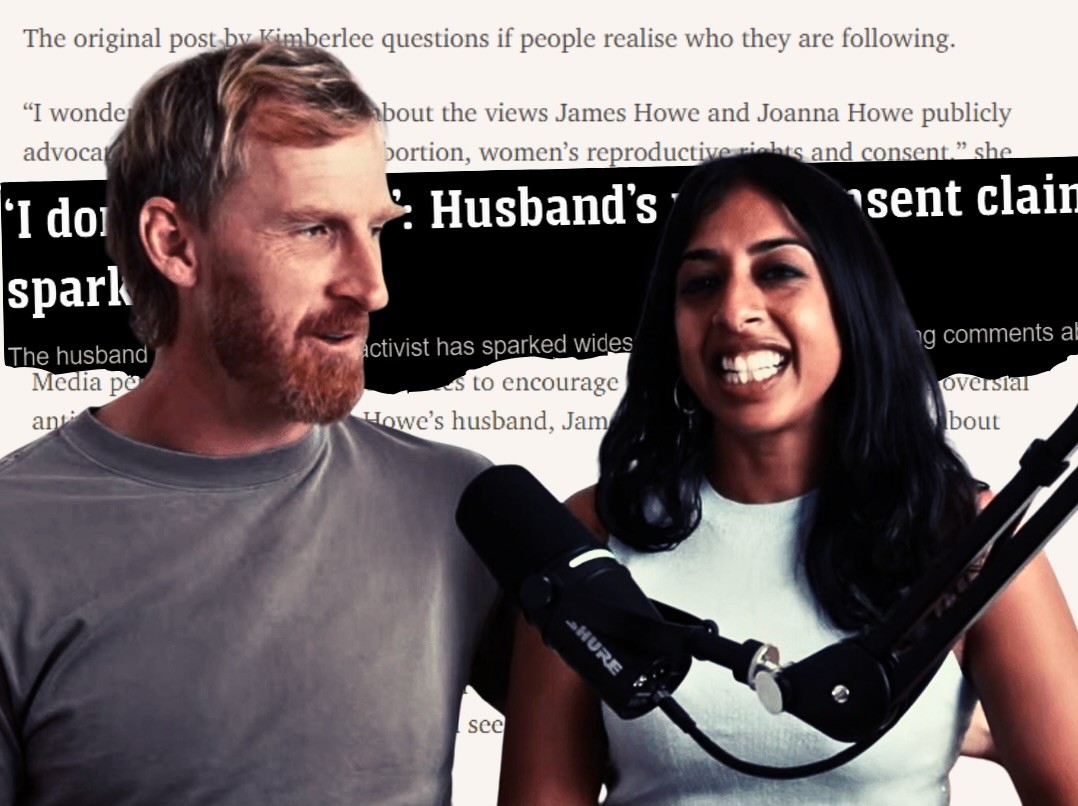
Learn how journalists use loaded language, selective quotes and misleading headlines to shape public opinion, using a controversial report about James and Joanna Howe as a case study.



I was diagnosed with Parkinson’s disease a year ago at the age of 67. For several months I had noticed tremors in my right hand and the shaking of my right foot when I was sitting. My normally beautiful cursive writing was now small, cramped printing. And I tended to lose my balance. The neurologist had me walk down the hall and said I didn’t swing my right arm. I had never noticed! I was in denial for a while, as there is no history in my family of parents and five older siblings, but I had to accept I had classic symptoms. I was taking amantadine and carbidopa/levodopa and was about to start physical therapy to strengthen muscles. I used different supplements that didn’t work, so last July, I tried the PD-5 protocol—the best decision ever! My tremors eased, my energy returned, and I sleep soundly. I feel like a new woman, and I can walk and exercise again. I got the PD-5 from limitless healthcenter. c om