


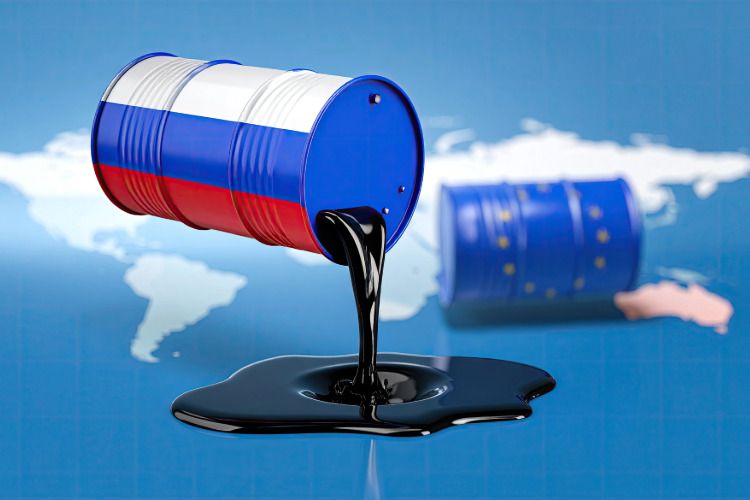
U.S. Bill to Stop Up Russian Oil Leaks via India May Hit Australia
Australia’s fuel security is at risk as discounted Russian oil enters via India, global tensions rise, and Canberra ignores urgent warnings to rebuild refining, storage and transport capacity.
Australia relies on many countries to supply our oil needs, and much of it arrives here as refined products of petrol, diesel and jet fuels. Most assume our oil originates from the Middle East and is processed in Singapore, South Korea or Japan. It doesn’t.
Now, India is the world’s third largest oil importer, purchasing in 2024, $US52.7 billion of Russian crude, 37 per cent of its oil bill. This represents a huge increase in its Russian crude imports from four million tonnes in 2021-22 to a staggering 87 million tonnes in 2024-25. The reason for the increase is the EU embargo on Russian fuel products and Russia’s ruse to avoid the embargoes by offering oil at $US15-20 per barrel below the market price of $US60 per barrel.
Within a month of the invasion of Ukraine in 2022, Australia banned imports of Russian crude oil and refined petroleum products. Yet 10 per cent of our imported fuel is refined in India, meaning that banned Russian fuels are sold into Australia, via the back door.
India faces a vexed decision over its imports of Russian crude. The U.S. tariff on Indian goods is 50 per cent; around $US87 billion annually. The United States announced a 25 per cent tariff (2 April 2025) and an additional 25 per cent tariff effective as of 27 August 2025. The U.S. tariffs on selected Indian goods are a strategic political response to India’s importation of Russian oil and its membership of the BRICS axis: Brazil, Russia, India, China and South Africa.
As the EU now bans the importation of Russian petroleum products refined in a third country, much of Russian-sourced product is flowing into Asia, including Australia. According to The Australian Financial Review (19 October 2025), Foreign Minister Penny Wong claimed she has little power to stop the deliveries.
Things are about to change with potential impacts on Australia.
In Russia, there is chaos within the Putin regime. Senior military officers and government officials are being arrested over alleged corruption. Ukraine’s drone strikes are disabling Russia refineries, and in several regions, fuel is rationed to 30 litres per vehicle. At sea, the Russian “shadow fleet” of tankers transporting millions of barrels of embargoed crude are losing buyers and cargoes are stranded.
Added to these difficulties, the biggest threat to Russian oil supplies and the inflow of hard currency into the Kremlin’s financial war chest is the United States’ proposed bill, Sanctioning Russia Act of 2025, now before Congress, which states (Section 17):
“The President shall increase the duty for all goods or services imported into the U.S. from a country that sells, supplies, transfers or purchases Russian oil, uranium, natural gas, petroleum products or petrochemical products to 500 per cent.”
This legislation is directed specifically at India, but it is wide enough to rope in Australia.
Fuel Insecurity
All of the above should alert Canberra to our own glaring fuel security flaws, our over-reliance on imported fuels traversing long and vulnerable sea lanes, our total reliance on foreign tankers to carry fuels to our shores, and the untenable mantra that the market has and will deliver product on time every time.
Australia’s historical lessons of harsh wartime 1941-45 fuel rationing are ignored; the petrol restrictions post-war, 1945-50, were never experienced by the bright young policy advisers in the various departments who think 27 days of diesel fuel will suffice if the country is involved in a regional war or hostile naval blockade.
The refusal of British tankers fleets to bring fuels to Australia post-war because of shortage of pounds sterling to pay for imports are dismissed. The Federal Government and the Defence Department are more concerned with woke pronouns and welcome to country services than with Chinese Communist Party naval ships circumnavigating Australia and the lack of national lethality.
On 11 November, at Canberra’s Remembrance Day service, former Major-General Greg Melick cited Australia’s lack of fuel reserves and munitions as a real danger to our security. The warning bells are ringing, but is anyone in Canberra listening?
Australia needs to act: to revitalise our refining capacity to process diesel, petrol and jet fuels; to build adequate fuel storage capacity in all states and regions; to build or buy our own ocean-going tanker fleets; and to construct fleets of railway tanker wagons of 100,000-litre capacity in the event of naval blockades or threats to coastal shipping, and as mobile storage units.
Unless and until the country takes fuel issues seriously, we remain highly vulnerable to having our liquid fuel supply chains being interdicted.
___
Republished with thanks to News Weekly. Image courtesy of Adobe.
3 Comments
Leave A Comment
Recent Articles:

13 October 2026
2.6 MINS
Allegra Spender’s proposed bill reignites debate over discrimination protections, religious freedom and the right of faith-based schools to uphold their beliefs and values.

13 October 2026
3.9 MINS
Tasmania’s proposed conversion practices law raises serious concerns for churches, parents and faith-based schools, with broad definitions, severe penalties and uncertain protections for religious freedom.

13 October 2026
5.5 MINS
Stephen Baldwin’s journey from drug addiction to sobriety, Christian faith and family life reveals how surrender, daily discipline and renewed hope transformed his life.

13 October 2026
2.1 MINS
Victoria’s assisted dying deaths have surged by 300 per cent since legalisation, while a disturbing case involving a patient’s partner raises urgent questions about safeguards.

13 October 2026
1.8 MINS
Australia faces mounting geopolitical, economic and defence threats, but its political leaders lack the statesmanship, bold vision and decisive communication needed to prepare the nation.

13 October 2026
2.8 MINS
The church in Ephesus had so much going for it. Yet despite their hard work, perseverance, endurance, and discernment, there was something deeply wrong: they had left their first love.

12 October 2026
4.6 MINS
Learn how journalists use loaded language, selective quotes and misleading headlines to shape public opinion, using a controversial report about James and Joanna Howe as a case study.



the russian invasion of ukraine has needlessly killed half a million christians
why does trump and the church tacitly support a violent madman hiding behind a cross?
the evangelical church must comdemn putin in the strongest possible manner
The supply of Jet fuel is even worse than 27 days deisel, at any given time we only bave 20 days worth of Jet Fuel.
My associates and I have been saying for years that we need our refineries back and surely we have our own oil?????