


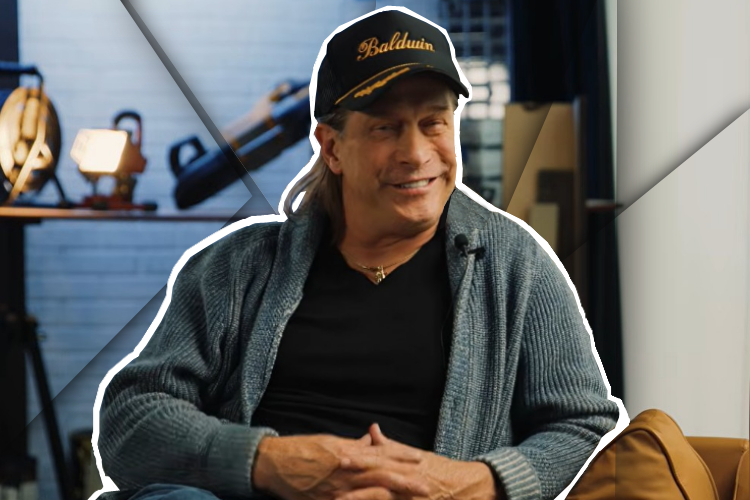
From Cocaine to Christ: Why Stephen Baldwin’s Sobriety Stuck
Stephen Baldwin’s journey from drug addiction to sobriety, Christian faith and family life reveals how surrender, daily discipline and renewed hope transformed his life.
Speaking about hope, Stephen Baldwin, actor, Christian, and the youngest of the Baldwin brothers, has said that for him, cocaine was the devil.
Alcoholics Anonymous (AA) gave him the discipline to focus.
Getting sober at 23, he married in 1990; the rest is history.
Fame came with all sorts of new problems. The Baldwins were not the traditional Hollywood family.
Drugs, sports, and then A-list cinema headlines made substance abuse easier than ever.
Stephen said, “I was Alec Baldwin’s little brother; I didn’t need money to get the freaking high. It was readily available.”
The Mirror Moment That Changed Everything
The trigger for sobriety was his wife of 39 years. They met while he was working at a pizza place in New York. He was dating another girl.
He was also embedded in drug culture. His dealer was the chef, and he used to sleep till 4 p.m., then get up to go to work.
Ten years younger than Alec, and with his brother’s success and doors opening that could mean his own entry into the acting world, Stephen recalled knowing that if he wanted to be with the girl who would become his future wife, things had to change.
He made the comments on PragerU’s new American Recovery podcast.
Speaking to Aaron Prager, Stephen said, “There was no way I was going to be able to continue with that behaviour.
“My wife said hello to me, dude. And that hit me in the face pretty hard because she’s pretty cute.”
“That was my kinda come to JC between me and Stevie B. I did have a moment in the mirror where that panic, you know, what are you going to do?”
“Listen,” he said, “I was selfish. I believed if Alec Baldwin can do it, Stephen Baldwin can do it. It was that kind of athletic attitude.”
Competition being a big part of the Baldwin brothers’ sports upbringing, Stephen said the competition was healthy.
He told Prager, “I was a bit of a rascal, too. I mean, I met my wife, but it didn’t mean I knew for sure it was going to work out. Let’s be realistic, bro.
“I just think there was a moment when I said, ‘Yeah, I want to know this woman. I think I can make some dough in this business, make some money.’”
That was the genesis of his sobriety.
Sharing more of the details, Stephen said, “There was really gnarly looking at yourself. Like I said, there wasn’t just one, but there was one that I had to say to myself, ‘If I get sober now, I can’t marry this girl for 12 months because you have to be a year sober to get into a relationship. That’s one of the steps.’”
Stephen said that he was completely committed and did AA, realising he had to eliminate it all.
His looking-at-yourself-in-the-mirror moment was his wife and a potential career in acting.
Talking 12 Steps with Prager, Stephen said, “Two thoughts of the program of Alcoholics Anonymous got me sober.”
“So much of what it takes to get sober has so many cogs in the wheel now. There’s a program of 12 steps you should do. But, dude, there were moments — teeth chattering, suicidal moments — in getting sober that I had to say to myself over: just not today and hit that pillow and just wait for the miracle of the morning.”
“In those dark days,” he asserted, “you gotta admit you’re powerless over alcohol and your life is unmanageable. You have to have that surrender for yourself in order for the miracle of AA to work. I believe that because it worked for me.”
Doubling down, Stephen said that long-term sobriety only sticks when you actually do the steps.
How Alcoholics Anonymous Prepared Him for Faith
Five years into his sobriety, he became a born-again Christian.
He told Prager that, in retrospect, a wellness sober opportunity of learning how to live life was something that was preparing him for having the same thing happen with the Bible.
Stephen said, “The big book of AA was my original bible, so to speak, and in many ways still is today, but now the Bible of Christianity has replaced it.”
Stating that the original 12 Steps are still a huge foundation for him, the Usual Suspects actor said to Prager, “In AA, the notion of a higher power is so brilliant. It’s such a great, initial engagement of something bigger than you; to be able to have it be all about you all the time.”
He warmly recalled his time in AA, sharing a story about people saying ‘they prayed to their sink,’ because, he said, “they had no real ability to open their heart comprehensively to God or a Bible. They’re so in that darkness.
“The only way sobriety within the AA 12-step program is going to work is for them to get around initially the concept of a higher power, which then they can choose to call God later.”
That led him to a God experience, which Stephen credits God for planning.
As he testified: “I believe God had the sober part planned for me, the AA part planned for me as well as a progression into the faith I have now.”
“I’m still telling myself, be careful. I was somewhere recently, and the cups on a table got mixed up, and I went, I’m good. I’ll just have fresh water.
“I don’t want a mouthful of a margarita or something right now. I don’t want to be somewhere where somebody says, like, ‘Hey man, you know, here’s a little bump. It’s good for you.’”
“People, places and things; there are all kinds of the foundations of Alcoholics Anonymous that I still utilise today.”
Navigating Sobriety, Medical Cannabis and Personal Conviction
At 60, Stephen’s sobriety journey took a controversial turn about seven years ago when he began using medical cannabis to treat chronic pain, some anxiety and inflammation.
Although he acknowledges the decision is heresy for some in AA, Stephen is serious about the research, saying he became convinced that measured, authentic medical doses didn’t conflict with his core convictions.
Stephen explained to Prager that the decision to go Cali Sober wasn’t made on a whim. He prayed and discussed the shift with his wife.
Unpacking his reasons again, Stephen said, “There’s a part of me that got to a place in the algorithm of peaceful warrior in AA not using anything, but I still had wicked back pain.”
He then added that Cali Sober is a euphemism for using the nature of cannabis for wellness purposes. It’s disciplined, not a Cheech and Chong joke.
Now an advocate for further research, Stephen clarified that he’s fighting the stigma. He’s not prescribing the practice.
Although Stephen did emphasise self-control and discipline, he is yet to discuss how being Cali Sober reconciles with his faith on a deeper theological level.
Finding Hope One Day at a Time
Despite this, since 2001, the Christian faith has been, and still is, his grounding factor. He starts his day by listening to a sermon or some worship music. That might include reading the Psalms.
That’s his sobriety.
Stephen’s also a fan of his church. Even though he says he doesn’t really like church in America, he found a good one.
As the actor told Aaron Prager, he’s found a cool pastor who’s teaching the Bible for him to learn. That’s all Stephen said he wants out of church.
He’s adamant that AA is the best way to get sober.
A dad, now a grandfather, he and his wife successfully homeschooled their kids, breaking what he said were generational curses, and trusting that God’s going to work it all out.
Those successful relationships and a growing family, he told Prager, started with sobriety.
“The thing I didn’t have before I got sober was hope. A solid daily; the Bible says, His mercies are made new every morning. AA says it’s new one day at a time.”
“If you think there’s no way out,” Stephen concluded, “you’ve got to get to a place where you know that’s a lie.”
“I was there. That’s why I always say to people that when I looked in that mirror, when I had that mirror moment, it was, ‘There’s gotta be hope. There’s no way I can’t have this freedom.’”
Recent Articles:

13 October 2026
2.6 MINS
Allegra Spender’s proposed bill reignites debate over discrimination protections, religious freedom and the right of faith-based schools to uphold their beliefs and values.

13 October 2026
3.9 MINS
Tasmania’s proposed conversion practices law raises serious concerns for churches, parents and faith-based schools, with broad definitions, severe penalties and uncertain protections for religious freedom.
13 October 2026
2.8 MINS
The church in Ephesus had so much going for it. Yet despite their hard work, perseverance, endurance, and discernment, there was something deeply wrong: they had left their first love.
12 October 2026
4.6 MINS
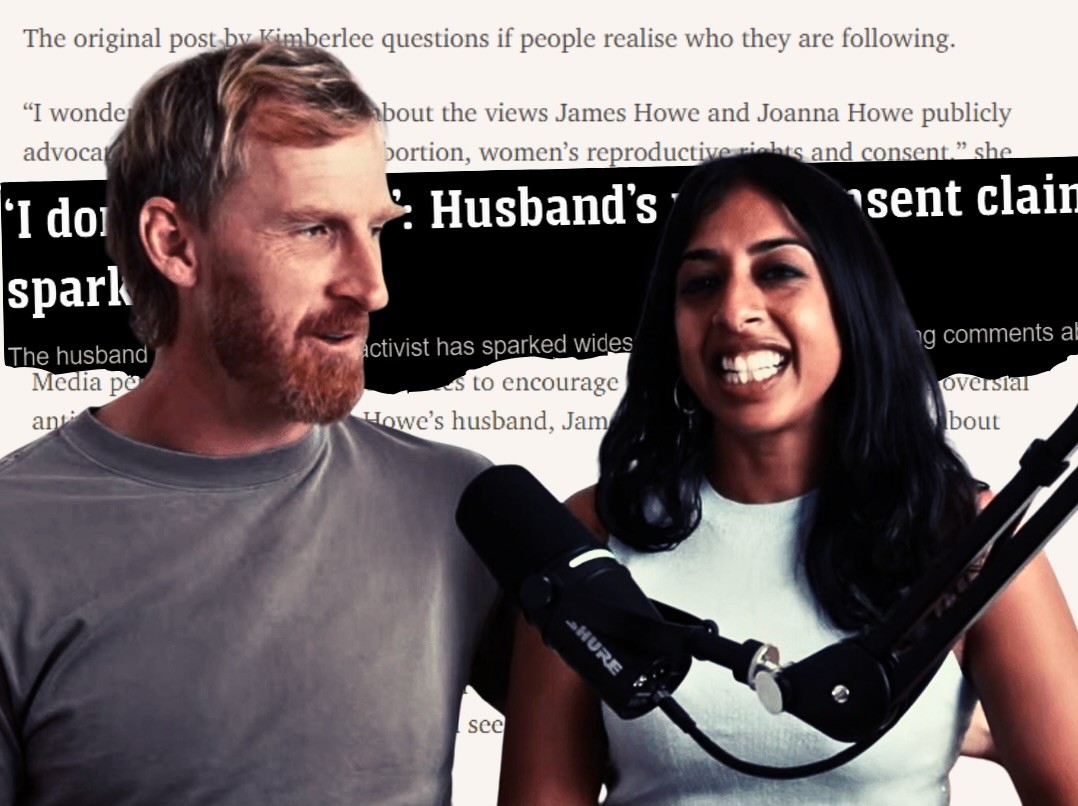
Learn how journalists use loaded language, selective quotes and misleading headlines to shape public opinion, using a controversial report about James and Joanna Howe as a case study.
12 October 2026
12.9 MINS
God’s judgement can seem difficult to reconcile with His goodness. But Scripture presents God’s perfect justice as something we can celebrate — and His present offer of mercy through Jesus as the good news.

12 October 2026
3.1 MINS
The proposed livestream of Nidal Hasan’s execution has reignited debate over justice, deterrence and public accountability, with critics comparing American justice to ISIS propaganda.
12 October 2026
3.7 MINS
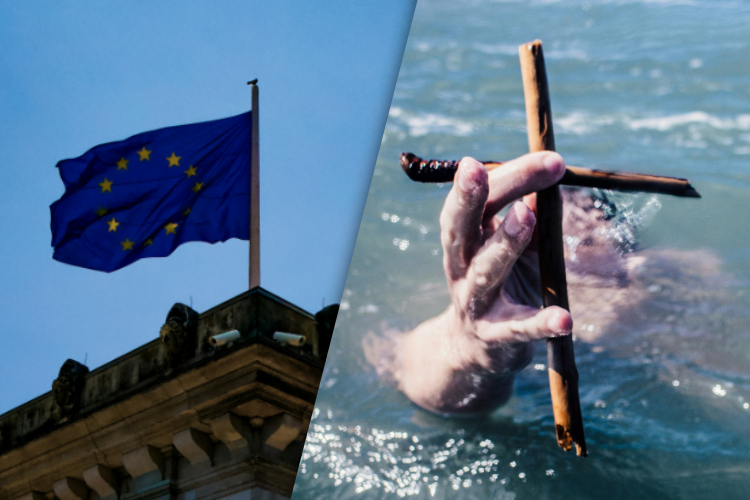
An EU court case over baptismal records could pit data protection laws against religious freedom, raising serious questions about whether governments can compel churches to erase sacramental history.


