


How Big Marijuana Has Manipulated the Public to Believe Cannabis is Safe — Part 1 of 2
Dr Phillip Drum, PharmD, is a clinical pharmacist and oncology specialist who earned his doctorate from the University of California, San Francisco, in 1986. Over his career, he has worked extensively with cancer and AIDS patients, gaining direct experience with the therapeutic use of dronabinol (synthetic THC).
Since the death of his sister in 2012 in a car crash caused by a driver who was under the influence of marijuana, Dr Drum has dedicated himself to public education on the risks of cannabis use, addressing schools, law enforcement and professional forums across the United States. A member of the International Academy on the Science and Impact of Cannabis (IASIC), he has contributed to its scientific library and served on the California Impaired Driving Task Force from 2018 to 2021.
Dr Drum was in Melbourne in October to address the Youth Forum Breathtaker Series organised by the Drug Advisory Council of Australia (DACA), at which time he spoke to News Weekly.
This article is Part 1 of 2. Read Part 2 here.
___
My state, California, was one of the first states to legalise the medical use – or the fraud of medical use – of marijuana back in 1996. I knew full well as a pharmacist that this was a fraud.
Going back to 1985 for a moment, the U.S. government, through the Food and Drug Administration, approved the use of dronabinol, also known as THC, which is the psychoactive component in marijuana. It was approved as a purely synthesised Delta-9 THC molecule.
I used it as an oncology pharmacist on cancer patients. The indication for use was in cancer patients for nausea and vomiting caused by the chemotherapy. So, I have experience using it as a pharmacist.
Again, I’m a clinical pharmacist, so I work in the hospital where people get their chemo, and I work with the physicians, I go on rounds, and I see the patients. So, I have immediate experience of how medications were being used and how successful they were. And dronabinol was not that successful. In fact, our national oncology group does not support the use of dronabinol as an antiemetic for chemotherapy.
Back in 1985, dronabinol was also approved for AIDS wasting syndrome. As an oncology pharmacist, I would see those immune-compromised patients as well in the hospital. So, I have a wide variety of experience in working with AIDS patients.
In the mid-1990s, the protease inhibitor drug class came out, and that revolutionised how we treat AIDS and HIV and has turned it into basically a chronic infection, kind of like diabetes. Till then, dronabinol was used to help bolster the weight of those people who had contracted HIV and had AIDS wasting, which is basically them losing weight. They would have a lot of diarrhea, they couldn’t gain weight because of all the various infections they would get.
So, it was really kind of a way of making them feel happy that we could give them something that stimulated their appetite. As we know, one of the effects of marijuana is the munchies. And so that was the other indication for dronabinol back in 1985.
So, again, the fraud in 1996 that a smokable form of marijuana as medicine was needed was without any scientific backing at all. In the United States, you can look up the NIH Reporter to see over 8,200 studies. Put in the search term “marijuana” in the NIH Reporter, and you will find 8,200 studies at a cost of $US4.2 billion ($A6.4 billion). None of them recommended the approval of cannabis as a medicine.
The marijuana industry came back to California voters in 2010 (Proposition 19) and tried to get marijuana legalised for recreational use, and the voters voted it down. Then they took their roadshow to Washington and Colorado, where it got approved for recreational use in 2012, in which anybody 21 and above could use it.
On account of Rosemary’s death, I’ve been very active. I’ve gone out and taught drug recognition experts (DRE) in the state of California, who were supposed to be experts getting these people off our roads. In fact, the officer who responded to my sister’s case was a California-certified DRE expert. He was the one who messed up the case in the way he did his documentation.
So, I’ve educated their educators, the people who educated their DRE officers. And when I talked to them, they said, we’ve never heard any of this information; and they were the content experts!
I encourage you to consider reviewing this book, Marketing Pleasure, by Sue Ruscha. She was a member of a group in the 1980s that worked against marijuana. Now, you have to recognise that the tobacco industry has actually bought a lot into the marijuana industry. So, they’re following the same playbook.
On page 15, I just want to quote to you what she says the playbook is. Here it says: “The strategies are, number one: deny science and invent your own science. Number two: deny that your drug is addictive. Number three: target children. Number four: increase the dose of the addictive ingredient. Number five: spend big bucks to market and lobby. Number six: always launch new products before new regulations can be written.”
Then she says a seventh strategy could be added: “Market your drug as a medicine, whether it is or not.”
In the 1950s, they used to show doctors recommending using tobacco as a medical product, and show doctors smoking various products on TV. So, the marijuana industry has done the exact same thing. All I can tell you is, if you look at a medicine and it claims to treat 60, 100 different medical indications, ask yourself, does that seem reasonable? Or is that snake oil?
The Tobacco Industry Playbook
And that’s exactly what marijuana’s doing. They couldn’t get it approved through the Food and Drug Administration (FDA), so what did they do? They went to the public and gave them false information on how it works. They used the fact that the FDA had approved dronabinol (synthetic THC (tetrahydrocannabinol) – the active ingredient in marijuana) for AIDS wasting syndrome and for nausea and vomiting.
However, the national oncology groups do not recommend dronabinol as an agent – it is basically an agent of last resort. We’ve gotten much better antiemetics since the 1990s, so we don’t use dronabinol anymore. Again, we don’t have AIDS wasting syndrome anymore. So again, the FDA-approved dronabinol is not even really being used.
But then the marijuana industry will claim that you can use it for pain, that about 80 to 90 per cent of the people using it are claiming pain. Again, go back and look at the studies for pain. Large studies have come out that say it doesn’t work for pain. It actually increases the use of opiates in these people, and their pain is not better controlled.
Another question I would ask is, what other medication are you aware of that’s smoked? Yet people are swallowing this as if that seems reasonable. Again, it’s creating those hydrocarbons that are more carcinogenic than tobacco.
If that doesn’t seem reasonable, they’ve created edibles and are feeding it to people in a “serving size” of 10 milligrams of THC.
Well, dronabinol was approved – Delta-9 THC – back in 1985 at three strengths: 2.5, 5, and 10 milligrams of THC. They call a “serving size” the maximum dose approved by the FDA. In California, they’ve allowed a product that has 2,000 milligrams of THC. So, they could put 2,000 milligrams in a brownie.
They commonly put 100 milligrams of THC in a cookie. Who eats the tenth of a cookie? Raise your hand. Nobody. Yet that’s what they sell. They sell products that are much higher than even their serving sizes allow. They have gummy bears that are 10 milligrams.
A study out of Colorado looked at impaired driving and asked, how long one needs to wait to drive for what dose of THC. They tested for 18 milligrams smoked, and they found you have to wait six hours after usage to be able to drive – and that was an infrequent user. Somebody who smoked it, like, once a week or once a month. Edible, you have to wait eight hours. Yet now they have started popping up that will now give you THC in food. You can go out to a restaurant and buy a salad with THC sprinkled in it or a meat product with THC on it.
I asked them in California’s Impaired Driving Task Force, do people sit around for eight hours after they ate to make sure that they could get home safely?
I asked them to put in as one of the recommendations, if there is any type of consumption – and we have consumption lounges in California – that they be offered alternative measures to get home.
We have autonomous vehicles now in California – they drive all over San Francisco, in the hills there in San Francisco, where you get in the backseat and the car’s driving itself. We have Uber, Lyft, we have taxis, we have all sorts of alternatives that people could use, versus getting out on the road and killing people like my sister. But the industry will not accept that.
Taxing Deadly Substances
In California, we approved cannabis back in 2016 for recreational use. So, four years after Colorado and Washington legalised it, California, with the backing of the then lieutenant-governor, now Governor, Gavin Newsom, and Kamala Harris, who was attorney-general at the time, legalised it. They promoted the legalisation saying that we could get all these tax dollars.
But they do not account for the consequences. And there have been many consequences – car crashes and deaths. California does a horrible job of collecting the data as to the cause of car crashes, as does Washington, but Colorado did a much better job. Until recently, the guy who was running the Rocky Mountain HIDTA (High Intensity Drug Trafficking Area) was very effective. It found that deaths in Colorado increased by 20 per cent.
Unfortunately, the guy who was running that program retired in 2021. And ever since, its reports have nothing to do with marijuana. It has moved on to ketamine and LSD and psilocybin, and they will not talk about marijuana anymore.
Previously, they were reporting and showing the hospitalisation rates going up. In fact, it’s the number one substance found in teenagers who have committed suicide.
Marijuana is the number one substance in teenagers, and we know this. Anybody under age 25 should not be using cannabis at all, because it alters the connectivity of the brain and can damage it for life.
In fact, the Canadian Government’s Health Canada website tells you that nobody under 25 should be using cannabis, yet they legalised it for the entire nation.
Also, on the website, they recommend that males wishing to have a family should not use it because it damages the sperm. That ultimately also alters the effect of pregnancy in women. And we’re finding that teenage girls using cannabis are having spontaneous abortions, probably of their cannabis use, because it impairs the fertilisation of the egg.
We’ve seen psychosis, we’ve seen schizophrenia going off the roof. We’ve seen homelessness as a result of the drug use. And the interesting thing is that it’s happening in the big cities that have legalised marijuana: Seattle, Portland, Los Angeles, San Francisco – it’s horrendous.
Hiding in the Brain
THC is a fat-soluble molecule. So, as a fat-soluble molecule, it tends to go to fat stores in your body. Your brain is 60 per cent fatty tissue. So, guess where the THC goes when you smoke it or eat it? To the brain, to the fatty tissue in the brain.
When you draw blood, however, you do not see the THC in the blood. Fatty tissue is where it’s going – to the brain. So, the problem is that, if you test the blood, you’re testing the wrong substance. Because we know scientifically that after the last smoke, the blood level peaks within minutes – within five to 15 minutes for THC – and then drops precipitously.
It drops 90 per cent in 80 minutes.
I did a study with a fellow called Ed Wood back in 2015, that looked at how long it was taking to draw blood in Colorado. His son – like my sister – was murdered by an impaired driver in the state of Washington. He has a website called DUID Victims Voices (Driving Under the Influence of Drugs).
In there, you can see more about my sister’s case. Rosemary Tempel is my sister (see box at the bottom of this article). And his son and many other cases of marijuana-impaired drivers that are killing people on our roads.
So, Ed and I did a study. Ed had access to the Colorado data on how long it was taking to draw blood. And I said, let’s look at the cases like ours in which there’s been a lot of mayhem. Not just a fender bender.
I want to look for a case in which there’s been mayhem, and somebody’s dead, or somebody’s been injured (seriously enough) to have to go to the hospital. Because when that happens, the police are having to do multiple things, and it takes longer before the patient ultimately gets blood drawn.
So, recognising that it takes 80 minutes to lose 90 per cent of that blood level, we wanted to know, how long does it take to take blood? On average, it’s two hours.
And we looked at it in different ways as well. We looked at it for the city police officers and state police officers. We did that because we know that state police officers have to travel longer distances to those cases up in the hills and things. And sure enough, it did. It took a little longer for them to get the person in to get blood.
And so, I started looking to see if anyone had a solution. Guess where I found that’s doing things much better?
In Australia, you guys do oral swabs and have been doing so for over a decade. That’s very smart because oral swabs can remain positive a lot longer than the blood level. And that will tell you that the THC is still in the body.
Just because it’s not in the bloodstream doesn’t mean it’s not in the body. It’s still in the brain, and it’s coming out in the urine over time. So, people say, let’s look at those urine metabolites. Well, there are two main ones, carboxy and hydroxy. The enzymes in your body add COOH. When you add that to the THC molecule, it makes it water-soluble, so it now becomes available to get back into the bloodstream and come out in the urine.
Well, the marijuana industry wants to tell you, well, the COOH version is not psychoactive, so you can’t measure that. OK, fine. Let’s measure the OH, the hydroxy metabolite, because the hydroxy metabolite has been proven to be more psychoactive than delta-9-THC.
So, when you add OH to the molecule, it now becomes water-soluble, but it’s also more psychoactive and impairs the brain more than the parent compound does. Very concerning.
So, if the THC OH is coming out in the urine, that means you got a psychoactive product in your body. Therefore, you should not be going to work, you should not be driving, because you have a psychoactive component in your body.
But the marijuana industry does not want you to talk about THC OH. It always focuses on the carboxy component. They also want to only look at CBD (cannabidiol) in marijuana, and they say, oh, CBD is not psychoactive. But if you heat CBD, you make THC. If you smoke CBD, you’re making THC.
In 2018, what’s called the farm bill was approved in Congress. It allowed hemp products, which are primarily CBD, and can have up to 0.3 per cent THC in them.
Chemically, you can convert CBD into what’s called Delta-8 THC, Delta-9 THC, Delta-10 THC, THC-O, and several of those products are more psychoactive than Delta-9 THC. And that was federally approved. They also decriminalised all byproducts of CBD.
___
Rosemary’s Story
In July 2012, Dr Drum’s sister, Rosemary Tempel – a nurse in Seattle, Washington – was killed in a head-on collision caused by a marijuana-impaired driver. Rosemary had been on her way to work at the hospital at 6:22 in the morning.
The driver, who had multiple prior felonies and DUIs, was on probation at the time. Yet the state of Washington just continued to allow him to be out on the roads and ultimately kill Phillip’s sister. In fact, the judge at the sentencing hearing said to Phillip’s mother in the room, this was apt to happen. How would you feel as a mother hearing that it was “apt to happen” that your daughter would be murdered by a marijuana impaired driver? Throughout her remaining seven years of life, Phillip would hear her repeat that many times.
The driver’s previous two felonies had also involved marijuana use. His first felony was selling marijuana and cocaine to an undercover police officer. So, this was his third felony – killing Rosemary under the influence of marijuana. Rosemary had a broken neck and died at the scene. He caused an eight-car crash, and left with a broken fingernail.
The judge also told Phillip’s mother at the time of sentencing that they should not look at the murderer. Once, when his mother attempted to – and at this time she was 83 years old – she glanced over at the murderer, and the judge gavelled and told her to stop and screamed at her, “I told you not to look at him.” An 83-year-old! He, however, was able to cry and look over at Phillip’s mother and say things, and the judge did not stop him.
Despite evidence of the driver’s cannabis impairment, the presiding judge deemed such evidence “prejudicial” and the trial proceeded without reference to his marijuana use. He was convicted of reckless driving and sentenced to 4½ years in prison, serving roughly three.
After his time spent in jail, he was supposed to pay Phillip’s family restitution. He was failing to do that. Phillip took him back to court. He got thrown in jail for a month, and then he started paying restitution. But at the time of this hearing, the judge, before sentencing him to another month in jail, revealed that he had committed another DUI after getting out of jail for killing Rosemary.
___
Republished with thanks to News Weekly. Image courtesy of Adobe.
2 Comments
Leave A Comment
Recent Articles:
9 October 2026
5 MINS
During a recent dialogue between high profile legal experts, a top Australian constitutional law expert was asked if Australia should have a Bill of Rights. His answer may surprise you.

8 October 2026
4.1 MINS
Italy honours St Francis of Assisi 800 years after his death, celebrating a saint whose devotion to Christ, radical simplicity and message of peace continue to shape generations.
8 October 2026
2.8 MINS
The MDBA’s case for further water buybacks rests on climate projections increasingly challenged by climate scientists, historical rainfall data and evidence of a greener Basin.
7 October 2026
1.5 MINS
Across the Middle East, North Africa and Anatolia, Christianity once shaped entire civilisations. Could Britain’s Christian heritage likewise become a memory rather than a reality?
7 October 2026
6 MINS
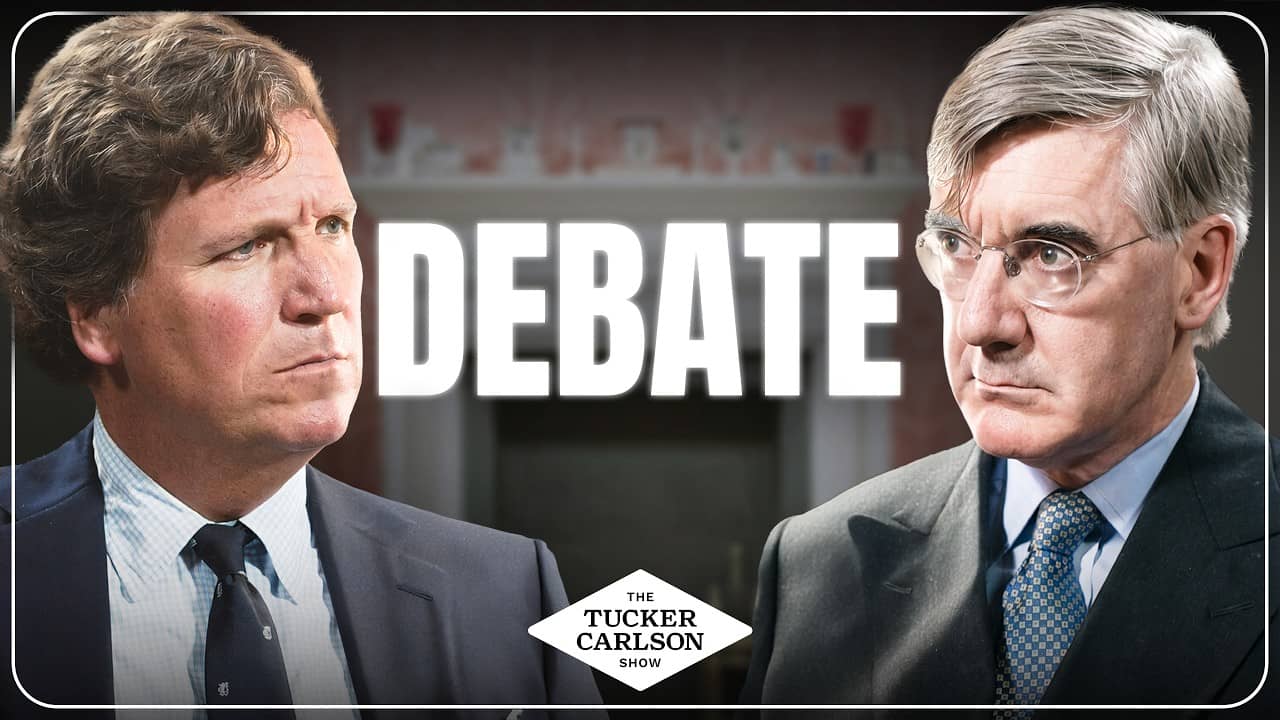
What can Tucker Carlson’s interview with Jacob Rees-Mogg teach us about political disagreement? Their clash over war, Russia and national defence highlights the importance of listening carefully and understanding an opponent’s position before attempting to refute it.

7 October 2026
8.5 MINS
Gerald McDermott’s work challenges Christians to approach Israel through Scripture first, exploring God’s covenant faithfulness, Christian Zionism, Jewish identity and antisemitism.

6 October 2026
3.4 MINS
Christians cannot afford to let headlines and social media shape their view of Israel. Scripture provides a foundation for understanding Israel, God’s promises and our response.



This article talks about a man made version in many places. There are variations in THC and its overall effects. This depends on the difference in terpenes and other naturally occuring compounds of the resins. I highly doubt they have even scratched the surface in being able to replicate the various types that can occur naturally. “As we know, one of the effects of marijuana is the munchies” No false, not all give the munchies, some variations can actually supress appetite. Some will give a sedative effect, some uplifting, some more cerebral, in fact there are numerous types with numerous effects. There is also what is known as THCV, this will energise a person. That it takes 8 hrs for edible to take effect is a fallacy and shows that it wasn’t prepared correctly and again the failure of man trying to replicate and failing what God made naturally. Half to one hour, not 8.
Now im not condoning recreational use, but I personally know people who had tried everything big pharma can throw at them in regards to constant debilitating pain and also mental health issues. One had even undergone several shock therapies, yes that still goes on. The difference I have seen and heard from them tells me all I need to know that there is a lot of scare mongering going on by so called professionals in the health industry and a lot of ignorant stubborn health workers giving out misinformation in regards to its real therapeutic effects when properly understood. The natural version, not some man made version one type fits all. There is a lot more to mental illness and suicide than saying marijuana caused it. What was the underlying reason they used it? Often these people turn to substance abuse for underlying things like trauma, previous physical or sexual abuse and just because they find a substance in their system when they commit they blame the substance. This is a naive approach and shows a shallow comprehension of the whole picture of the persons problems overall. What people need to know too is the effects of big pharma medications too on the bodies internal organs, liver destruction, kidney destruction, mind alterations and the list goes on. Pharmaceuticals can have multiple times more negative effect on ones body than medicinal marijuana. You won’t hear them admitting this but just look up the side effects and dangers on lots of them. Why do you think they are limiting even paracetamol these days. Get into checking out some of the commonly prescribed pain kilkers and antidepressants and the long term effects and even short term side effects from those! These have caused huge damage to millions over the years. Some even create pshycosis! Again, no to recreational use, but its a God created plant that understood properly and used properly in its natural form has very helpful uses for ill people.
Where is the mention of God and Jesus in this article? Nothing. God created all things and all things were good, yes through sin the fall happened and with that the curse, weeds thorns, creatures became some of them a threat to man, sickness, illness and other things entered in. But amongst all this there are still millions of things good and for our good. We have over the years in our ignorance seen things that seem bad at first glance but deeper understanding later shows some can be used for good. Radiation until understood was bad but look at the amazing uses in nuclear medicine now.
Insect stings, venoms and numerous other things that would be considered bad are now understood and can be used to our good not bad. Who would have thought venom that kilks could be used to make anti venom that saves. Mould that saves. There are numerous fruits that if you used the whole fruit including the seeds can kill you, does that make apricots bad? No, we understand that they the fruit are not only nutritional but lovely to eat. We recognise the good and the bad. God, Jesus, the Holy Spirit created apricots, and in them can be good for us and bad for us. This is the same with marijuana. It can be good for some and it can be abused and be bad, like many things in Gods creation.
Food in general can be bad and God warns against gluttony, but food is good too. We need to approach things keeping God in mind at all times, staying positive in our approach but also careful and using wisdom which God imparts through His Holy Spirit and Holy Word. Yes there is a side to the Marijuana industry overseas that is cashing in on recreational abuse of it. That doesn’t make it bad, it shows the sinfulness of those doing so. People abuse opioids, drink, food, God given pleasures too, to their detriment. But they can be used for good. Its sad to hear of accidents where a substance was found in the offenders system and tragedies from abuse. But wisdom will show you often a bigger picture than just a finger pointed at one pixel. That doesn’t excuse the person ever but it can open your eyes to more than say the drink, the drug. Did the drink kill the person the driver hit? No the person did. Did drink play a part? Yes. Ban all drinking?
Then we ban all pain kilkers that are abused, food, drinks, everything that can be used and abused? No, its not that simple. Its sin. Remember God in all that you do and do all for His glory, seek and pursue wisdom through His Word and let that be your guide.
I’m so glad Jon, that “you are not condoning recreational use”.
Dr Drum’s sister, Rosemary Tempel – a nurse in Seattle, Washington – was killed in a head-on collision caused by a marijuana-impaired driver.