


Sacrificial Empathy Gets a Sporting Yellow Card
After an 11-year-old girl loses a championship spot to a male-born competitor, this piece questions “sacrificial empathy”, fairness in women’s sport, and why grassroots girls lack the protections elite athletes receive.
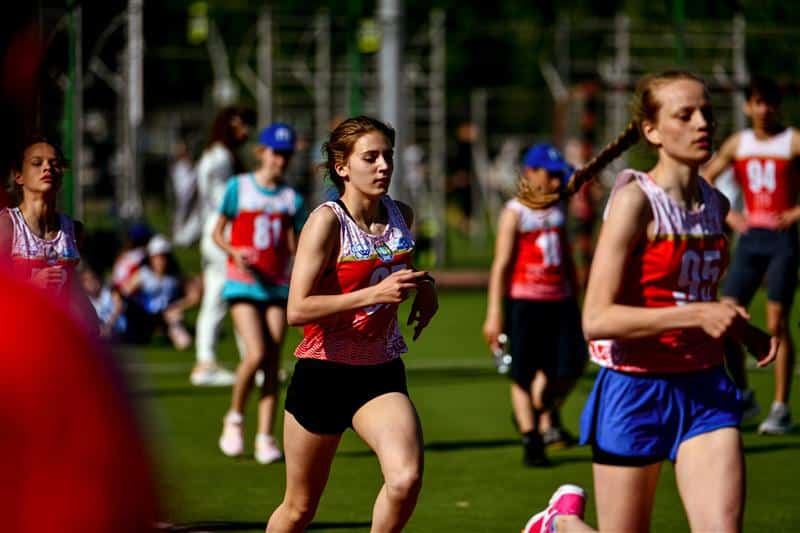
In October 2025, 11-year-old Emily from regional Victoria failed to qualify for her district athletics championships after being beaten by a competitor who was born male but identifies as female. Under Victorian law, community sporting competitions, most of the time, are required to accept a person’s gender identity as reality.
As reported by media, Emily’s father lodged a formal complaint with the Victorian Department of Education. It was dismissed.
This is not the first time a female has missed out on sports opportunities after being beaten by a female-identifying male in a women’s or girls’ category. Yet opposition has been sparse. Why?
One explanation is sacrificial empathy: the desire to be so kind and inclusive that we might subjugate facts, our own boundaries, or even the needs of people close to us.
Psychological research shows that women, on average, score higher than men on agreeableness – a personality trait associated with harmony-seeking and conflict avoidance.
Most of the time, this is a strength. But in the case of transgender ideology and sex-based sport, it can mean difficult truths go unspoken, and girls like Emily are thrown under the bus to support the transgender position.
The result is a system in which fairness and safety may be treated as secondary.
Why Grassroots Girls Aren’t Protected Like Elite Women
Since 2020, policies based on gender identity rather than biological sex have allowed male-bodied athletes to compete in women’s and girls’ community sport and to access female-only changerooms. A respectful yet tense debate has existed behind closed doors. That tension is increasing.
Much of this debate has taken place without mainstream scrutiny. That is, until the 2024 Paris Olympics, when boxer Imane Khelif, who it is reported has a disorder of sexual development and XY chromosomes, won gold in the women’s division.
Seeing women get smashed by Khelif was just too much. TV viewers couldn’t unsee what they’d seen. The Diversity, Equity and Inclusion mantra of ‘be kind’ started to lose its shine.
After the Olympics, the number of signatures to the Declaration of Biological Truth Australia tripled. On a register to express concern about transgender ideology, Australians were finding their voice.
At the community level, the issue has been confronting for parents.
Dads watch on in horror as their teenage daughter’s sports club competes against teams containing larger, stronger boys who identify as female.
These teams usually win, sometimes by a mile. In Sydney, a women’s football team containing five female-identifying males won their season competition with 59 goals for and three goals against.
These same concerned dads are also seeing males registering to join their daughter’s team and, of course, use their changeroom. Inclusive? Maybe. Safe? No.
The kicker comes when girls and women are told to be “kind and inclusive” because they are only playing ‘community’ or amateur sport.
This expectation of sacrificial empathy gets them fuming mad – and rightfully so.
The Legal Loophole Sports Clubs Are Ignoring
At the elite level, women’s sport in Australia is increasingly protected by eligibility rules based on fairness and player welfare. Cricket Australia excludes transgender players from international teams. Transgender players are restricted from participating in women’s Rugby League internationals. Trans women cannot play netball or swim for Australia.
Meanwhile, Football Australia has acknowledged the need for elite-level eligibility standards and is working on a policy to address concerns about fairness, safety and player welfare in women’s competition.
So why are elite women being protected while grassroots players are not?
The answer is simple.
Elite women’s sport is broadcast to millions. Community sport is not. If TV viewers saw the unfair and unsafe nature of transgender sport inclusion, things would change rapidly. The Imane Khelif Olympics fiasco is a prime example.
Australian TV audiences want fair play. Advertisers want viewer numbers. This commercial imperative ensures fair play and safety in women’s elite sport continue.
What sports managers haven’t understood is that the loudly touted ‘rules’ demanding female-identifying males play in women’s community sports are not rules at all, but guidelines.
According to the Australian Human Rights Commission (AHRC), an exemption can be given that allows for discrimination on the grounds of sex or gender identity only in “any competitive sporting activity in which the strength, stamina or physique of competitors is relevant”.
I might be wrong, but aren’t those factors important at any sporting level?
Inclusion Without Boundaries Isn’t Inclusion at All
A statement from the American College of Sports Medicine adds speed to the list of male advantages and notes these physical benefits can exist well before the onset of puberty.
None of this requires hostility toward transgender people.
Males who identify as female can compete in their own separate division or that of their birth sex. In the spirit of fair, safe competition, inclusion must have limits.
At the community level, concerned parents armed with the AHRC strength, stamina and physique exemption, can confidently volunteer for committee positions to reverse the prevailing insanity. In the face of vocal over-empathy, it may not be initially comfortable. The push for truth often isn’t.
And professional club managers can legally revise their policies to include transgender or ‘open’ divisions. Competition is important for transgender players. Safe participation is important for girls and women.
The integrity of women’s sport depends on a strong single sex policy. This is commonsense based in science, within the law and biblically faithful.
In 2026, girls like Emily may again compete on a level playing field. If sacrificial empathy in women’s sport can be reversed, it could lead to change in other areas such as education, health and recruitment. We can only hope.
___
Republished with thanks to The Catholic Weekly. Image courtesy of Unsplash.
4 Comments
Leave A Comment
Recent Articles:

7 October 2026
3.6 MINS
Victoria’s 18th March for the Babies will bring families together to peacefully affirm the value of every human life and call for a cultural change towards life.
7 October 2026
1.5 MINS
Across the Middle East, North Africa and Anatolia, Christianity once shaped entire civilisations. Could Britain’s Christian heritage likewise become a memory rather than a reality?

7 October 2026
4.6 MINS
Medicine was created to heal and preserve life. Yet abortion, euthanasia and gender medicine increasingly redefine death and destruction as care, leaving the vulnerable dangerously exposed.

7 October 2026
3.7 MINS
Christians have their differences. But those differences should not, and need not, result in us being disconnected from each other in the one body of Christ.

6 October 2026
3.4 MINS
Christians cannot afford to let headlines and social media shape their view of Israel. Scripture provides a foundation for understanding Israel, God’s promises and our response.

6 October 2026
6.7 MINS
Fresh revelations about the foiled FlyDubai terror plot expose the attacker’s alleged extremist history, while a courageous pilot’s actions prevented an unthinkable catastrophe.

6 October 2026
6.2 MINS
Britain’s grooming gang scandal exposes a devastating failure to protect vulnerable children, raising urgent questions about political correctness, accountability, immigration and the loss of moral courage.



Great article!!!!!
When women and girls are told to be ‘kind and inclusive’ it excludes these females. Inclusivity seems to be very exclusive to me.
Thanks Phil. To quote you above “we can only hope”.
I add, “and pray”.
Good article. We soon won’t have any elite women’s sporting teams if this inclusivity continues. The elite teams are fed by the grassroots teams & if the girls continue to be beaten then they will give up & find something else to do, therefore no feeder teams & no women’s teams.