


The Anti-Religious Bias Regarding Australia’s Convict Past
A visit to Tasmania’s infamous Sarah Island uncovers how anti-religious bias can distort history — and why the real record of faith in Australia deserves a second look.
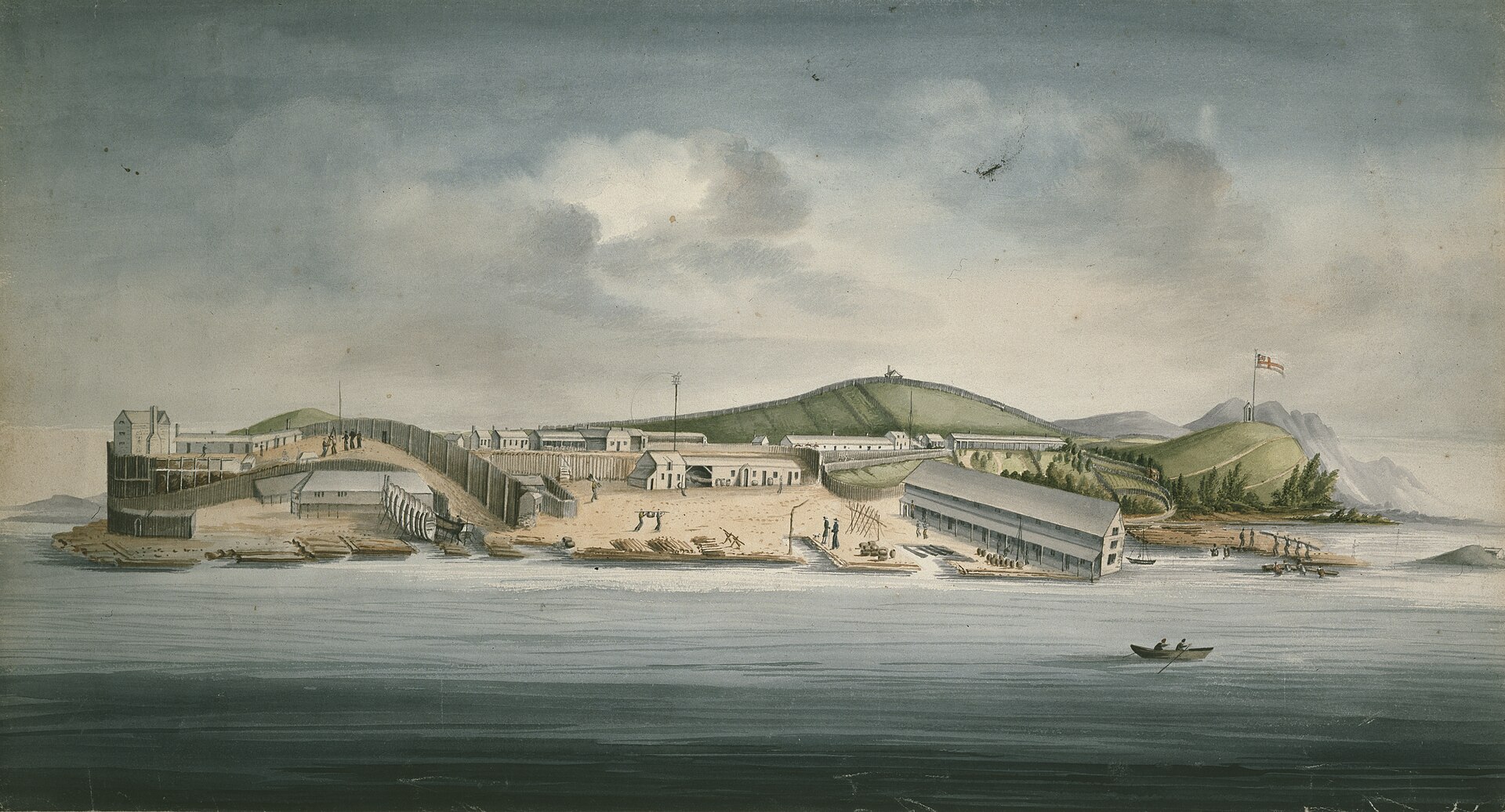
I recently went on a Franklin River cruise on Tasmania’s west coast, where we disembarked at the infamous former penal settlement of Sarah Island. Located in the middle of Macquarie Harbour, it is accessed from the open sea through the narrow nautical passageway aptly named “Hell’s Gates”.
Having previously read the classic Australian novel by Marcus Clarke, For the Term of His Natural Life (published in 1872), which refers to the historic conditions there, I was eager to visit it for myself.
What I was not prepared for—although, in hindsight, I shouldn’t have been surprised—was our tour guide’s sudden and vitriolic denunciation of Rev. William Schofield, the evangelical Methodist chaplain to the island from 1828-32.
For example, according to our learned guide, if convicts professed Christian faith, then they were subsequently offered a blanket to keep warm at night. Atheists, it was suggested, would just have to freeze. Hence, Rev. Schofield was subsequently deceived by many spurious religious ‘conversions’.
Setting the Record Straight
As a clergyman myself, this led me to research what the historical record actually said about Macquarie Harbour’s notorious chaplain. Could it be that my tour guide might also have been prejudiced by his own unbelief?
While we still thankfully have many of Rev. Schofield’s letters (located in the Mitchell Library, Sydney), here is a short excerpt from the Australian Dictionary of Biography:
Schofield’s first service with the convicts at Macquarie Harbour was held on 30 March 1828. A large room was provided for later meetings and, although attendance was compulsory, it was soon evident that some of the men and boys were influenced by his message.
The penal settlement already had a small Methodist class meeting which Schofield continued; he added weekly meetings for religious conversation, regular evening lectures and singing classes, and a night school, all with voluntary attendance. In these projects, he was helped by the commissariat clerk, T. J. Lempriere, and others, including young convicts who tried to teach old convicts to read.
The results of this work impressed the commandant and his officers, but Schofield was not deceived by signs of religious revival; he warned his successor, Rev. J. A. Manton to be cautious in recommending apparently pious convicts to the governor for removal to less isolated prisons.
Well, so much for the good reverend being some kind of naive religious dupe! Rev. Schofield even explicitly advised his successor to be careful of faux spiritual conversions motivated by temporal gain. What’s more, further investigation into Rev. Schofield revealed that the prospect of ‘false conversions’ was something which he zealously guarded against. As one scholarly article reports:
Yet, when early release from the confines of Macquarie Harbour is numbered amongst the potential attractions of a conversion, Schofield’s success rate appears to have been far from spectacular. Given such inducements, one would have expected a tidal wave of potential converts, and at first, this is exactly what happened. Concerned, however, that many of these convict testimonies were shams designed to obtain nothing more than an early release, Schofield drew up a set of rules to separate the sheep from the goats. [1]
When Historians Lose the Plot
Unfortunately, such misleading portrayals of religion’s impact on Australian history are commonplace. In their magisterial work, The Fountain of Public Prosperity (Monash, 2018), Stuart Piggin and Robert Linder make the point that “Academic scholarship has been prodigiously negative about the role of all religious movements in Australia until relatively recently.” They then go on to make the following provocative observation:
A key question remains: is the prevailingly negative picture of Christianity painted by Australian historians a true reflection of the reality that objectively religion has been relatively weak in Australian history, or is it that most conventional histories just repeat uncritically the stereotype created by unsympathetic secularists?
There is little doubt that the forces of atheism and agnosticism have been much stronger in the history profession than they are in Australian society as a whole. In a survey of the profession taken in 1987, close to the date of conception of the present study, 48% of 124 respondents said that they were atheists. A further 12% said that they were agnostics. These figures no longer look preposterous, but in 1987 they contrasted sharply with the Australian average.
The Australian Values Systems Study of 1983 showed that only 0.9% of all Australians claimed to be atheists; 1.7% were agnostics. So whereas only 2.8% of all Australians said they were atheists or agnostics in the 1980s, 60% of the members of the history profession made that claim. In this respect, the profession has hardly been representative of average Australian views on religion. [2]
Thankfully, academia is starting to redress the anti-religious bias of Australia’s convict past. One of the most helpful examples of this is Hilary Carey’s recent book, Empire of Hell: Religion and the Campaign to end Convict Transportation in the British Empire, 1788-1875 (Cambridge University Press, 2019). For anyone interested in pursuing the subject further, this is a must-read.
All of which is to say, though, when on a recreational holiday, don’t believe everything you hear. Or if you’re at home reading the work of an anti-religious ‘expert’ on any given subject, keep an open mind to the positive contribution which Christianity in particular has made to this great nation.
___
[1] Hamish Maxwell-Stewart & Ian Duffield, “Beyond Hell’s Gates: Religion at Macquarie Harbour Penal Station”, Tasmanian Historical Studies, Vol. 5, No. 2, 1997, p. 85.
[2] Piggin and Linder, The Fountain of Public Prosperity, p. 14.
___
Image courtesy of Wikimedia Commons.
3 Comments
Leave A Comment
Recent Articles:

14 October 2026
6.7 MINS
A national poll challenges claims that pro-life Australians are extremists, revealing broad support for abortion restrictions, protections for unborn babies and safeguards for vulnerable women.

14 October 2026
2.8 MINS
Queensland recorded 1,082 assisted suicide and euthanasia deaths in 2025–26, as the review board called for consultation on potentially widening eligibility criteria.
14 October 2026
5.5 MINS
As Christianity fades from public life, Marxism or Communism offers a substitute faith built on oppression, liberation and political salvation — but at what cost?

14 October 2026
5.3 MINS
Marco Rubio’s Athens speech celebrates the Greek, Roman and Christian foundations of Western civilisation, warning that cultural self-loathing and radical ideologies threaten its future.
14 October 2026
2.8 MINS
Australia needs a courageous Church that never separates courage from Christian love — the courage of Peter and John, who, when ordered to cease speaking about Jesus, responded: “We can't stop.”
13 October 2026
2.6 MINS
Allegra Spender’s proposed bill reignites debate over discrimination protections, religious freedom and the right of faith-based schools to uphold their beliefs and values.

13 October 2026
3.9 MINS
Tasmania’s proposed conversion practices law raises serious concerns for churches, parents and faith-based schools, with broad definitions, severe penalties and uncertain protections for religious freedom.



One would be remiss in not turning to Professor Patrick O’Farrell’s magisterial works on the Irish Catholic influences in Australia’s convict history and later to the establishment by the Catholic Church of a completely separate and distinct education system to redress the influence of the established Anglican oriented Government systems. The Catholics received no funding support until the early 1960s. Required to build new, improved toilet blocks, without money. a Catholic Bishop closed his schools and all the students arrived at the local State schools which were obliged to take all comers.
Great and needed article Mark!!!!!
Hear! Hear!