


Christian Tattoos as the Answer to Islamic Slavery
A Eurovision performance has reignited debate about Europe’s Christian heritage, Ottoman history, and the enduring cultural tensions surrounding Islamic expansion.
Eurovision ‘Drops the Mic’
There’s an old saying that nearly everyone has heard, but people always need to be reminded of. It simply says, “If you don’t learn from the mistakes of history, then you’re bound to repeat them.” This year’s Eurovision Song Contest, of all things, has provided one of the most stunning reminders of all regarding the historic threat of Islamic invasion.
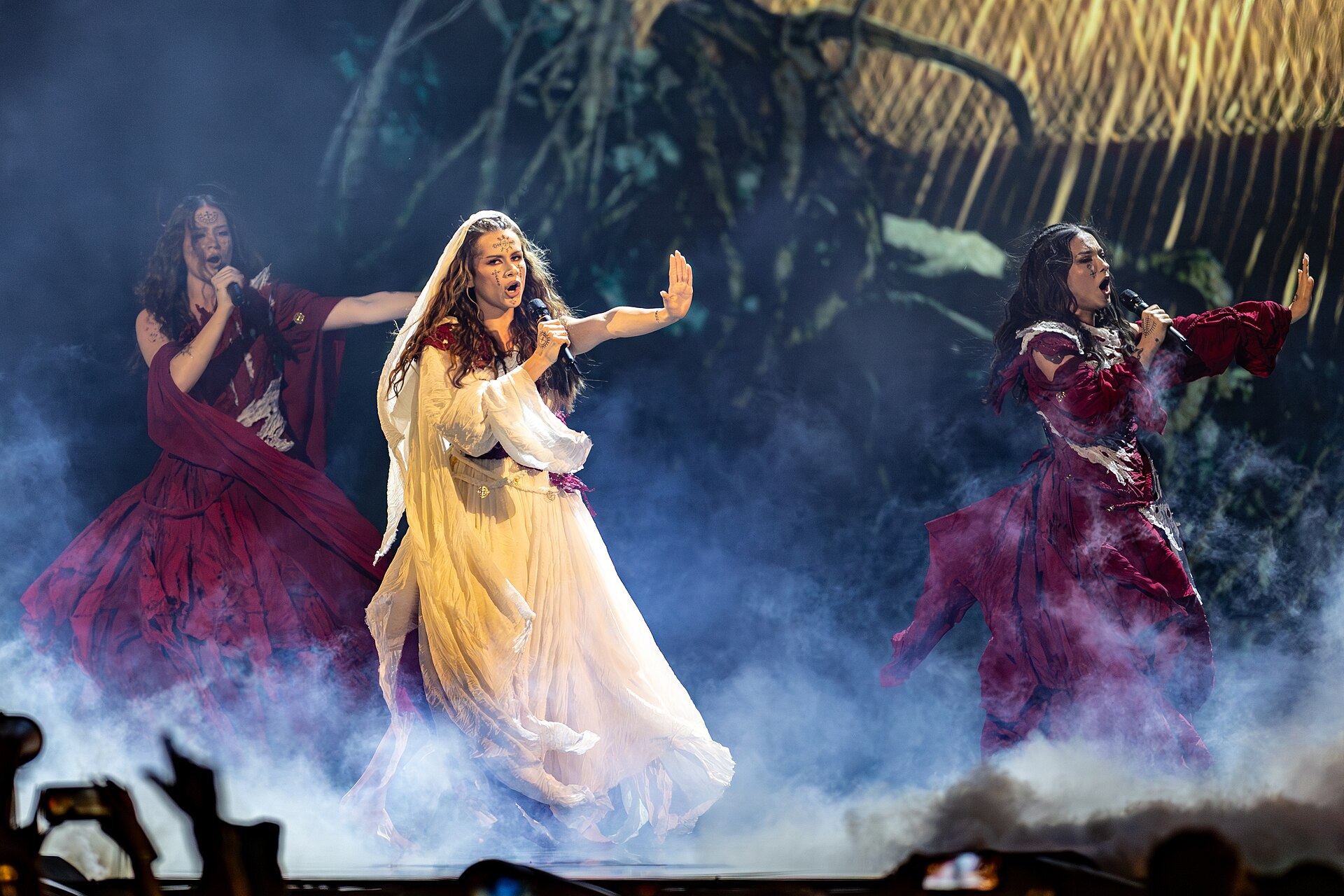
I’ve honestly never appreciated most of the music which comes out of Eurovision, but for the first time in I can’t remember, this particular song by Lelek just hit different. And I didn’t even know what they were singing about! But as the following video makes clear, it’s a clarion call for the West to wake up to the ever-present threat of Islamic invasion by how Christian parents in Europe used to tattoo their children to make them less desirable to Muslim invaders at the time of the Ottoman Empire.
The historic practice of tattooing religious patterns on one’s body is known as sicanje or bocanje, and is a fascinating piece of Balkan history. While it was most popularly practised by Catholic Croats living in Bosnia and Herzegovina—especially during Ottoman rule—it extended into other parts of Europe and, in particular, Croatia as well.
While the tattoos were occasionally placed on the forehead, they were more often inscribed on the hands, wrists, forearms, and chest. This unique religious custom became a vital strategy of cultural survival and completely undermined the Ottoman Empire’s colonialist goals
Ancient Tattoos as Christian Resistance
The custom actually predates the arrival of the Ottomans—dating back to ancient Illyrian pagan tribes in the region—but when the Ottoman military conquest expanded into the Balkans in the 15th century, the Christian population there reappropriated the ancient practice for three critical reasons:
First, it prevented forced conversions. The tattoos featured highly visible and ornate Christian symbols—mostly variations of the cross or circular patterns representing one’s family. By permanently marking their children, parents ensured that they could never be forced to convert to Islam without a permanent, visible reminder of their Christian religious heritage.
Obviously, a tattoo cannot be hidden, confiscated, or stripped away, unlike articles of clothing, names or a piece of jewellery can be. To the Muslim overlords, then, someone displaying a cross forever etched onto their bodies was a consistent and unerasable proclamation of religious resistance as well as cultural resilience.
Second, it thwarted the jizya or ‘Religion Tax’. Muslims in the Ottoman Empire practised a taxation system called devshirme, where young Christian boys were taken from their families, forced to convert to Islam, and then trained to become elite soldiers (Janissaries) in Muslim armies. Marking young boys with permanent Christian symbols made them undesirable for military recruitment since they visibly carried around with them the “stamp” of another faith. A perpetual reminder of what they were violently taken from.
In short, the tattoos demonstrated a fierce, unyielding Christian confession, making it very difficult for Muslim leaders to force people to convert to Islam. This then altered the local taxation and administrative system upon which Islamic conquest is built. Under the Ottoman jizya taxation system, all non-Muslims (known as dhimmi) occupied a lower social status and were only allowed to practice their faith if they paid the special ‘religious’ tax.
Third, it protected young girls in particular against being abducted and forced into sexual slavery. Christian women and girls were constantly at risk of being abducted for Islamic harems or forced into marriages with local Muslim men, or especially Ottoman rulers. Tattooing a young girl’s hands, chest, or especially her face and forehead, made her deeply unappealing, as Islamic law strictly forbids tattoos. Hence, it acted as a powerful religious deterrent.
Classic Islamic jurisprudence (Sharia Law) prohibits the tattooing of the body, viewing it as a desecration of what God has created. Seeing boys or girls openly flaunting this prohibition—especially the symbol of a Christian cross—was seen as being an act of spiritual defiance and hence a rejection of Islamic cultural dominance.
The History Lesson Continues
The process of being tattooed in the past was as painful as it was primitive. It often involved the elderly men or women in a village marking their beloved children when they were very young, normally between the ages of 10 and 15.
What’s more, it often coincided with special religious feast days such as Good Friday. Usually, a sharp needle was used to prick the skin, and then a mixture of charcoal, soot, honey, or sometimes even breastmilk or saliva as a lubricant was used to secure the dark pigment into the skin forever.
However, the tradition began to diminish in the mid-20th century, especially as the advancement of Islamic armies was halted. As the following video explains, though, the threat of Islamic invasion is an ever-present one. And if one cannot freely leave a religion—without the threat of being harmed or even killed—one must ask the question, in a democratic society such as Australia, does it even qualify as being a religion?
___
Image courtesy of Wikimedia Commons.
7 Comments
Leave A Comment
Recent Articles:
18 October 2026
2.7 MINS
Every season of life belongs to Christ, and we don't retire from discipleship as we grow older. In fact, our older years hold unique gifts for the younger generations.
17 October 2026
3.4 MINS
Seeking the face of God means surrender, laying aside our agenda and wants. Revival begins when we want God himself more than we want the outcome.
16 October 2026
4 MINS
A desperate Victorian Labor Party is peddling taxpayer-funded abortions as free “healthcare”. In a shameless attempt to stay in power, they're willing to do anything — including killing the unborn and forcing taxpayers to pay for it.

16 October 2026
4 MINS
Katie Zacharia’s first days as White House Press Secretary have sparked fierce media criticism, but her remarkable testimony of surviving an abortion attempt tells a deeper story.
16 October 2026
3.4 MINS
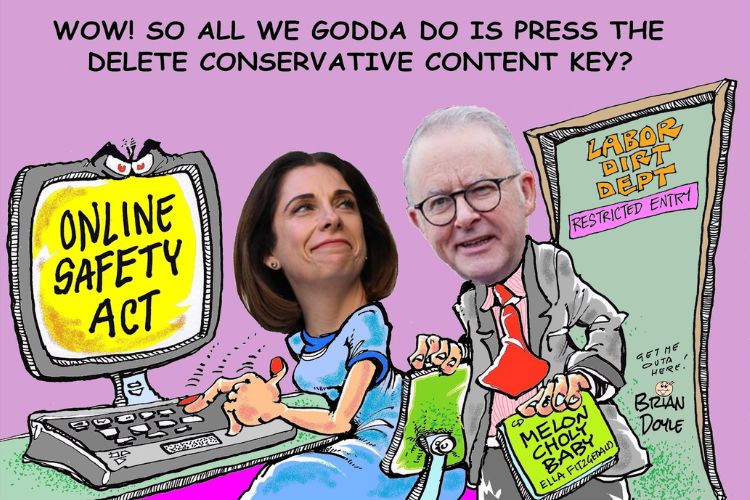
Australia’s proposed digital duty of care laws promise greater online safety and increased user control by switching off algorithms, but critics warn they could give ministers sweeping powers to restrict lawful content and threaten free speech.
A Million Women Movement Marks Second Anniversary: “Look What the Lord Has Done! Ishtar Has Fallen!”
16 October 2026
2.8 MINS
Two years after A Million Women gathered in Washington for ten hours of prayer and fasting, organisers point to victories they believe reflect God’s answers to intercession.
16 October 2026
2.6 MINS
Euthanasia accounted for 4% of all deaths in Belgium in 2025, with growing numbers involving people who were not terminally ill, dementia patients and psychiatric conditions.



Thanks Mark, a fascinating history with present-day cultural implications.
A brave mark of resistance which if they were captured by Muslims meant their death because they could not be used as slaves or wives sporting the symbol of the cross, etc on their skin. A brave song by a Croatian band to highlight the danger Muslim migration poses to Europe , ie =conquest. Wake up , Australia there is another contingent of ISIS brides and their progeny arriving tomorrow.
This article is Islamophobic. Shame on you for spreading such un-Christ-like fear and suspicion.
Islamophobia is a sensible position for any Christian concidering Islam’s espoused aims concerning our religion and culture – if you are not worried about the growing influence of Islam, then you are burying your head in the sand – it’s not like they are subtle about what they want after all.
Any country or culture that has an evil ideology wanting to infiltrate into another nation is from the pit of hell, stay in your own land where you belong, never come to a peace loving nation, country or city that has its own moral beliefs & traditions, if you do come be
prepared to assimilate with respect to that land that has welcomed you, if not get out of our country & go home!! Enough is enough!! This problem is all over the world, may each country be brave & close their borders to those with evil intent as we are in a Spiritual Battle! Let’s stand up against all known terrorist grps & PRAY as UNITED WE STAND, DIVIDED WE FALL!! Sent without prejudice!!
It is history, Sally.
My wife and I are big Eurovision fans, get up early, score each song on a prepared list and vote for our favouries. However, I resist a lot of the underlying messaging especially “Love is Love” and the double meanings from the SBS commentators (but they are generally informative). Like Mark, I was impressed by the boldness bringing this history to light from the performance of this song but was disappointed (with what could be argued) pagan references when I actually searched for the English translation.
[Verse 1]
As you light a candle, ask your grandmother
Why she was giving birth to daughters in fear
Why so many chose the graveyard
Our mothers did not give birth to slaves
[Verse 2]
So many tears have flowed like a river
Why is history written all over again
Our sons are not subjects
Are screams from the cradle waking you up at night?
[Pre-Chorus]
Take me for yourself, Queen Earth
The soul is yours, to them I’m a body
[Chorus]
Lead me to the stars, to the shattered nests
There where, amid screams, they send off soldiers
Lead me to the stars, far from the gazes
Andromeda
[Verse 3]
All the scars carved down to the bone
No mother will forgive you
On the table of shame, the gold from necklaces
While they wash their hands in the blood of our wounds
Andromeda
[Pre-Chorus]
Take me for yourself, Queen Earth
The soul is yours, to them I’m a body
[Chorus]
Lead me to the stars, to the shattered nests
There where, amid screams, they send off soldiers
Lead me to the stars far from all the gazes
Andromeda
Excerpt from https://genius.com/Genius-english-translations-lelek-andromeda-english-translation-lyrics