


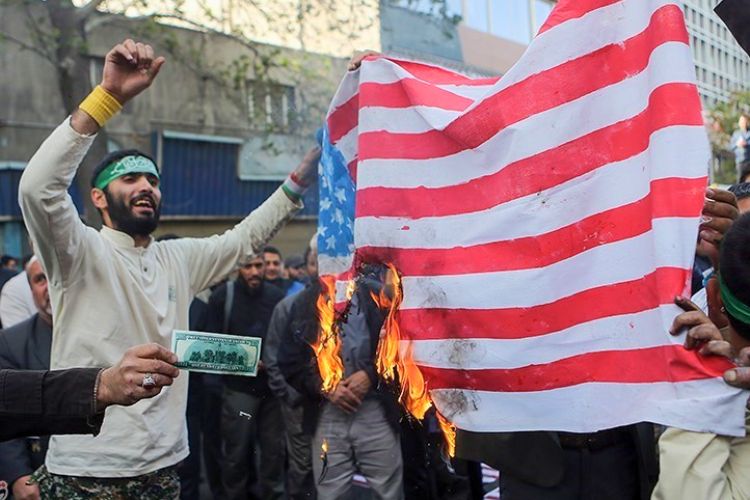
Zealots Don’t Change: A USA-Iran Peace Deal?
Trump is calling it peace. Iran is calling it progress. History suggests it’s neither.
Zealots don’t stop being zealots just because they sign a piece of paper.
That’s the first thing worth remembering as Donald Trump celebrates what he’s calling a peace deal with Iran.
Peace deal.
Those two words are doing a lot of heavy lifting.
Because when you look beyond the triumphant announcement — on Trump’s 80th birthday no less — what we actually have is something far less impressive.
An Agreement to Begin Agreeing
At best, this is an agreement to pause hostilities while everybody gets what they want.
Trump needs oil flowing through the Strait of Hormuz because the global economy runs on energy, and voters have an annoying habit of noticing when petrol prices spike.
Iran needs access to frozen assets and sanctions relief because revolutionary slogans don’t pay government salaries. Or fund terror proxies.
So both sides have found common ground.
Trump gets stability.
Iran gets cash.
The rest of us get told it’s peace.
Except it isn’t…
The most important detail in the entire arrangement is the one hidden beneath the headlines: the real negotiations haven’t happened yet.
They’re scheduled to occur over the next 60 days.
Think about that for a moment.
The grand achievement being celebrated today is essentially an agreement to have meetings.
It’s the diplomatic equivalent of announcing your engagement before you’ve actually asked the girl whether she’d like to get married.
The difficult questions remain exactly where they were yesterday.
Iran’s nuclear ambitions remain unresolved. They’ve agreed not to pursue nuclear weapons. Do we trust them?
They’ve not yet agreed to hand over the 500kg of enriched uranium they still possess. Trump says the “dust” is harmless. Okay.
Details of sanctions relief remain unresolved.
Verification mechanisms remain unresolved.
Even the final terms remain unresolved.
The deal itself explicitly creates a period of negotiations to settle those issues.
Why Iran Can’t be Trusted
And that raises an obvious question.
Do we really believe the Iranian regime is suddenly going to negotiate in good faith around a boardroom table?
This is the same regime that has spent decades funding proxies across the Middle East, chanting “Death to America” and treating international agreements less as binding commitments and more as temporary inconveniences.
The ayatollahs didn’t wake up one morning, look in the mirror and decide they’d rather be Switzerland.
Their objectives haven’t changed.
Their ideology hasn’t changed.
Their view of the West certainly hasn’t changed.
The only thing that’s changed is the balance of incentives.
That’s why calling this peace feels premature.
A ceasefire, perhaps.
A pause, certainly.
A tactical timeout while everyone regroups and reassesses. Absolutely.
But peace requires a genuine change in intentions.
This looks more like a change in circumstances.
Israel and Hezbollah
And then, there’s Israel.
And this is where the deal becomes particularly awkward.
Reports indicate the agreement seeks to halt military operations across the region, including Lebanon, placing significant constraints on Israel’s ability to continue striking Hezbollah targets.
So while Trump celebrates a diplomatic breakthrough and Iran anticipates access to billions in frozen funds, Israel is effectively being told to sit on its hands and trust the process.
Good luck with that.
Trusting Hezbollah not to rearm during a ceasefire is a bit like trusting termites to respect heritage-listed timber.
It’s not impossible.
It’s just not a strategy most rational people would bet their house on.
A Quick Deal Instead of a Real Victory?
There’s another problem with this deal.
Deals are usually faster than victories. That’s why politicians love them.
A deal allows everyone to declare success and go home for dinner. A victory requires patience, sacrifice and the willingness to keep applying pressure until the other side has no option but surrender.
Trump has chosen the quicker path.
The Strait of Hormuz reopens sooner. Oil keeps flowing. Markets calm down. Headlines celebrate diplomacy rather than conflict.
But faster doesn’t always mean cheaper.
In fact, the most expensive outcome may be the one that sits awkwardly between victory and defeat.
The question hanging over this agreement is whether Trump has blinked first.
Iran was under enormous pressure. Its economy was struggling. Its regional proxies had been weakened. Its military capabilities had been exposed. For perhaps the first time in years, the regime looked vulnerable.
So why offer it a lifeline?
Why give the ayatollahs breathing space rather than forcing them to the point where they have no choice but to abandon their ambitions altogether?
History is littered with regimes that used ceasefires, negotiations and diplomatic breakthroughs the way a boxer uses the stool between rounds: not to quit the fight, but to recover for the next one.
That is the danger here.
A diplomatic bargain that allows the Islamic Republic to rebuild its finances, strengthen its position and regroup its allies will ultimately be no different from a defeat.
Perhaps worse.
Because defeats are at least honest. Everyone knows who won and who lost.
Middle-way solutions create the illusion of success while preserving the conditions for the next conflict.
And that’s the uncomfortable reality facing Trump.
No Magical Middle Option
There can be only one choice: win or lose.
Either Iran is forced to abandon the revolutionary project that has destabilised the region for decades, or it survives to continue pursuing it.
There is no durable middle ground between those outcomes.
No magical third option where the regime remains committed to the same objectives but somehow ceases to be a threat.
Trump’s best path forward would be recognising that reality. Yet this agreement appears built upon the opposite assumption.
Perhaps this deal succeeds.
Perhaps Iran abandons decades of behaviour and embraces a new era of transparency, moderation and good faith.
And perhaps the Ibis at our local park will stop raiding our bins every Thursday night.
Until then, this looks less like the end of a conflict and more like an intermission.
The shooting may pause.
The talking may begin.
But zealots rarely stop their zealotry.
I expect the Iranians to simply find new ways to pursue the same old goals.
___
Republished with thanks to The James Macpherson Report.
Image via Wikimedia Commons.
5 Comments
Leave A Comment
Recent Articles:
12 October 2026
4.6 MINS
Learn how journalists use loaded language, selective quotes and misleading headlines to shape public opinion, using a controversial report about James and Joanna Howe as a case study.
12 October 2026
3.1 MINS
The proposed livestream of Nidal Hasan’s execution has reignited debate over justice, deterrence and public accountability, with critics comparing American justice to ISIS propaganda.
12 October 2026
3.7 MINS
An EU court case over baptismal records could pit data protection laws against religious freedom, raising serious questions about whether governments can compel churches to erase sacramental history.
9 October 2026
5 MINS
During a recent dialogue between high profile legal experts, a top Australian constitutional law expert was asked if Australia should have a Bill of Rights. His answer may surprise you.

9 October 2026
1.8 MINS
Pen Power Australia has been busy confronting antisemitism and double standards, lodging letters, pursuing accountability and celebrating several important wins along the way.

9 October 2026
3.3 MINS
New South Wales healthcare workers who object to abortion and voluntary assisted dying face growing pressure, raising serious questions about conscience rights, employment and moral injury.
8 October 2026
3.6 MINS
John Anderson warns that Australia’s decline is rooted in spiritual and cultural disintegration, calling for a recovery of Christian foundations, social cohesion and national purpose.



James, detailed, realistic, objective reality, thank you. My only hope is that Trump still has a trump card up his sleeve!
Great insight and analysis
Spot on James, especially your last line.
Ideologies don’t change overnight.
James said it; the victory condition for the Islamic regime of Iran is simple. Survive.
Therefore for the US to win…
Brilliant and incisive article!!!!!!