


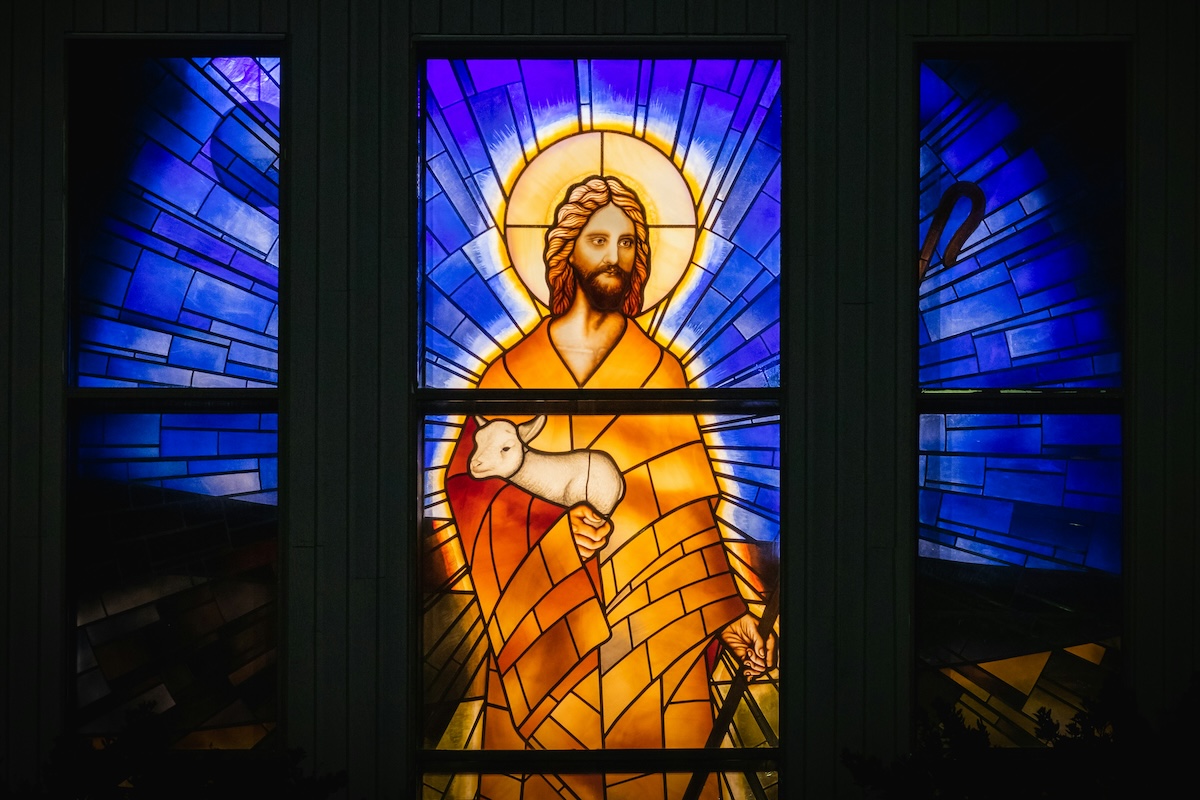
Why is Jesus Called the Lamb of God?
Fr John Flader answers a catechist’s question, showing how Old Testament sacrifice, the prophet Isaiah and the New Testament all point to Jesus as the Lamb of God.
By Fr John Flader
Q: I am a catechist, and one of my young students recently asked me why Jesus is called the “Lamb of God”. I gave her a brief answer, but can you please explain this at greater length?
A: The reference to the lamb has its origin in the Old Testament, where, from the time of Moses, lambs were offered in sacrifice.
A very important text comes in the celebration of the first Passover. On the night before they left their life of slavery in Egypt, the Israelites were to slaughter and eat a one-year-old lamb without blemish, and they were to sprinkle its blood on the doorposts and lintels of their houses so that the angel of death would pass over their houses and not kill their firstborn sons (cf. Ex 12:1-13).
The Passover lamb is a figure of Jesus, who was without the blemish of sin and who shed his blood and died on the Cross to free us from slavery to sin, death and the devil. As with the Passover lamb, he died so that we might live.
When the Israelites had passed out of Egypt into the desert, God commanded them to offer two sacrifices each day, and four on the Sabbath. The victim was to be a one-year-old lamb, once again a figure of Jesus, the Lamb of God, who offered himself in sacrifice on the Cross, and since then in every Mass (cf. Ex 29:39-40).
Later, the prophet Isaiah speaks of the “Suffering Servant”, foretelling the humble, willing sacrifice of Jesus on the Cross, who “like a lamb that is led to the slaughter, and like a sheep that before its shearers is silent, so he opened not his mouth” (Is 53:7).
In his trials before Caiaphas, Herod and Pilate, Jesus did not defend himself or beg for his life. He remained silent and accepted his death like a lamb.
Isaiah explains why the Servant had to suffer: “But he was wounded for our transgressions, he was bruised for our iniquities; upon him was the chastisement that made us whole, and with his stripes we are healed” (Is 53:5). Jesus is the Lamb who suffered to redeem us, to atone for our sins.
Passing to the New Testament, St John the Baptist points Jesus out to some of his disciples with the words, “Behold, the Lamb of God, who takes away the sin of the world!” (Jn 1:29).
St John was obviously inspired by the Holy Spirit to see Jesus as a sacrificial lamb who would die to take away our sins.
Later, St Paul takes up the theme of the Passover lamb and applies it to Jesus: “For Christ, our Paschal Lamb, has been sacrificed” (1 Cor 5:7).
Jesus’ suffering on earth is rewarded with his being worshipped in heaven. In the book of Revelation, there are some thirty references to a Lamb who is worshipped with great ceremony, a Lamb who is obviously Jesus Christ.
For example, “I saw a Lamb standing, as though it had been slain” (Rev 5:6), a reference to Jesus’ suffering and death. Also, the myriads of angels in heaven say with a loud voice: “Worthy is the Lamb who was slain, to receive power and wealth and wisdom and might and honour and glory and blessing” (Rev 5:12).
The early Christian writers often referred to Jesus as the Lamb of God who takes away our sins.
To cite one example, Melito of Sardis (died ca. 180 AD) said of Jesus in an Easter sermon on the Passover: “He is the lamb that was slain; he is the lamb that opened not its mouth… He was led as a lamb, and he was sacrificed as a sheep; by his burial, he ransomed us from the corruption of the earth.”
And, of course, we call Jesus the Lamb of God in the Mass. During the breaking of the bread, the people say three times “Lamb of God, you take away the sins of the world”. And before Communion, the priest holds up the host and says: “Behold the Lamb of God, behold him who takes away the sins of the world. Blessed are those called to the supper of the Lamb”.
In summary, Jesus is appropriately called the Lamb of God. Like the sacrificial lambs of the Old Testament, Jesus is the Lamb who died on the cross to redeem us from our sins.
___
Republished with thanks to The Catholic Weekly. Image courtesy of Unsplash.
One Comment
Leave A Comment
Recent Articles:
17 October 2026
3.4 MINS
Seeking the face of God means surrender, laying aside our agenda and wants. Revival begins when we want God himself more than we want the outcome.
16 October 2026
3.3 MINS
Jesus is calling us to love one another “just as I have loved you”. And if the Church does awaken to that agape (love), the world will see a great and powerful witness to Christ and his kingdom.
15 October 2026
3.6 MINS
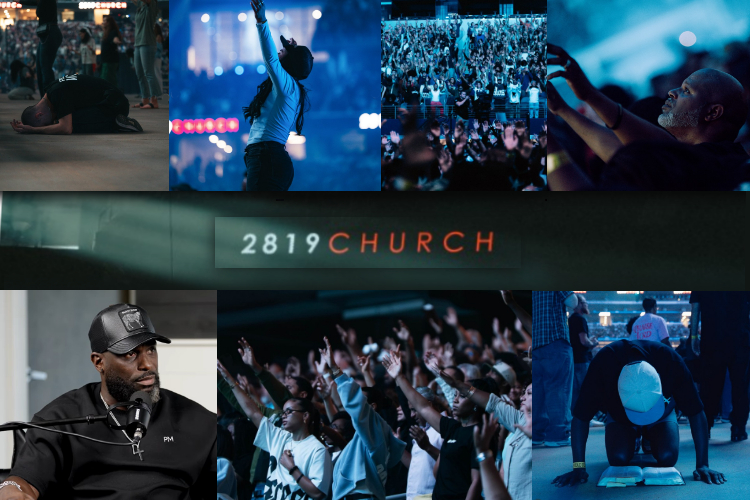
An 80,000-strong gathering in Texas signals a hunger for revival, as Pastor Philip Anthony Mitchell warns that Christian indifference could leave future generations without the faith.

15 October 2026
4.2 MINS
Many Australian Christians don’t know a single Aboriginal person. Robyn Murray argues that reconciliation begins with honest history, prayer and a shared life in Christ.

15 October 2026
7.2 MINS
A man’s death in a tiger enclosure sparks chilling online reactions, exposing a growing willingness to judge human worth by usefulness, behaviour and ideology.
15 October 2026
2.6 MINS
Before anything else, we must make prayer central. I urge the Church in Australia to awaken to, first of all, prayer.
14 October 2026
5.5 MINS
As Christianity fades from public life, Marxism or Communism offers a substitute faith built on oppression, liberation and political salvation — but at what cost?



Thanks for this. It’s even deeper than people realise. These (and other) previous articles expand on understanding the importance of Passover
https://dailydeclaration.org.au/2026/04/01/passover-last-supper/
The Last Supper was a Passover meal. Tonight, 1st April 2026 (Hebrew 15th of Nissan, 5786) is the start of the Passover feast. So, let’s explore the awesome parallels between Passover and the Last Supper.
https://dailydeclaration.org.au/2025/04/15/heavenly-substance-the-eternal-reality-of-communion-and-passover/
During these holy seasons of Passover and Resurrection Sunday, I would like to reflect on the phrase the Lord gave me, “Heavenly Substance”. When we partake in communion we are partaking of the eternal, slain Lamb.