Are You Being Shaped By This Subversive Ideology?
You see it in the growing phenomenon of ‘cancel culture’, where people are ‘cancelled’ for saying things that were once considered common sense.
It manifests itself in the school classrooms, when kids are taught that gender is ‘fluid’. It drives the defacing and tearing down of statues, even of heroic figures like Lincoln and Churchill.
And you see it in phrases like ‘lived experience’, ‘white privilege’, or ‘heteronormativity’.
All this is part of a new ideology that’s shaping millions of Westerners (including Christians), often without their realising it. This ideology was formed in the ivory towers of academia, but is now going mainstream. It undergirds movements like Black Lives Matter, LGBTI movements, and increasingly, the Democratic Party of America.
It’s an ideology with real world consequences.
It demands justice for those it views as oppressed, and compensation from those it views as oppressor. Its sees Western civilisation (and Biblical Christianity) as a source of bigotry and oppression. It’s suspicious of western values such as universal human rights, free speech, and religious freedom.
And because it’s gaining mainstream acceptance, Christians and churches are not immune from its subversive influence.
What is this ideology?
It’s known as ‘Critical Theory’.
Uncovering The Ideology of Critical Theory
While I’ve heard about critical theory before, I’m reading a new book that closely examines critical theory, called ‘Cynical Theories — How Universities made everything about race, gender and identity — and why this harms everybody’, by authors Helen Pluckrose and James Lindsay. Pluckrose and Lindsay are both Left-leaning secular scholars. In Cynical Theories, they uncover the history and teachings of Critical Theories, which are concerned with ‘revealing hidden biases and underexamined assumptions, usually by pointing out what have been termed “problematics,” which are ways in which society and the systems that it operates upon are going wrong’ (13-14). In other words, the ideology of critical theory aims to diagnose what’s wrong with society, and provide a solution.
But it does this in a radically new way.
Critical Theory Is Turning the World Upside Down
In their new book, Pluckrose and Lindsay write:
‘We, everyday citizens who are increasingly befuddled about what has happened to society and how it happened so quickly, regularly hear demands to “decolonise” everything from academic curricula to hairstyles to mathematics. We hear laments about cultural appropriation at the same time we hear complaints about the lack of representation of certain identity groups in the arts. We hear that only white people can be racist and that they always are so, by default. Politicians, actors, and artists pride themselves on being intersectional.
They continue:
Companies flaunt their respect for “diversity,” while making it clear that they are only interested in a superficial diversity of identity (not of opinions). Organisations and activist groups of all kinds announce that they are inclusive, but only of people who agree with them. American engineers have been fired from corporations like Google for saying that gender differences exist.’ (64-65)
What’s Happened to the West?
If you’re seeing these changes, and shaking your head at these developments, you’re in good company. As Pluckrose and Lindsay argue:
‘Almost every day, a story comes out about somebody who has been fired, “canceled,” or subjected to public shaming on social media, often for having said or done something interpreted as sexist, racist, or homophobic. Sometimes the accusations are warranted…However, increasingly often, the accusation is highly interpretive and its reasoning tortuous. It feels as though any well-intended person, even one who values universal liberty and equality, could inadvertantly say something that falls afoul of the new speech codes, with devastating consequences for her career and reputation. (14-15)
They continue:
For most of us, [these changes are] confusing and alarming. Many people are wondering what’s happening, how we got here, what it all means, and how (and how soon) we can fix it and restore some common ground, charity and reason… because these ideas offer the appearance of deep explanations to complicated problems… they have successfully morphed from obscure academic theories — the sorts of things only intellectuals can believe — to part of the general “wisdom” about how the world works.’ (65)
Why Critical Theory Is Subversive
It uses the same vocabulary, but has a different dictionary.
What makes this new ideology dangerous isn’t merely that it attacks values that both secular westerners and Christians value (e.g. freedom of speech, universal human rights), but also that it’s subversive. That is, it uses terms that we as Christians use — such as ‘justice’, ‘oppression’, and ‘racism’ — but then redefines them. As the authors of Cynical Theories put it,
‘[T]hey speak English, but they use everyday words differently from the rest of us.’ (15)
As Christians, we know that words matter. Words convey meaning, and shape our view of the world. Which means we need to be clear about our terminology, else we risk being influenced by God-less ideologies, including Critical Theory.
Engaging With Critical Theory
Whenever we examine another belief system — be it another religion or secular ideology — we do well to understand it on its own terms. There shouldn’t be any room for critiquing a misrepresentation of the belief/ideology.
Moreover, we should also look for the kernel of truth in the belief/ideology. As dangerous as these Critical Theories may be, they may still tell us some things that are true about our world — and we can thank God for whatever is true (and make use of it).
Finally, we should look to see why it’s growing in popularity (particularly among young people): why is it resonating with them? What does it offer? And how does the Gospel answer those longings?
That’s what I’ll be doing over the next little while: I hope to blog through parts of the aformentioned book Cynical Theories, and see what we can learn about this new ideology taking the western world by storm.
___
Originally published at AkosBalogh.com
Photo by Lennon Cheng on Unsplash.
Recent Articles:
11 November 2026
3.2 MINS
National Forgiveness Week could offer Australia a fresh pathway to genuine reconciliation, bringing Aboriginal voices, churches and communities together to rediscover the transformative power of forgiveness.
11 November 2026
1.9 MINS
The Australian Christian Values Checklist for the 2026 Victorian State Election is now available. This simple, practical resource compares political parties on issues of particular concern to Christians, including life, faith, family and religious freedom.
11 November 2026
3.3 MINS
Indigenous Friends of Israel International warns that antisemitism must be confronted across the political spectrum, defending Jewish Australians while protecting legitimate criticism and freedom of expression.
9 November 2026
3.1 MINS
John Anderson has repeatedly called for Australians to confront our cultural and moral decline and put courage over complacency.
9 November 2026
12.5 MINS
The election of transgender candidates and Tasmania’s sweeping conversion-practices ban illustrate a civilisational crisis. While the 'anti-conversion' bill has already passed the lower house, one MP's opposing speech was a clarion call for sanity in a time when people had sadly lost their minds.
6 November 2026
3.7 MINS
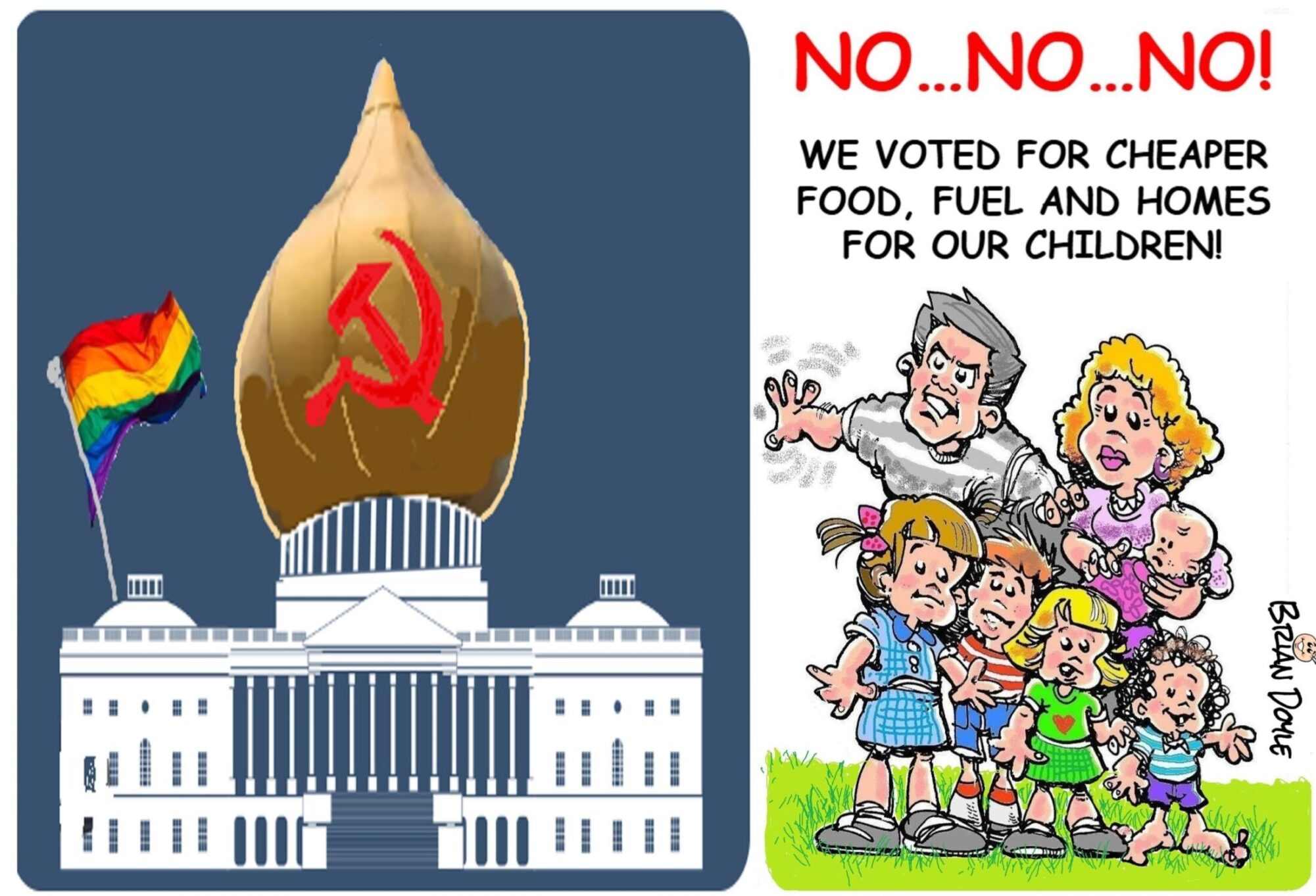
Trump's MAGA movement made serious inroads in the culture war despite the mistakes that led to the Midterms electoral wipeout. Protesting against fuel prices and an ongoing war in Iran, most people are oblivious to the all-out assault on Western civilisation.

4 November 2026
3.7 MINS
Victoria’s Labor Government has written off a $6 million loan to rescue the financially struggling Pride Centre, leaving taxpayers to foot the bill for another government-funded bailout.