



Situational Awareness: A Crucial Life Skill
Situational Awareness (SA), or situation awareness, is the ability to recognise and understand a situation or environment and the capability to identify and assess any potential threats and taking the necessary steps to address them. (Isarsoft)
A while back, I was watching Mentor Pilot describe a tragic aviation disaster in Brazil, South America. The presenter used the term ‘situational awareness’ in the context of the pilots not knowing where they were due to their lack of situational awareness. On Varig Flight 254, 3 September 1989, sadly, twelve died, but miraculously, 42 passengers and crew survived.
We are not all pilots
No, we are not, but in one sense, yes, we are! We are all seeking to navigate life. We are responsible for our own safety and getting the satisfaction of arriving at our objective, while at other times, we are responsible for the lives and destinations of others — our family, our businesses, our community, or in the case of national and global leaders, we might be responsible for millions.
Let’s examine the idea of situational awareness. As our situational awareness can impact the lives and futures of others as well as ourselves, our ability to identify and assess any potential threats, and our ability to take the necessary steps to address them, may diminish the impact of a tragedy.
How our individual and societal situational awareness (SA) might have been weakened
Here are just six issues, in no particular order, that may have conspired to weaken our SA.
1. Work-Life Imbalance
Most of us would say we don’t have our life in balance. What does that mean? Most of us are primarily focussed on work. That takes our energy, interest and understanding away from our own situation. We become detached from our own reality as work consumes us. Consequently, our SA is diminished.
2. Craving Safety
Our society is ruled by devices designed to ensure our safety. The seatbelt, CCTV, home alarm systems with cameras feeding directly to our mobiles — the list is endless.
Our governments are obsessed with their ‘responsibility’ to keep us safe, safe from bad guys with their gun laws, safe from cyber-attacks with the erosion of our privacy, and safe from diseases with strict medical protocols and compulsory or coerced vaccinations. Noble, even laudable aims at times, but our SA suffers, as we no longer need to be responsible for ourselves and our loved ones, as ‘they’ will protect us; that’s ‘their job’, or so they tell us!
3. Miseducation
Think back: education used to be about the love of learning, satisfying our curiosity and fulfilling our dreams. Now it is the mass production of compliant automatons who can be assigned various roles in society based on the specific accreditation(s) they possess.
Education is now a one-size-fits-all so that no one can claim discrimination. Consequently, each level of achievement has been devalued. Soon, we will need a doctorate to drive a forklift!
The practice of critical thinking is unheard of among our youth. Education is now about what we know, as opposed to being taught how to learn. The consequence: no more curiosity and questioning, and our SA takes a further dive.
4. Incessant Entertainment
Everything is now judged by how entertaining it is. If it’s hard work, it’s bad! From the cradle to the grave, we are being pacified by entertainment. Parents and teachers must not train and discipline their young any longer; they must entertain them, and they can’t be told they are ever wrong!
As adults, let’s measure our productivity to entertainment ratio. The digital screen has captivated all of us, all day and all night long. The result: passivity at best, unconscious sleepwalkers at worst. Our SA has taken another hit.
5. Headphones and Earbuds Everywhere
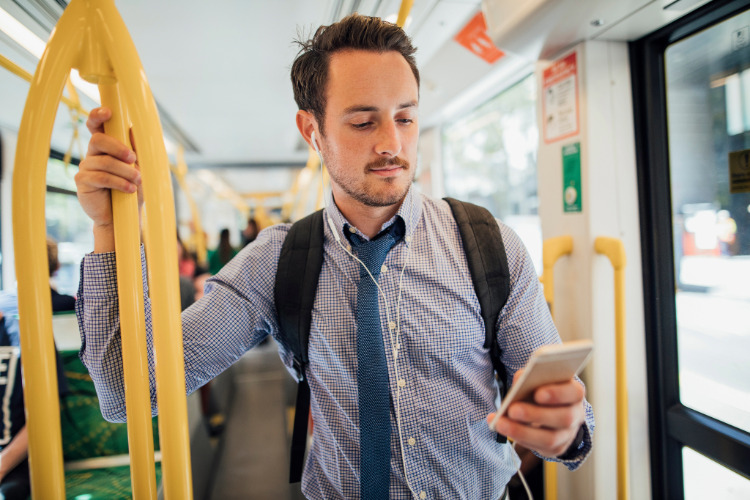
Perhaps this is the most visible assault on our SA. Not just listening to podcasts or music while out jogging, commuting or shopping, but engaging in long protracted conversations with loved ones or clients, while out in public spaces. Those not protected by ear implants or ear coverings must listen to these conversions, often with extra loud voices, as the input into the ears makes the respondent shout louder.
The consequence is that those engaged in this activity cannot hear the scream for help from someone in distress. They can’t participate in a polite communal ‘hello’ or ‘how are you’. They don’t hear the bus mounting the curb that wipes them out. Their SA is seriously compromised. In addition to the obvious physical impairment to the participant’s SA, they are saying, my life is more important than anyone else’s, I have zero interest in or empathy for anyone else.
6. Multiculturalism
I am in no doubt that safe countries should provide sanctuary for victims of tyrannical dictatorships. But Western nations’ version of multiculturalism has contributed to our individual and collective decline in SA.
Because of our concern to celebrate diversity by supporting the new migrants in maintaining their cultural distinctiveness by backing up their use of their native tongue, we have increased the individual and collective isolation and insulation from traditional Australian life. The new migrants now only look out for their own, and Australians are now more sceptical of them.
If we had insisted that reasonable fluency in Australian English should be the language required of all migrants, we would have had a much more cohesive society, and SA would not have been eroded.
~
There are countless other factors eroding our SA. With these examples, I am seeking to justify my belief that, individually and collectively, we are not doing well in SA — with the consequence that many things have changed in our environments, and many of us have not seen these changes coming. We have been convinced that we were travelling north when, in fact, we have been travelling due west, to use the illustration of Mentor Pilot describing Varig Flight 254, 3 September 1989.
How our individual and societal situational awareness (SA) can be strengthened
10 Ways to Improve Your Situational Awareness with Navy SEAL Chris Sajnog (2020)
In this video, Chris outlines ways to help our SA in the context of staying safe and keeping others safe in public places. All excellent ideas and strategies, but I want to broaden their application. Watch the video and come with me:
1. The S.E.A.L. Loop (See/Sense, Evaluate, Act, Learn)
As an educator I love this, it’s a feedback loop, not a one stop shop. God has graced us with at least six senses:
You’ve probably been taught that humans have five senses: taste, smell, vision, hearing, and touch. However, an under-appreciated “sixth sense”, called proprioception, allows us to keep track of where our body parts are in space. (Alec Nickolls, 2020)
From the SA standpoint, we would all agree that ignoring some of our senses would be silly. We should all want to know as much as possible about our environment, so that we can then track through the whole ‘SEAL Loop’. Practising this technique would be like opening a window that had previously been permanently closed. This new perspective might be most enlightening.
2. Practice Your Positioning
Chris talks about making sure we are in a good spot to see what’s going on. Makes sense. But all too often, we can be so absorbed with our own thing that we have little or no interest in what’s around us. We simply assume it’s the same as always — why would it change?!
I think this technique trains us to expect change, anticipating the unexpected. For me, this one is not just related to whether our eyes are open; it is also tuning our ears to hear, and perhaps operating our ‘seventh’ sense, our intuition, when previously we might not have considered using it. My wife reminds me that women are much better at this than men!
3. Use All Your Senses
I have already referred to this point, but here, I would like to add our spiritual sense.
It seemed good to us, being assembled with one accord, to send chosen men to you with our beloved Barnabas and Paul, men who have risked their lives for the name of our Lord Jesus Christ. (Acts 15: 25-26)
Here, the apostles were not just using their natural senses, but their spiritual sense as well. Notice here, that there was agreement, one accord, in the local community. So, let’s make a life habit of tuning in to the Holy Spirit to improve our SA.
4. Know Two Exits
Whenever we get on a plane, we are encouraged to know the locations and accessibility of the exits, plural. Hopefully we will never have use one, but let’s make a life habit of observing suitable exits.
What about knowing our exits from a group of friends we might be falling in with, rather than having to make a frantic search for an exit in a crisis?
My children are always reminding me that the world is not the same as it was in my day when I am trying to suggest my exit strategy that dates back to the 1960s! Perhaps my exit is now out of date; perhaps that gate is bolted. So, I am now looking for modern alternatives, as a boost for my SA.
5. Have a Full Field of View at All Times
Chris describes this as having our heads up and always on a swivel! So that we are not engrossed in our own world to the exclusion of knowing what’s going on around us.
One of my biggest concerns with our SA is that it is so natural to settle into the comfort and security of our known environment. But the last few years have woken me up to the exponential rate of change. And without good SA, we can become oblivious to these changes, as we don’t expect to see them.
6. Meditation
Let’s clear out the clutter of our thoughts, so that we can focus on what really matters. For me, I am transposing the word prayer for Chris’ meditation. I am not suggesting we simply pour out a list of legitimate needs to God in prayer.
No, I am saying that we should find a quiet location, and an appropriate time, and thoughtfully, intentionally, empty the room of our mind and heart of clutter so that we can hear the voice of the Lord clearly. Then we can say with Samuel, speak Lord, for your servant hears You. (1 Samuel 3:7-11)
I am convinced that living in an attitude of prayer, reminds us that without the Lord, we can do nothing, at the same time as opening the channel for the supernatural power of God to flood our world, and the lives of those around us, which will give us a supernatural enhancement to our SA.
7. Play Games
Playing games is a great way to learn — any educator will tell you that! But why is that? I think that a big part of it is that we are playing in a team, a group, a family, or with a friend, and the social interaction improves the cognitive processes. It’s as if we have been designed that way!
Another benefit of playing games is that the process takes us out of ourselves and drives us to focus our attention on our environment. We become more balanced, more fun to be around and less self-absorbed, as we build our SA.
8. Practise People-Watching.
This can be thought of as an extension of the playing of games. But here, you don’t need interaction with others; you can just focus on developing your powers of observation.
I do this all the time in a café. I particularly enjoy trying to work out the relationships between groups. For example: is that mum and daughter, is that father and son? In a restaurant, my wife and I play this together competitively, trying to work out the dynamics of a different table and why they have booked this particular restaurant.
9. Estimate Distances and Time.
As drivers we have to do this all the time, but I find that some of us are not very good at estimating how long a task will take, with the consequence that our planning and productivity are below par.
Chris’ focus here is on the importance of judging safe distances between you and a potential threat. This distance has a direct correlation with the time you have to react to that threat. But in the broader context of improving our SA in general, being aware of spatial distances and the time interval between events improves our perception of society at large.
10. Take Care of Your Body
One of Chris’ key points is the importance of enough sleep. Going back to the story of Varig Flight 254, 3 September 1989, a pilot, especially an intercontinental pilot, must watch their sleep routine very carefully, as lack of sleep dramatically impairs SA.
However, in the Brazilian air disaster we looked at, there was no indication that lack of sleep was an issue. Rather, I think it may have been more to do with the age and experience differential between the two pilots, on top of the generational sensitivities in that country at that time.
~
I hope these notes may have inspired someone to be more intentional about developing their SA. I think my SA is probably quite good, but I am sure, it can be better. I know for sure there are things that I miss.
A little while back, my piece on “The Anatomy of a Robbery” was published here in The Daily Declaration. There, I sought to analyse what happened when a pickpocket took my wallet from me while I was travelling on a Paris Metro. My SA told me that I was vulnerable, but my physically confined situation with no exits, meant I was powerless to respond.
Why is Situational Awareness so important?
Sadly, the world is becoming increasingly less safe. This is particularly true for Jews across the Western world, and I suspect it will be for Christians soon. So, for all of us, I am sure that improving our SA would be a good strategy. However, this is not why I have written this piece.
Rather, my concern is about how good our SA is individually and as a society regarding the values and standards we hold and tolerate in our environment. Think of the metaphor of the frog being poached in gradually heated water.
It is interesting that if most people accept something, we tend to accept it too. We don’t engage our SA to ask probing questions. For example, most people still see the Labour Left as standing up for the battler and the underdog, while the Conservative Right (Liberal/Nationals Coalition) stands up for traditional family values, the Judeo-Christian ethic and a fair go for all. To me, both sides have come adrift from their moorings as they both now preach their woke worldview. If we fail to apply SA, we are accepting their lies.
I think there are three types of people in the world today.
- The satisfied – very low SA. Those who ascribe to the worldwide spread of woke ideology. Most of these people have their roots in a deep sense of justice for the downtrodden, are opposed to discrimination and want to do all they can to protect our vulnerable ecosystems.
- The disengaged – widely variable or medium SA. Those who are aware of woke ideology, often dismissing it with mild humour, but have settled for what will be will be. However, they believe that their individual submission and compliance are for the greater good, so they don’t ask probing questions. They also believe that globalism is the only answer to our problems.
- The engaged – high SA. Those who no longer take the one-dimensional narrative at face value, but want to hear the other side. These are most likely labelled as narrowminded conspiracy theorists, intolerant, racist, and far too critical.
The true divide is now between the globalists and the nationalists. Increasingly, the engaged are supporting so-called radical right-wing populists who are seeking to champion national sovereignty, national democracy and the upholding of traditional, Judeo-Christian Western values.
I suspect that in most Western nations, the satisfied and the engaged are small in number and, perhaps together, might approach half the population of any given Western nation. I suspect the largest group is the disengaged.
I have written this piece with the disengaged in mind, as I think they are the ones whose situational awareness (SA) has been clouded the most by our modern lifestyle. It seems to me that if the engaged could engage the disengaged, the balance might be shifted.
Let’s all develop our situational awareness and our appreciation for the importance of situational awareness to each individual and to society at large. Because:
Jesus answered: “Watch out that no one deceives you. For many will come in my name, claiming, ‘I am the Messiah,’ and will deceive many. You will hear of wars and rumours of wars but see to it that you are not alarmed.
Such things must happen, but the end is still to come. Nation will rise against nation, and kingdom against kingdom. There will be famines and earthquakes in various places. All these are the beginning of birth pains.”
(Matthew 24: 4-8)
___
Image courtesy of Adobe.
2 Comments
Leave A Comment
Recent Articles:
28 October 2026
4 MINS
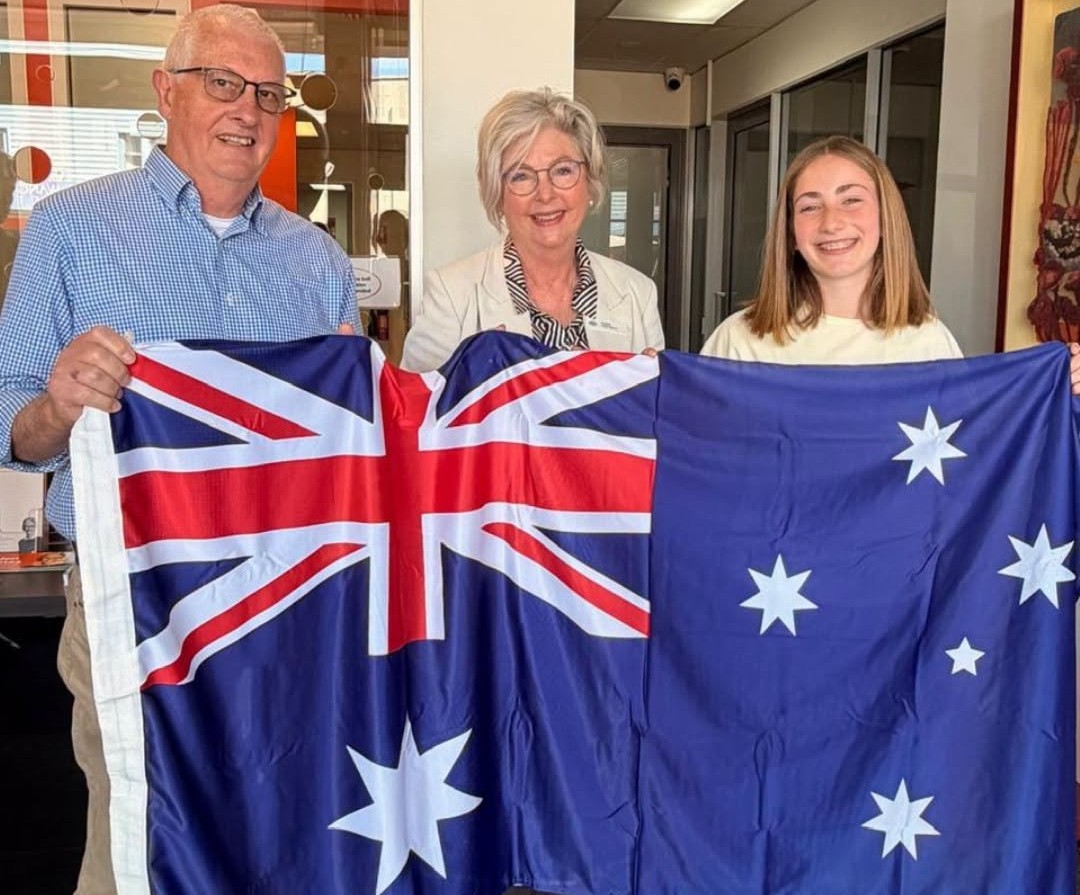
The assault on Helen Haines highlights Australia’s growing political hostility. Recovering civility requires personal accountability, respectful debate and a renewed commitment to Christian moral foundations.
28 October 2026
5.1 MINS
Germany’s proposed social media rules would give government-approved news outlets preferential visibility with social media algorithms, raising concerns about state influence over online information and the future of digital freedom.
28 October 2026
4.4 MINS
Christian commentator Samuel Sey’s ICE arrest has sparked fierce controversy, exposing deep divisions among conservatives as supporters call for prayer, compassion and a swift legal resolution.
28 October 2026
4.4 MINS
With biblical illiteracy on the rise, understanding why Jesus came is more important than ever. Fifteen New Testament passages reveal the heart of His mission.
28 October 2026
1.8 MINS
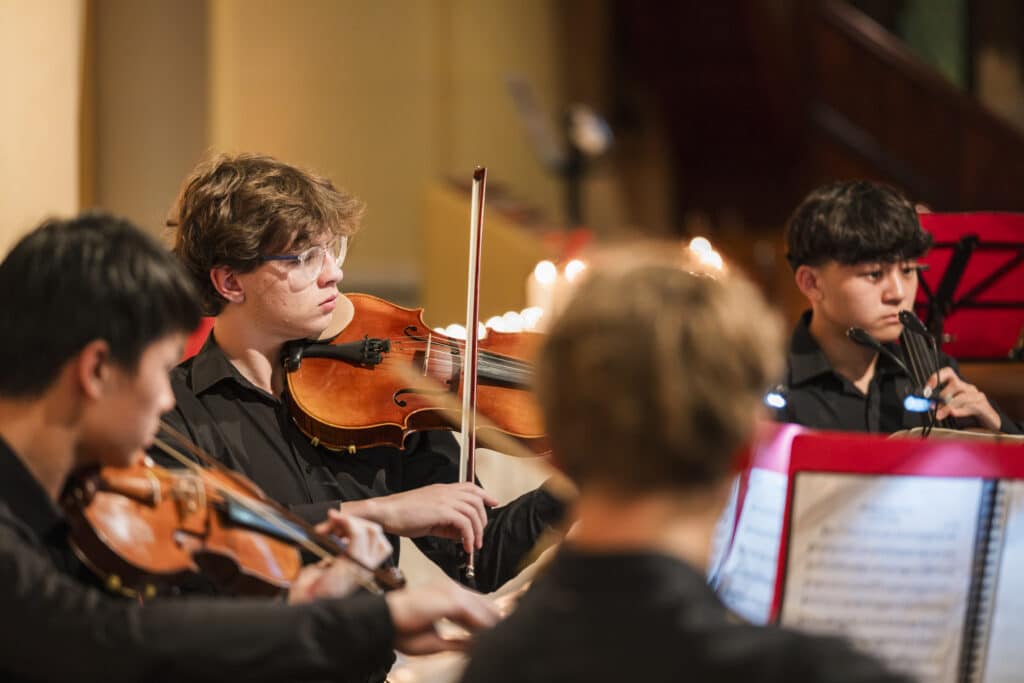
A candlelit performance of Mozart’s Requiem at Sydney Town Hall will honour 21 Australian Army nurses murdered in the Bangka Island massacre, along with generations of military nurses.
28 October 2026
3 MINS
When we live in God’s presence, anchored in his Word and secure in Christ, we can stand unshakeable amid life’s challenges.
27 October 2026
25.2 MINS
Labor’s Digital Duty of Care Bill threatens free speech, empowers covert online surveillance, and imposes potentially burdensome regulations on Australian businesses.



Thanks Jim. This is a thoughtful article, which raises points I had not considered before. It seems I may need to adopt some of your suggestions to improve my situational awareness.
Stephen, thank you for reading this ‘long’ piece. I am sorry it turned out so long, that was not my intention. I am exploring the correlation between folk who are naturally high in SA and are ‘safe’ on the one hand and those who don’t buy the ‘standard narrative’.