



Tale of Two Laws: The Unborn in Violent Contradiction
“It was the best of laws, it was the worst of laws, it was the law of choice, it was the law of consequence…”
The First Law: Freedom to Choose
Seven years ago, Queensland passed the 2018 Termination of Pregnancy Act, a landmark piece of legislation that legalised abortion on request up to 22 weeks’ gestation, and beyond that with the approval of two doctors, effectively up to birth.
Advocates praised it as a modern recognition of reproductive rights, a step toward compassionate healthcare, and an affirmation of a woman’s bodily autonomy. It was, for many, a law of progress and empowerment.
The Second Law: Protection of the Unborn
Yet within Queensland’s Criminal Code, another statute remains. Section 3131 states that it is a criminal offence to “cause the death of an unborn child” during an assault on a pregnant woman. The punishment? The same as for killing a born human being—up to life imprisonment.
Here, the unborn child is not abstract. It is defined, protected, and given legal value in its own right.
The Paradox
Two laws. Two realities.
In one courtroom, a baby at 38 weeks can be legally aborted under medical justification.
In another, the same baby—if lost due to a violent crime against the mother—is treated by law as a murdered person.
This is not simply a clash of policy. It is a clash of legal definitions, of moral frameworks, of who is protected and when.
The Problem
To underscore this paradox, there is a problem with the underlying matter of intent.
One law concerns the death of an unborn child as a result of a violent criminal act.
Even though there may have been no intent to kill that unborn child, under this law, the offender can face life imprisonment!
Compare this with the other law, which allows unborn children to be aborted up to birth.
In every one of these cases, there is the clear intention to kill the unborn child, yet under that law, the perpetrators do so with complete judicial immunity.
Quite literally, every abortionist gets away with murder!
The Question on the Unborn Child
How can the same government define an unborn child as life worth protecting in one case, and in another, as a medical option to be legally ended?
Can we affirm women’s agency while maintaining legal consistency regarding the value of unborn life?
What does it say about our collective conscience when the value of a child depends not on their humanity—but on the context in which they are harmed?
Conclusion
The Tale of Two Laws is not merely a legal anomaly. It is a moral mirror, asking us to look squarely at what we believe about life, freedom, and justice when these collide.
Like the divided cities of Dickens’ novel—London and Paris—these two laws may coexist, but not without tension. They expose a fracture in our legal and ethical reasoning.
And perhaps the greater question is not which law we should uphold—but whether we have the courage to confront the disquieting contradiction between them.
___
Image via Adobe.
- Queensland Criminal Code, Section 313(2): “A person who unlawfully assaults a pregnant woman and thereby causes the death of a child before its birth commits a crime.” [↩]
3 Comments
Leave A Comment
Recent Articles:
18 October 2026
2.7 MINS
Every season of life belongs to Christ, and we don't retire from discipleship as we grow older. In fact, our older years hold unique gifts for the younger generations.

17 October 2026
3.4 MINS
Seeking the face of God means surrender, laying aside our agenda and wants. Revival begins when we want God himself more than we want the outcome.
16 October 2026
4 MINS
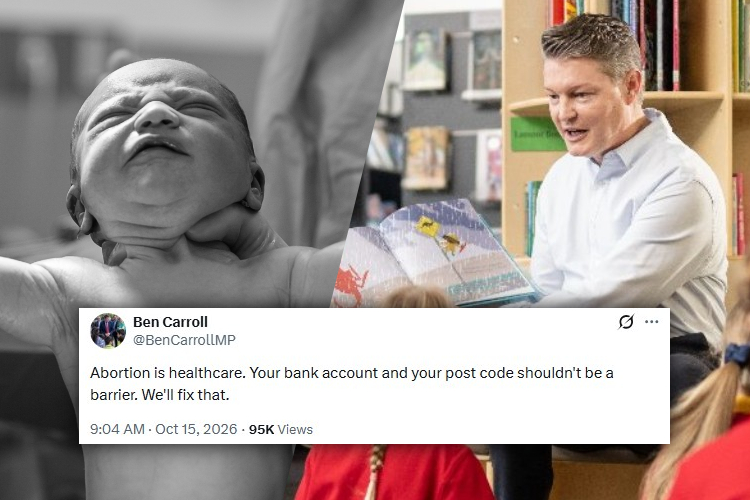
A desperate Victorian Labor Party is peddling taxpayer-funded abortions as free “healthcare”. In a shameless attempt to stay in power, they're willing to do anything — including killing the unborn and forcing taxpayers to pay for it.

16 October 2026
4 MINS
Katie Zacharia’s first days as White House Press Secretary have sparked fierce media criticism, but her remarkable testimony of surviving an abortion attempt tells a deeper story.
16 October 2026
3.4 MINS
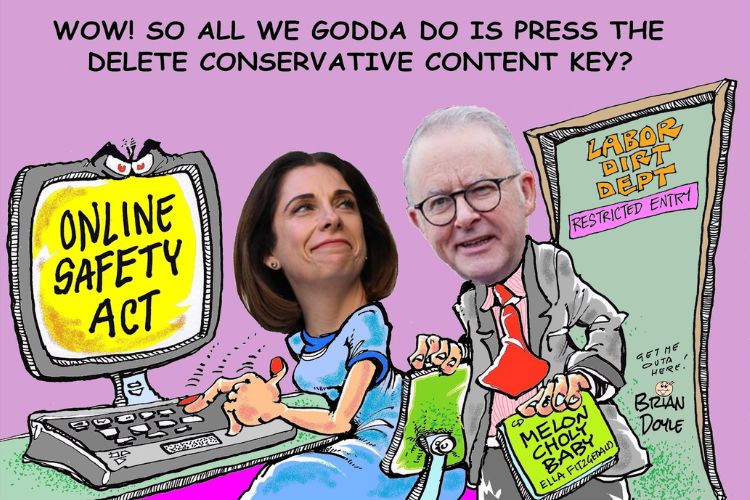
Australia’s proposed digital duty of care laws promise greater online safety and increased user control by switching off algorithms, but critics warn they could give ministers sweeping powers to restrict lawful content and threaten free speech.
16 October 2026
2.6 MINS
Euthanasia accounted for 4% of all deaths in Belgium in 2025, with growing numbers involving people who were not terminally ill, dementia patients and psychiatric conditions.

16 October 2026
5.2 MINS
Christa Pike’s botched execution has sparked outrage across America, but critics argue that the same concern for human dignity is denied to abortion survivors.



What does it say about our collective conscience when the value of a child depends not on their humanity—but on the context in which they are harmed?
Thank you Wayne.
Jesus said I came to give Life!
Thank you Wayne.
Until we bring back God’s Word as the bar of objective truth, we will continue to have these strange, seemingly unresolvable disconnects : my opinion and your opinion will pass each other as ships in the night. With no apparent means to connect meaningfully.
We have forgotten our God.
But He has not forgotten us – we will seek Him and find Him when we seek Him with all our heart.
May this be the place we are arriving at even today.
I see this contradiction also in the ads I have been getting for the “every moment matters campaign” endorsed by the Australian government.
https://everymomentmatters.org.au/
Why does the Australian government deem that a zygote is worthy of protection from Fetal Alcohol Syndrome but not from a scalpel or lethal injection followed by getting torn away from its life support?