


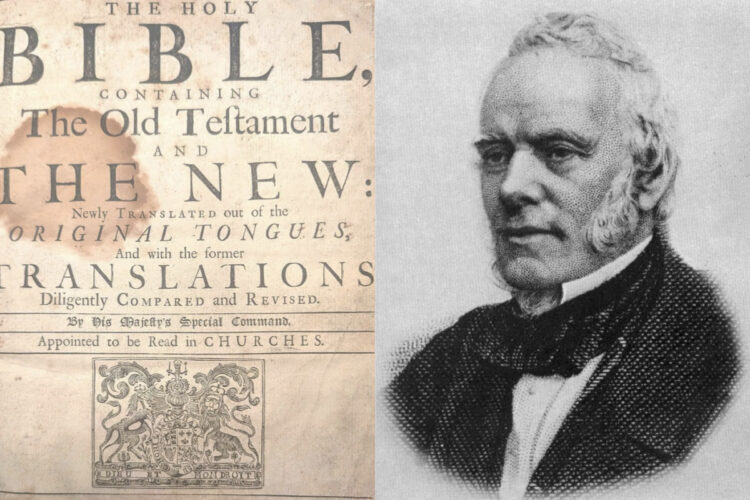
Hidden Treasure: Op Shop Unearths George Fife Angas’ 1726 Bible — and SA’s Spiritual Roots
Found in a humble donation bag, George Fife Angas’ 1726 Bible offers a vivid reminder of South Australia’s Christian heritage, and the faith that would renew our nation — if we let it.
In an unassuming op shop in Mount Barker, an extraordinary artefact recently surfaced offering a powerful reminder of South Australia’s spiritual foundations.
A 1726 Bible owned by George Fife Angas — one of the colony’s Founding Fathers — was found in a storeroom by Australian Red Cross workers. As reported by Glam Adelaide:
The Bible was in a bag of donations that came into the store. The Red Cross is a secular organisation, so religious texts like a Bible can’t be sold. As a result, the staff placed it aside in the storeroom, unaware of the treasure it contained.
It wasn’t until a few weeks later, when the store manager was sorting through the items, that the significance of the Bible became clear. The handwritten annotations, dating back to 1868, [were] a strong indication of its historic value.
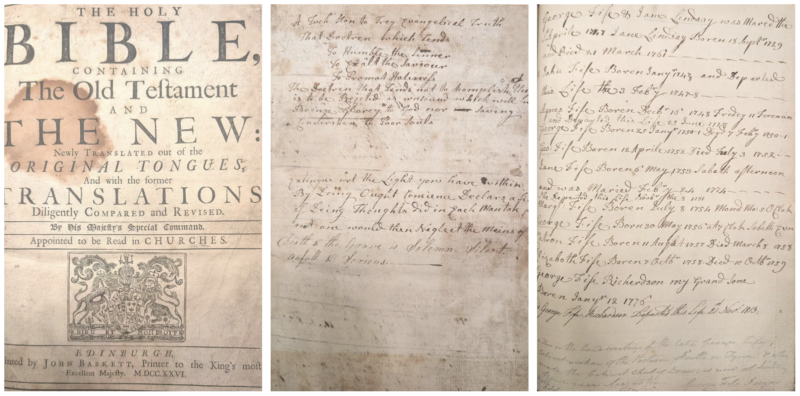
Image by Glam Adelaide
“When the staff in Mount Barker realised what they had, they knew they had to get it to the right place,” explained Brook Sclater, Merchandise and Distribution Centres Manager at Australian Red Cross.
The charity’s team made contact with state MP Cressida O’Hanlon, who helped find a new home for the Bible in South Australia’s Parliamentary Library.
“People are amazed that something so rare and important was found in a place like Mount Barker,” Brook elaborated. “It’s a great story for the town.”
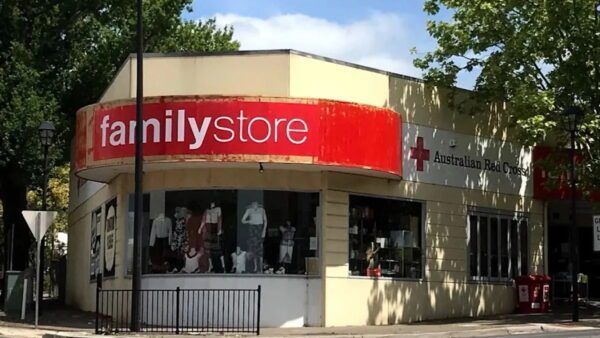
Image by Glam Adelaide
As someone who lives in the Adelaide Hills and has shopped at this very store, I share the town’s excitement — but not just for the rarity of the find.
The takeaway provided by Glam Adelaide — the only outlet yet to report on the stunning discovery — is that the 1726 George Fife Angas Bible is “a reminder that treasures can come from unexpected places, even at the bottom of a donation bag at your local op shop”.
In fact, it’s a reminder of so much more.
The Faith and Vision of George Fife Angas
George Fife Angas (1789–1879) was a prominent English businessman, banker and philanthropist, whose outsized role in the founding of South Australia is impossible to understand apart from his Christian faith.
Born in Newcastle upon Tyne, Angas came from a wealthy Baptist family and was involved in his father’s shipping and trading business, before moving to London to become a successful businessman in his own right.
In 1830s London, British reformers were floating radical new plans for a free colony in South Australia. Angas recognised a rare opportunity to shape a new society grounded in Christian liberty. Drawing on his financial resources, evangelical networks, and ties to Parliament, he helped form the South Australian Company in 1835, laying the foundations for a colony built on faith, freedom, and moral order.
Just a year later, Angas was approached by August Kavel (1798–1860), a Lutheran pastor from Prussia (now Germany) whose revivalist preaching had stirred spiritual renewal, but whose followers now faced mounting state persecution.
As my friend Warwick Marsh and I documented in our recent book Great Southland Revival, “People had travelled from far away to hear [Kavel]. Many were saved, and local ale houses were deserted as a result.” But the authorities were not so enthusiastic:
The King of Prussia soon outlawed Kavel’s brand of Lutheranism, making church services punishable by fines and imprisonment. Kavel first pled for toleration, then sought to relocate his people to Russia or America. His plans failed, but he eventually found favour with George Fife Angas (1789–1879), an English Baptist who was laying the groundwork for South Australia to become a free colony. Indeed, it was the hope of Angas “that South Australia will become the headquarters for the diffusion of Christianity in the Southern Hemisphere”.
Angas rejoiced at the news of a community of believers stirred by revival, burning with evangelistic fervour, and shaped by a strong moral ethos. To him, Kavel’s followers were more than refugees — they were the model settlers he had long hoped would shape South Australia’s future: self-reliant, hardworking, and virtuous.
Without delay, Angas set about chartering ships for the group and arranging land for their settlement in the young colony. Then, with preparations for their long journey secured:
In 1838, at their port of departure in Plymouth, Angas urged Kavel’s flock to go and establish a great nation, just as the American Pilgrims departing from the same port had done over two centuries earlier.
Almost 600 Germans arrived in Adelaide aboard four ships, soon settling in the Barossa Valley and the Adelaide Hills. They carried the fruits of revival with them, holding daily prayer meetings, founding a seminary, becoming peaceful and productive citizens, and enjoying relative success among the Indigenous Kaurna people of the Adelaide plains.
George Fife Angas on Church and State
Over a decade later, in 1851, George Fife Angas emigrated to South Australia — not simply to retire in the land he had helped envision, but to actively shape its moral and civic life.
Appointed to the colony’s Legislative Council by Governor Sir Henry Young, Angas used his position to champion religious liberty, public morality, and education — values deeply rooted in his Baptist convictions.
As a staunch Nonconformist, Angas believed that true religion must be voluntary, arising from personal conviction rather than state compulsion. Even before his arrival in South Australia, he had been instrumental in ensuring the colony would have no established church — a radical departure from the British imperial model, where Anglicanism dominated public life. This bold constitutional innovation laid the groundwork for a society founded on religious freedom, whose fruits Angas could now witness firsthand as persecuted minorities, including the Prussian Lutherans he had helped resettle, found a safe and welcoming haven.
While Angas maintained that church and state should be distinct, he was convinced that religion still had a vital role to play in public life.
Throughout his legislative career, Angas remained a committed philanthropist, investing generously in churches, Sunday schools, Christian missions and Bible societies. He fervently promoted daily Scripture reading in public schools, convinced that literacy and moral formation were inseparable.
Indeed, according to historian Douglas Pike, “It was claimed that in fifty years [George Fife Angas] circulated over one million copies of Scripture, many millions of tracts and two million copies of devotional books such as Spurgeon’s Morning by Morning and Evening by Evening.”
In politics, philanthropy, and education, Angas sought to plant Christian principles deeply into South Australia’s soil. By the time of his death in Adelaide in 1879, George Fife Angas had not only helped found a colony but had also helped forge its spiritual and cultural identity.
Recovered from obscurity, Angas’ 1726 Bible is a vivid reminder that faith and liberty were central to South Australia’s founding. More importantly, it serves as a powerful metaphor for Australia’s long-forgotten Christian heritage that awaits our rediscovery — and could revive our nation again.
___
Images courtesy of Glam Adelaide and Wikimedia Commons.
2 Comments
Leave A Comment
Recent Articles:
18 October 2026
2.7 MINS
Every season of life belongs to Christ, and we don't retire from discipleship as we grow older. In fact, our older years hold unique gifts for the younger generations.
17 October 2026
3.4 MINS
Seeking the face of God means surrender, laying aside our agenda and wants. Revival begins when we want God himself more than we want the outcome.

16 October 2026
4 MINS
A desperate Victorian Labor Party is peddling taxpayer-funded abortions as free “healthcare”. In a shameless attempt to stay in power, they're willing to do anything — including killing the unborn and forcing taxpayers to pay for it.

16 October 2026
4 MINS
Katie Zacharia’s first days as White House Press Secretary have sparked fierce media criticism, but her remarkable testimony of surviving an abortion attempt tells a deeper story.

16 October 2026
3.4 MINS
Australia’s proposed digital duty of care laws promise greater online safety and increased user control by switching off algorithms, but critics warn they could give ministers sweeping powers to restrict lawful content and threaten free speech.

16 October 2026
2.6 MINS
Euthanasia accounted for 4% of all deaths in Belgium in 2025, with growing numbers involving people who were not terminally ill, dementia patients and psychiatric conditions.
16 October 2026
3.3 MINS
Jesus is calling us to love one another “just as I have loved you”. And if the Church does awaken to that agape (love), the world will see a great and powerful witness to Christ and his kingdom.



Hi Kurt a very important find George Angas bible ..have lived In Angaston and helped instigate combined church meetings in the Union Chapel there. A legacy of Mr Angas this chapel , which is a reminder that SA was not to be under just one denomination but the the one Church
Fantastic article! The South Australian story of settlement more than any other state is deeply and profoundly spirtual. God was at work!!! Soli Deo Gloria!!!