



A NATO of Our Own: The Urgency of a Pacific Community Defence Pact
As the United States urges Australia to lift its military spending dramatically, a former U.S. defence secretary is proposing a Pacific defence pact to counter Beijing’s increasing belligerence across the Asia-Pacific region. The proposal echoes B.A. Santamaria’s proposal 60 years ago for a Pacific Community defence and economic arrangement.
Recently arguing the case for a new defence pact in Foreign Affairs journal was Ely Ratner, Assistant Secretary of Defence for Indo-Pacific Security Affairs under former U.S. President Joe Biden. Ratner repeated the warning of former CIA Director William Burns, that the People’s Liberation Army (PLA) could be ready to invade Taiwan by 2027.
However, Beijing harbours doubts about the ability of its powerful but inexperienced military to invade Taiwan’s very difficult terrain. Thus, the strategy of the U.S. and its allies should be to magnify Beijing’s doubts.
Ratner says that, while many regional nations are boosting their defence forces, they require a formalised “robust commitment to collective defence”, or else “the Indo-Pacific is on a path to instability and conflict”.
Widening Conflicts
Beijing is provoking conflicts and seeking influence across a wide arc from Japan to the South Pacific and across the Indian Ocean.
Its forces are engaged in confrontations with regional nations over territorial boundaries in the South China Sea, where it has built military bases on artificially created islands to reinforce its territorial claims. The PLA is provoking ongoing encounters with the navies and air forces of Japan, the Philippines and other regional nations, and makes almost daily incursions into Taiwan’s maritime zone and airspace.
Beijing is making intense efforts to gain economic and security inroads in Papua New Guinea, the Solomon Islands and other Pacific-island states.
In response, both Tokyo (which has reinterpreted its post-World War II pacifist constitution) and Manila have massively increased defence expenditures.
At the same time, the QUAD, the Five Eyes arrangement, networks of bilateral arrangements, and an array of joint military exercises increasingly resemble defence pact arrangements.
However, Ratner says there are significant shortcomings:
- No mutual obligations between the U.S. and its allies, only obligations on the U.S.
- No central military headquarters.
- Planning and coordination between the various militaries is intermittent.
After World War II, the United States forged many networks of separate security arrangements across the Asia-Pacific to counter the Soviet Union and Communist China, but due to legacies of conflicts and distrust among neighbours, these never evolved beyond being bilateral arrangements.
Today is different.
Growing threats hasten the need for a new “collective defence pact”, starting with “the fastest growing and most robust combined military cooperation: Australia, Japan, and the Philippines.”
Ratner says that operationally, “collective defence could build on existing cooperative projects, including in the areas of intelligence sharing, maritime domain awareness, combined training and exercises, and command and control…”
“Together, they could more readily pre-position weapons to ensure sufficient stockpiles in the event of conflict, further strengthening deterrence.”
Such a pact would require these nations to carry their “fair share” of the defence burden, which Australia could augment with supplies of critical minerals to the U.S. for the electronics and defence industries.
Stating the obvious, Ratner argues that the pact would be most successful if reinforced with a “robust regional trade agenda, active diplomatic efforts, and effective foreign assistance programs”.
He says that the defence pact should be promoted as ensuring a “free and open Indo-Pacific”, a goal shared by nearly every country in the region.
Ratner notes that, while the Trump Administration has publicly downplayed the importance of many U.S. alliances, partly to goad freeloading allies into boosting their military budgets, there is deepening military cooperation across the Indo-Pacific region. To date, it has been a case of “far more continuity than disruption”.
Lost Opportunities
In his 1964 book, The Price of Freedom, B.A. Santamaria called for the establishment of a Pacific Community, a military pact with “an integrated military command” to counter communist expansion by Communist China and the Soviet Union. This Community needed an economic foundation – “a series of preferential trade agreements”.
Although his proposal received the support of then Japanese Prime Minister Hayato Ikeda and former U.S. Assistance Secretary of State Roger Hilsman, it fell on deaf ears in Australia.
When a 2003 Senate Foreign Affairs, Defence and Trade Committee recommended a localised Pacific Community embracing 16 regional states, again the concept was ignored.
Instead, in 2015, Australia contributed $US738 million to China’s Asian Infrastructure Investment Bank and became the banks sixth largest shareholder.
Given today’s growing strategic threats, bipartisan support is urgently needed for Australia to give the lead in establishing a Pacific Community defence pact.
___
Republished with thanks to News Weekly. Originally titled “A NATO of Our Own: Time is Ripe for a Pacific Community Defence Pact”. Image via Australian Navy.
2 Comments
Leave A Comment
Recent Articles:

14 October 2026
6.7 MINS
A national poll challenges claims that pro-life Australians are extremists, revealing broad support for abortion restrictions, protections for unborn babies and safeguards for vulnerable women.

14 October 2026
2.8 MINS
Queensland recorded 1,082 assisted suicide and euthanasia deaths in 2025–26, as the review board called for consultation on potentially widening eligibility criteria.

14 October 2026
5.5 MINS
As Christianity fades from public life, Marxism or Communism offers a substitute faith built on oppression, liberation and political salvation — but at what cost?
14 October 2026
5.3 MINS
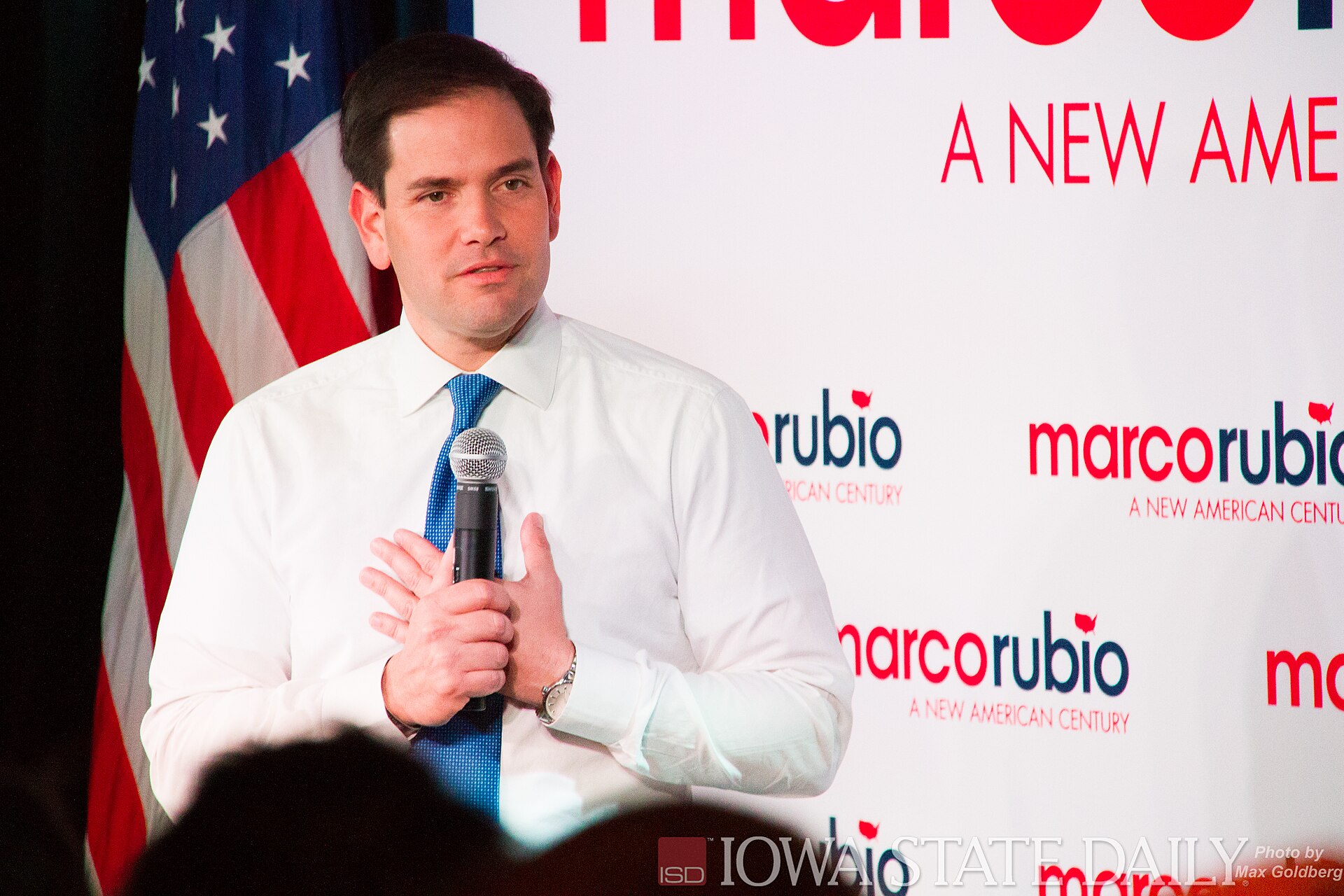
Marco Rubio’s Athens speech celebrates the Greek, Roman and Christian foundations of Western civilisation, warning that cultural self-loathing and radical ideologies threaten its future.

14 October 2026
2.8 MINS
Australia needs a courageous Church that never separates courage from Christian love — the courage of Peter and John, who, when ordered to cease speaking about Jesus, responded: “We can't stop.”

13 October 2026
2.6 MINS
Allegra Spender’s proposed bill reignites debate over discrimination protections, religious freedom and the right of faith-based schools to uphold their beliefs and values.

13 October 2026
3.9 MINS
Tasmania’s proposed conversion practices law raises serious concerns for churches, parents and faith-based schools, with broad definitions, severe penalties and uncertain protections for religious freedom.



How outrageous putting money into a Chinese controlled bank account. What is our government doing? Where are we being led begs the question.
It seems obvious when pointed out the minerals we have that the U.S. could use for electronics and defence. The U.S wants to impose hefty tariff on our exports and they want us to increase our defence spending. We would be in a better position to increase our defence spending if we were not hit with tariffs, add to that the supply of minerals that we have. It makes sense for our prime minister to meet with President Trump and strike a deal that would benefit both countries and help act as a deterrent to China.
Our prime minister recently spent time in visiting a certain country to the north of us where he spent time at a large wall they have and a trip to the zoo to see pandas. I’m not sure that any mention was made about the military excursions circumnavigating our country or human rights.
It seems that China is doing very well taking over our country, not by military might but by stealth in causing us to shut down our own manufacturing and relying on them to produce cheaper goods. Our government is trying to convince us that China is a wonderful trading partner, despite the cost to our manufacturing. Did our prime minister mention anything about improving trade with China that we are being convinced is so important?
Why is our Prime Minister so reluctant to meet with President Trump or raise significanbt issues with China?