


The Priest Who Kept His Church Open
When Irish churches shut their doors during Covid lockdowns, Father PJ Hughes stood alone — defying orders to instead keep his church open, in a reminder to the faithful that worship is not a government-approved activity.
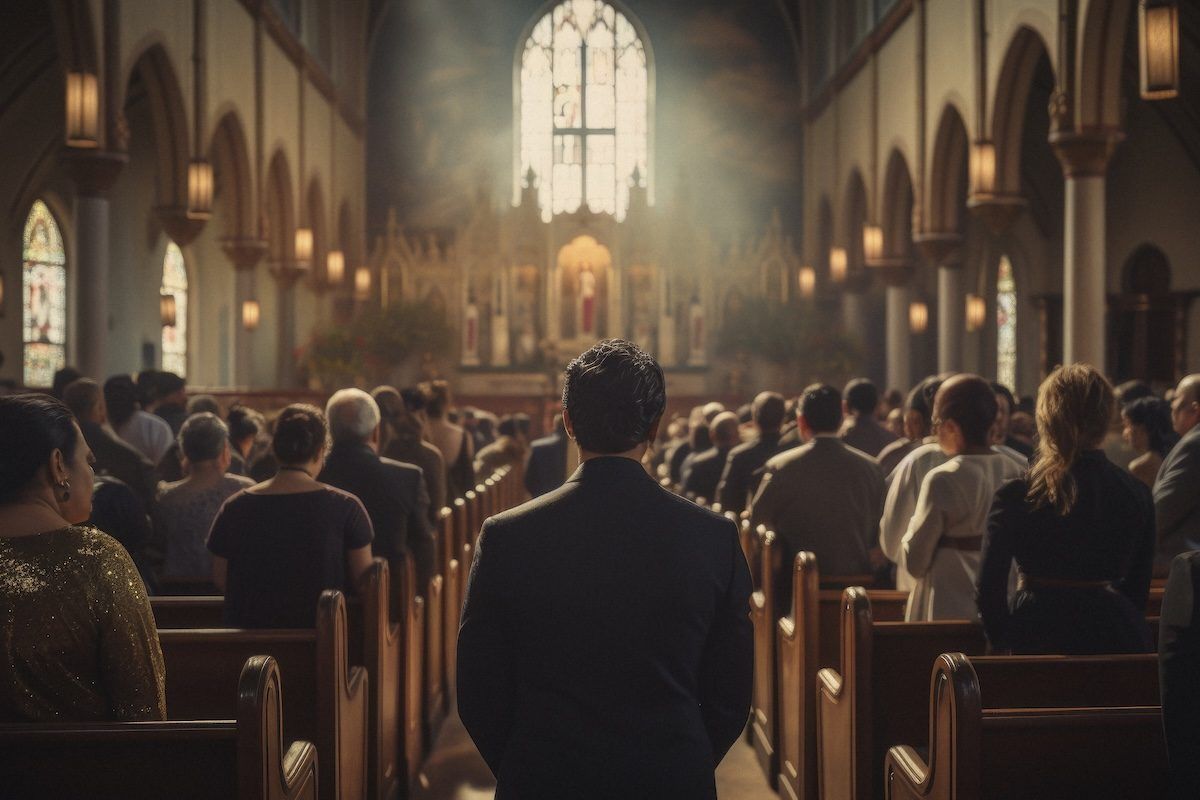
On 15 November 2020, in a small parish church in County Cavan, Father PJ Hughes did the unthinkable: he held a Sunday mass with around 50 of his parishioners. Speaking later on RTÉ Radio 1’s Today with Claire Byrne programme, Father Hughes said that the Gardaí phoned him just five minutes before the service was due to begin, warning him he was in breach of regulations and should instruct the congregation to leave.
Father Hughes refused, saying “I am not going to tell these people to go home. That would be a huge insult to them, and their faith.”
After the Mass, the Gardai paid Father Hughes a further visit. This time, they informed him that he would be prosecuted for breaking the law, and that he would be fined €2,500 and sent to jail for 6 months. “I’m here to serve the Lord and the people,” he said during the interview on RTE, “not the government.” As far as he was concerned, he had broken no law; he only honoured the fundamental right to practice religion.
Father Hughes went on to say: “We have a divine right to worship God, somebody show me the law that says I’m wrong…It’s telling people you cannot practice your faith. Are we going to live in a Communist state or what? I know the virus is there, but at the same time, we have to live.”
The Courage of Father Hughes
We have to live. Father Hughes’ words and actions shone like a welcome light in the tyrannical darkness of that time. While bishops complied, churches closed, and spiritual life was deemed “non-essential,” one priest stood by his vocation and his parishioners. This wasn’t just a priest talking. This was a man who had served on mission in Ecuador, who had buried the dead and baptised the living in places where faith was not polite or convenient; it was essential. And he returned home to find a Church that had become timid, compromised, and compliant.
Some months later on 18th March 2021, following another mass held in-person, Father Hughes received a fine notice by post. He stated, “I’ll go to jail before I pay that.” Despite repeated warnings from Gardai and his bishop, and threats of stiffer penalties in the future, Father Hughes continued to insist that he would not turn people away from the local church and he proceeded to hold a mass there on Palm Sunday, 28th March 2021.
On this occasion, “Numerous Garda checkpoints were mounted on the approach roads to Our Lady of Lourdes Church, Mullahoran, on the morning in question. Gardaí were on high alert in Holy Week amid concerns anti-lockdown protestors would demonstrate at the church in support of the local parish priest who continued to say Mass with parishioners present.”
This actually happened. During the holiest week of the Christian calendar, the Irish state deployed multiple police checkpoints to monitor a rural church in County Cavan, not because of a terror threat, or to prevent violence, but to ensure that no one dared gather peacefully to worship their God.
An Garda Síochána, which, translated from Irish, means literally the Guardians of the Peace, were used to police the Irish people in the practice of their faith. These people weren’t rioters or thugs. These were ordinary law-abiding citizens. And yet, their spiritual life became a target of state power and coercion.
Supposedly on that Palm Sunday, the Garda presence was about managing potential protests from anti-lockdown protestors. But the optics and the reality were unmistakable. Ireland’s police force had become enforcers of modern-day penal laws. They weren’t protecting the right to worship. They were there to intimidate and to make a quiet show of state control over the people and their religious freedom.
This was not about guarding the peace, but violating it. It was naked intimidation. The kind of intimidation that tells a devout pensioner turning up for Holy Week mass that they might be crossing a line just by stepping inside a church, and in that chilling theatre of checkpoints and police vans, we saw the fragile mask of democracy slip, revealing something far uglier beneath.
Where Were Our Church Leaders?
I have never forgotten about Father Hughes. His courage stood in painful contrast to the silence and the complicity of most Christian churches during lockdown. This wasn’t just a Catholic failure, though for those of us raised in that tradition, the sense of betrayal ran deep. Across all denominations, pulpits were empty and doors were locked. The spiritual needs of human beings were not just neglected; they were treated as dangerous and subversive.
Churches, long seen as sanctuaries in times of fear and loss, were suddenly cast as threats to the public good, a notion that was itself weaponised to justify unprecedented control. The very spaces where people turn to make sense of suffering were closed, and they were denied that solace at a time in their lives when they had never needed it more.
And where were our church leaders when we needed them most? In Ireland, the bishops obeyed government diktats and indeed supported them. In Rome, Pope Francis, who once described the church as “a field hospital” for the wounded, offered no theological resistance. At a time when the faithful were deprived of their spiritual community, the Vatican spoke loftily of solidarity, safety, and science, when it should have fought for the deep and very real spiritual needs of their flock, and for the basic human right to worship God.
What I will always struggle to comprehend is not just that the church closed its doors; it’s that so few people seemed to mind. Ireland, the land of saints and scholars, with a history of persecuted worship and outlawed sacraments, just accepted locked churches without protest.
The stand that Father Hughes took was striking, not just for its defiance, but because it was so rare. He reminded us that our faith is not subject to approval from experts, that obedience to God sometimes requires disobedience to men. I ask myself why didn’t other priests, pastors, and ministers stand up against this tyranny like Father Hughes did. And why was his disgraceful treatment by the Irish state tolerated? Why did so few object to the sight of a parish priest being fined, targeted, and effectively criminalised for offering the sacraments to his people during the holiest week in the Christian year?
I may never know the answers to those questions, but I will go on asking, because the asking matters.
Father Hughes stood alone. But that he stood at all meant the world to me, and it kept a flicker of hope alive in my heart during those dark and lonely days, and that same light still guides me today.
___
Republished with thanks to Brownstone Institute. Image courtesy of Freepik.
4 Comments
Leave A Comment
Recent Articles:
21 September 2026
2.4 MINS
It is truly concerning that this sort of incursion into free speech can even be suggested. Labor's Digital Duty of Care Bill is about controlling the narrative online, and must be defeated.
21 September 2026
3.2 MINS
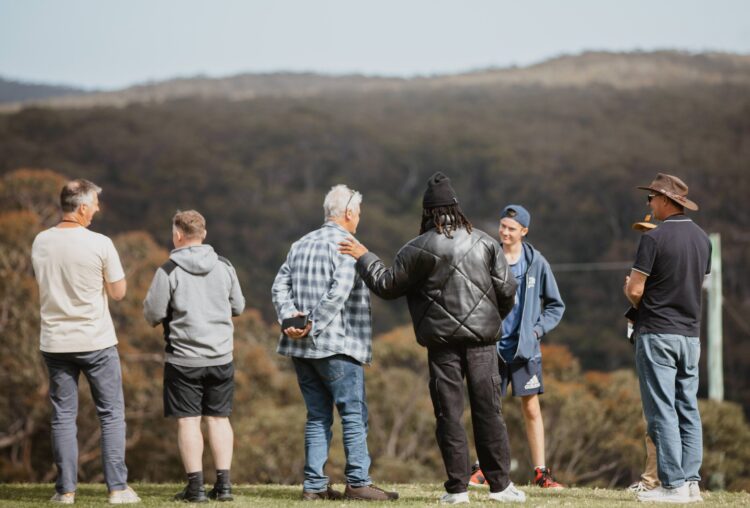
Something special happens when men step out of the everyday and focus on being fully present. Dads4Kids recent Men’s Summit and the upcoming Courageous Online Fathering Course create space for presence.
18 September 2026
4.4 MINS
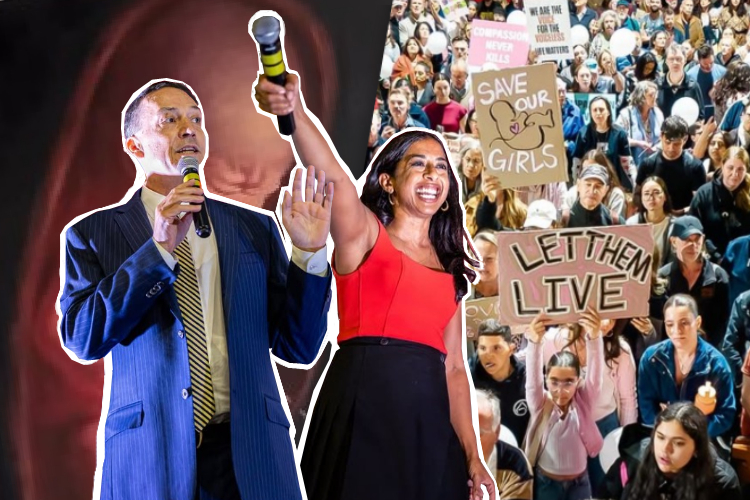
Up to 10,000 rallied in Sydney for a ban on sex-selective abortion. Twenty-four hours later, the NSW Legislative Council defeated John Ruddick's bill 21–16. The fight, says Dr Joanna Howe, is just beginning.
18 September 2026
3.5 MINS
Brothers Luke and Joel Smallbone have become one of the world's most loved Christian pop acts. As For King & Country, they have won four Grammys, 15 GMA Dove Awards and billions of song streams. And today they releasing their latest album.
18 September 2026
4.9 MINS
The government's $75 million deradicalisation program isn't working — and some wannabe terrorists have left more radical. So it's announced a new plan — which forbids identifying what's doing the radicalising.
18 September 2026
2.1 MINS
"Trans women are women." Repeat it enough and it starts to feel true. That's not an argument — it's a propaganda technique. And Australia's courts are now enforcing gender ideology.
18 September 2026
5.2 MINS
Nike picked a fight with half its customers, endorsed a man in a sports bra, and defended China's slave labor. Now it's bleeding $200 billion in market value. Turns out customers have a choice.



Yes. The question why there was so little resistance from the church is also a question I ask that has never been truly answered. And when I bring it up to pastors all I get is that we need to obey the government and it saved lives.
I agree.
In Geelong a priest offered Holy Communion to his faithful if they’d drive by the porch of the church on Sunday morning where he stood ready to administer Holy Communion with the Blessed Sacrament.
Agree with much you have said here, but there were some more Pastors around the globe who did likewise. I have heard a Pastor from a church in Tasmania speak out, some in the USA & I am sure from NSW or Qld here in Australia. But yes, it was a tough time for believers who disagreed with the whole instructions to the Church.
Thanks for your words.