



A Nation Without a Common Culture Cannot Stand
One Nation Senator Pauline Hanson’s recent speech at the National Press Club has sparked predictable controversy, with critics accusing her of opposing a multiracial Australia. As a migrant myself, I believe many of those criticisms miss the point entirely.
The debate is not primarily about race. It is about culture.
Monoculture
Australia today is unquestionably a multiracial society. The real question is whether Australia can remain culturally cohesive while continuing to welcome people from diverse ethnic and religious backgrounds.
When Senator Hanson speaks about a “monoculture”, she is not talking about race. She is referring to the Western civilisation and Judaeo-Christian heritage upon which modern Australia was founded, shaped and built. These foundations gave rise to the institutions, freedoms, values and social norms that have made Australia one of the most successful, stable and prosperous nations in the world.
Whether one embraces multiculturalism or holds strong anti-colonial views, it is impossible to deny that modern Australia as a nation-state was built upon British institutions, Western legal traditions, parliamentary democracy and Judaeo-Christian moral principles. If those foundations are gradually eroded or abandoned, Australia will inevitably become something different. It may still be the Great Southern Land, but it will no longer be the Australia generations have known, cherished, and migrated here for.
I was born overseas and came to Australia in my late teens. I call this country home because Australia offered something distinct: a culture founded upon Judaeo-Christian values, a stable society, strong institutions and freedoms admired around the world. These are the blessings I pray my children and grandchildren will continue to enjoy.
A nation is more than a geographical location. It is a shared identity, history, language, culture and set of values.
That does not mean migrants must abandon their own heritage. Australians from Greek, Italian, Chinese, Indian, Vietnamese, Lebanese, African and countless other backgrounds can preserve their traditions, celebrate their festivals and maintain their languages within families and communities. Ethnic diversity does not require the abandonment of a common national culture.
In fact, the two can coexist.
What matters is that Australians, regardless of background, share a commitment to Australia’s civic culture, institutions, national identity and the English language as our common means of communication.
Migration succeeds when newcomers embrace their new home while enriching it with aspects of their own heritage. It becomes problematic when people migrate expecting Australia to accommodate the social norms, values and political conflicts of the countries they left behind. If someone wishes to live exactly as they would have in their homeland, one might reasonably ask what purpose migration serves.
The Difference Between Multiracialism and Multiculturalism
Supporters of multiculturalism often present cultural diversity as an unquestionable good.
Yet successful societies require more than diversity. They require unity, social cohesion, shared values and a common sense of belonging.
Singapore and Malaysia provide useful examples. Both are clearly multiracial societies. Chinese, Malays, Indians and other ethnic groups maintain distinct cultural identities while also identifying as Singaporean or Malaysian.
Citizens preserve their heritage, but they also embrace common national symbols, national languages and national identities. Schoolchildren learn the national anthem. Citizens respect the national flag. There is a strong expectation that people contribute to a shared national vision.
Ethnic identity exists alongside strong national identity.
This differs significantly from the version of multiculturalism increasingly promoted throughout many Western nations.
Rather than encouraging integration and social cohesion, contemporary multiculturalism often places group identity ahead of national identity. People are encouraged to see themselves primarily through the lens of race, ethnicity, religion or other identity categories.
The result is often fragmentation rather than unity.
Identity Politics and the Erosion of Social Cohesion
Multiculturalism today has been heavily influenced by identity politics and critical theories that portray Western civilisation primarily as a source of oppression.
Under this framework, cultural groups are encouraged to compete for recognition, power and victimhood. Historical grievances are continually revisited and amplified, while citizens become increasingly divided into competing identity groups.
The consequence is a society that becomes less united and more polarised.
Rather than fostering a shared national story, identity politics encourages people to view one another through the lens of race, ethnicity and historical conflict. Over time, this erodes social trust, deepens divisions and fuels discrimination.
Those who value Australia’s Western and Judaeo-Christian heritage are often portrayed as opposing diversity, discriminatory or even racist. In reality, many people, including myself, are concerned about losing the cultural foundations that have made Australia a successful and stable nation.
If those foundations disappear, future generations of Australians will inherit a country that bears little resemblance to the Australia that attracted migrants from around the world for generations.
Preserving Australia for Future Generations
Australia can remain a successful multiracial society without embracing a form of multiculturalism that weakens national identity and erodes our Judaeo-Christian heritage.
People from diverse backgrounds can preserve their cultural traditions while embracing a common Australian identity and culture. These goals are not contradictory; they are essential to a healthy, cohesive and united nation.
The real challenge is ensuring that Australia’s foundational values, institutions, language and cultural inheritance are preserved and passed on to future generations. A nation that loses confidence in its own identity will eventually struggle to remain united.
As an Australian with a migrant background, I am committed to preserving and passing on the Western and Judaeo-Christian heritage upon which this country was built. I believe native-born and migrant Australians alike share a responsibility to do the same — not only for the sake of our national unity, but for our children, our grandchildren and the future of our nation.
Because a nation without a common culture cannot stand!
___
Republished with thanks to the ACL.
Image via Adobe.
8 Comments
Leave A Comment
Recent Articles:

13 October 2026
2.6 MINS
Allegra Spender’s proposed bill reignites debate over discrimination protections, religious freedom and the right of faith-based schools to uphold their beliefs and values.

13 October 2026
3.9 MINS
Tasmania’s proposed conversion practices law raises serious concerns for churches, parents and faith-based schools, with broad definitions, severe penalties and uncertain protections for religious freedom.

13 October 2026
2.1 MINS
Victoria’s assisted dying deaths have surged by 300 per cent since legalisation, while a disturbing case involving a patient’s partner raises urgent questions about safeguards.

13 October 2026
1.8 MINS
Australia faces mounting geopolitical, economic and defence threats, but its political leaders lack the statesmanship, bold vision and decisive communication needed to prepare the nation.
13 October 2026
2.8 MINS
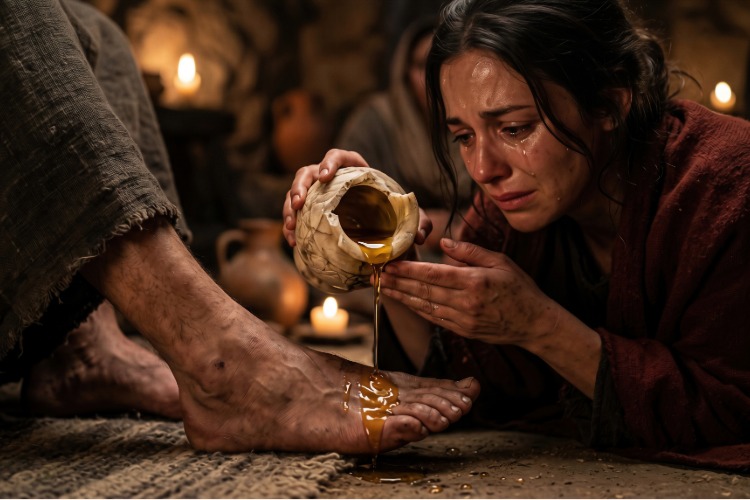
The church in Ephesus had so much going for it. Yet despite their hard work, perseverance, endurance, and discernment, there was something deeply wrong: they had left their first love.
12 October 2026
4.6 MINS
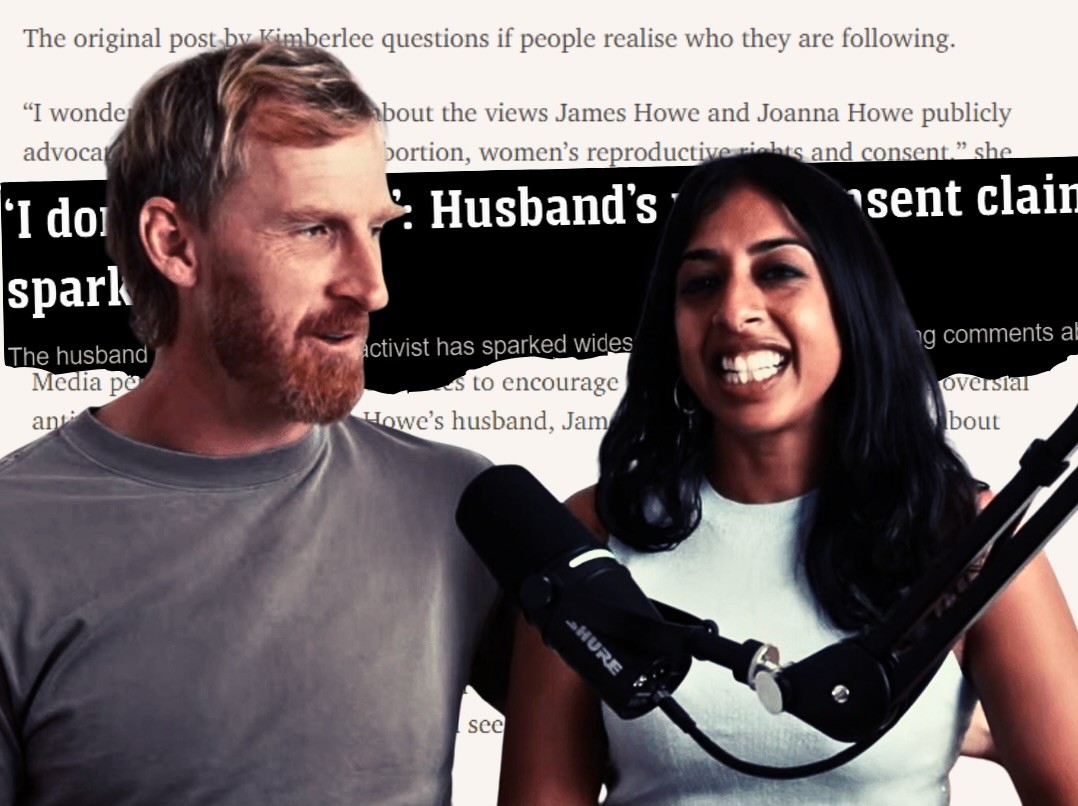
Learn how journalists use loaded language, selective quotes and misleading headlines to shape public opinion, using a controversial report about James and Joanna Howe as a case study.

12 October 2026
3.1 MINS
The proposed livestream of Nidal Hasan’s execution has reignited debate over justice, deterrence and public accountability, with critics comparing American justice to ISIS propaganda.



Do a Vox pop in Melbourne’s main city streets today of 100 people. Ask each one what he or she to name the foundations of a Juseo-Christian culture. You’d be lucky to get one person who understands the question, can provide a basic framework of such a culture and would then be able to identify Australia as juridically upholding the precepts which create a Judeo-Christian culture.
Look at what we have enshrined in law:
tax-payer funded abortion on demand for any or no reason
Contraception, the seed of the abortion mentality and practice and also an abortifacient in its own right.
Pornographised primary school education.
Legally protected medico-surgical mutilation of one’s procreative system
Manufactured children deprived of one or both biological parents
Marriage redefined and defiled
No-fault divorce
Frozen human embryos
under-age violent crime perpetrated without consequence
You call ours a “culture”.
Yes, certainly, a culture of death and disorder.
Great read. Thank you, thank you, thankyou! For writing this, Jasmine.
Thanks Jasmine. That’s a great essay and explanation.
Thank you for your insights, Jasmine. You are one of the many migrants who contributed to the country and greatly enriched it. We appreciate you.
Thank you, Jasmine, keep up the good work especially through ACL.
This is a brilliant article!!! Everything you say is spot on, articulate and resonates with my views. Thankyou!
Thanks Jasmine.
The truth and reason in a well expounded nutshell.
I loved and agree with every word you wrote, Yasmine Yuen. It’s not about Colour/Race. It’s a diabolical Plot to divide us as a Nation to weaken us in order, amongst other reasons, to exploit our great potential Wealth for the benefit of Overseas countries , foreign billionaires and foreign corporations, while causing Internal Strife and reducing us to poverty . It is the old “Divide and Rule ” . Australia has become a Colony for everyone to exploit. Pauline Hanson is no fool. She can see right through the Left’s plans. With God’s help we can get our once peaceful country back.