Advice for New Readers and Great Books Ranked with Malcolm Guite and Matt Fradd
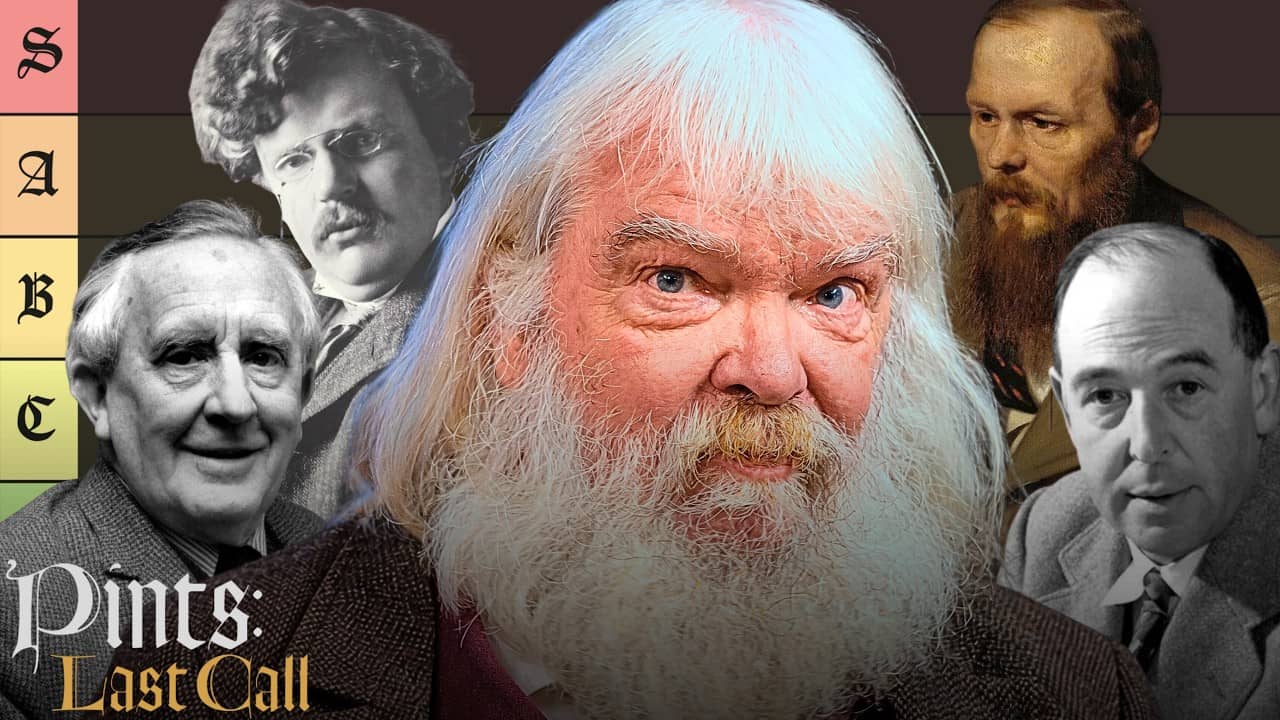
English poet, singer-songwriter, priest, and academic Malcolm Guite recently sat down with Australian-American podcaster Matt Fradd to discuss and rank a selection of classic books from the Western literary canon. Guite also shared some helpful words of advice for new readers.
Rev Dr Malcolm Guite has gained a reputation as one of the world’s foremost scholars of the Inklings — the literary group surrounding C. S. Lewis and J. R. R. Tolkien — and a successful poet and author in his own right.
In many ways, the polymath poet, singer-songwriter, scholar, and Anglican priest embodies the artistic, theological, and intellectual legacy of Lewis and Tolkien in his own work, which includes his current project: a retelling of the great Arthurian legend for contemporary English audiences.
Guite earned his Bachelor of Arts, which was later upgraded to a Master of Arts, in English Literature from the University of Cambridge. He obtained his Doctor of Philosophy in 1993 and has gained a reputation for his insightful commentary on the great works of literature in the English language.
In a recent episode of Pints: Last Call, Australian-American Catholic podcaster Matt Fradd — known as the host of the popular podcast, Pints with Aquinas — asked Guite to rank several of the great works of English literature, as well as a handful of more recent bestselling books and series.
Great Western Books: Ranked
Perhaps unsurprisingly, given the impact the two writers have had on modern Western fantasy, Guite and Fradd devote significant attention to the works of both C. S. Lewis and J. R. R. Tolkien.
From Lewis, The Chronicles of Narnia (1950–1955) received a mention, as did the lesser-known novels The Great Divorce (1945) and Till We Have Faces (1958), and the frequently mis-named “Space Trilogy” (1938–1945). Tolkien’s The Hobbit (1937), The Lord of the Rings (1954–1955), and his posthumously published legendary history of Middle-Earth, The Silmarillion (1977), were also discussed.
Of Lord of the Rings, Guite observed, “that is, I think, a tale that was given for our times”:
“God arranged through Tolkien that an age that is going to kill itself with consumption is given an epic of letting go. Of not acquiring, but letting go. Stop possessing it, and it will stop possessing you. If that’s true of a ring, it’s true of your phone.”
Comparing the two best-known works of each author, he remarked:
“As a pure piece of literary art, The Lord of the Rings is better — but as an effective communication of the heart of wonder and awakening of an imagination so that it can be ready for Christ, Narnia is better.”
Asked his preference if he could only read either The Hobbit or Narnia, Guite chose the latter, adding, “I’d hate to be in a world where you had to choose.”
Other classic English works the pair discussed and ranked included T. H. White’s The Once and Future King (1958), Kenneth Grahame’s The Wind in the Willows (1908), George MacDonald’s The Princess and the Goblin (1872), and The War of the Worlds (1898) and The Time Machine (1895) by English science-fiction pioneer H. G. Wells. From Russia, Fyodor Dostoevsky’s masterpiece, The Brothers Karamazov (1880) — Matt Fradd’s all-time favourite work — received a brief mention.
Guite also shared his thoughts on several more recent bestsellers, including J. K. Rowling’s Harry Potter series (1997–2007) and George R. R. Martin’s A Game of Thrones (1996). Of the former, he observed:
“It’s beautifully… I mean, it’s great, but I don’t think it’s in the league of Lewis and Tolkien. I like it, of course, because it precisely takes a lot of Arthurian themes and does good things with them. I love that it, you know, it takes that Arthurian thing — which is the guy who doesn’t think he’s anybody, who really turns out to be somebody, and that, if we know the Christian story well enough, is the story of every man.”
The latter he said he had not read, although his brief exposure to parts of the similarly named Game of Thrones HBO television series led him to label the story “indulgent” and “voyeuristic”.
The list of works Fradd and Guite discussed — for the most part — offers some brilliant options for readers keen to dig into some of the more recent classics, especially in English literature.
Advice for New Readers
Towards the end of their entertaining interview, Fradd asked Guite for his advice for new readers:
“What advice would you have to somebody who thinks, ‘Goodness gracious, I’ve had a poor education. I’d like to get into some of these beautiful books. […] Where would they begin, and why should they not be paralysed by that fear?”
Guite made three comments.
Firstly, he pointed out that there is always time for things we prioritise. It is important not to let others dictate how we spend our time:
“Time is yours to take and make. You don’t have to have your time dictated by everybody else.”
His second piece of advice was to point out that, although switching from scrolling to reading might be initially jarring, your capacity to read and comprehend will increase over time:
“So start small. You know, if you want to read, if you want to get into the greats of Russian literature, read the short stories first.”
Fradd recommended, in particular, Fyodor Dostoevsky’s A Gentle Creature (1876) for new readers interested in great Russian literature, noting that it was one of his personal favourites. He also mentioned the novella, The Death of Ivan Ilyich (1886).
Guite advised new readers to “take it at your own pace” and not make reading “a daily prescription”:
“You will be surprised by how quickly your mind recovers its capacity to read… if you just give it a chance to do a little bit of it each day.”
Finally, he clarified that new readers should probably not start by plunging into literature from another culture like Russia — “brilliant as it is”.
“I mean, I would start with Chesterton because he’s such a great storyteller, or Lewis or Tolkien. That’s where I would start.”
If you find yourself in a position where you would like to get started on a great, relatively modern Christian writer like Chesterton, Lewis, or Tolkien, here are a few places to start.
If you haven’t read it already, try C. S. Lewis’s classic, The Lion, the Witch, and the Wardrobe. If you have read it, I have good news for you. There are six further novels in the series just waiting for you!
On the other hand, if you’re interested in diving into some of Lewis’s other works, a few great places to start are his well-known apologetics primer, Mere Christianity, which started its life as BBC radio broadcasts. Alternatively, take a look at his spiritual autobiography, Surprised by Joy, or the creative devotional novel, The Screwtape Letters.
If J. R. R. Tolkien sounds appealing to you — and you’ve not yet had the delight of exploring Middle-earth — start with The Hobbit. It is written in a much more accessible style than The Lord of the Rings and will hopefully prepare your literary palette for the joy of reading that masterpiece for the very first time. As Guite says, don’t rush!
G. K. Chesterton is also well worth a read. As Guite and Fradd note, Orthodoxy — Chesterton’s version of Mere Christianity — is probably the place to start.
If all of these writers sound a bit intimidating to you, you may prefer to dip into their world via the work of a contemporary author who inherits, communicates and translates many of their ideas and a good deal of their style. N. D. Wilson’s Notes from the Tilt-A-Whirl is a good option for this.
Wherever you choose to start, I have little doubt that you will find the process of immersing yourself in the thoughts of some of Christianity (and the world’s) greatest minds well-worth the effort. It is stretching, rewarding, and edifying.
Happy reading!
Image courtesy of Matt Fradd. Accessed via YouTube.
Recent Articles:

30 November 2026
4.2 MINS
A new European report reveals a sharp rise in anti-Christian hate crimes, raising concerns about religious freedom, growing hostility and Christianity’s place in public life.
27 November 2026
3.3 MINS
A newly released documentary celebrates the remarkable life and legacy of Rev Fred Nile, featuring tributes from political leaders, friends and those who worked alongside him.

27 November 2026
2.6 MINS
Pope Francis’s claims of meeting Satan three times have reportedly sparked a full-blown PR crisis in Hell, threatening centuries of carefully cultivated disbelief.
27 November 2026
2.1 MINS
Christian leaders, political allies and former opponents have paid tribute to Reverend Fred Nile, honouring his faith, moral conviction and decades of public service.

26 November 2026
2.9 MINS
Major Christian organisations and hundreds of Australian leaders have united to condemn antisemitism, support Jewish Australians and pledge practical action through a landmark national declaration.

26 November 2026
2.3 MINS
The expansion of marriage beyond traditional boundaries raises important questions about love, lust and moral responsibility, as new forms of multi-partner relationships gain legal recognition.

26 November 2026
4 MINS
Drawing on centuries of Habsburg family history, Eduard Habsburg presents a Christian vision of marriage, parenthood and prayer as foundations for lasting happiness.