



Daniel and the Counterculture: Being Different
In the anti-Christian world in which we live, the book of Daniel can be an ongoing source of inspiration and instruction.
We can learn much from Daniel about being a stranger in a strange land:
The book of Daniel is valuable for so many reasons. Many believers especially like all the prophetic bits and how we might understand various end-times scenarios.
That is important, but so is the basic story of how God’s people should live in a strange and hostile land.
Having just reread this Old Testament book, the notion of being counter-culturalists in foreign territory again stood out to me.
The setting of course is this: Daniel and his friends are in Babylonian captivity. They are a long way from home, and they have to learn to adapt to their new circumstances.
Do Not Defile Yourselves
And early on in the book, we discover one key to their success at remaining faithful to Yahweh while in enemy territory.
Verse eight of chapter one says, “But Daniel resolved that he would not defile himself”.
Yes, the text goes on to show that Daniel and his companions would not defile themselves specifically with the King’s fancy foods.
But obviously, the broader sense of not being defiled would also be in view here. They would remain true to their God while living in a pagan land.
And the lessons for us today should be obvious. We too are strangers in a strange land. We too are in enemy-occupied territory.
The West has moved from being a Christian culture to a post-Christian culture to an anti-Christian culture. That is the reality Christians must today face up to.
The truth is, “we’re not in Kansas anymore,” to run with a line from a famous film.
We are living as exiles.
How Should We Now Live?
Thus the question arises: How should we then live in such circumstances?
How are believers to proceed when living in such a difficult setting?
Sure, things are not yet as bad as living in Communist China or North Korea, but we seem to be inexorably heading in that direction. So we need some wisdom here.
Let me draw upon some commentators as we seek to understand how best to live in this sort of situation. I start with a short quote from Paul House who gets to the heart of the matter:
“Daniel does not just seek to survive. Rather, he desires to make God known to his captors.”
That should be true of us as well. We are here to be a witness, to be God’s representatives, his ambassadors.
Bryan Chapell on Daniel
In his book The Gospel According to Daniel, Bryan Chapell writes:
In response to Daniel’s holiness – his decision to remain undefiled – God provides for Daniel’s immediate welfare. But, more importantly for him and for us, through Daniel’s holiness God provides a witness of the reality and perpetuity of the spiritual truths that are eternally important.
If Daniel would risk position, privilege, and life itself for a pure relationship with God, then that must be quite a relationship and that must be quite a God. . . . There are not always tangible benefits nor only negligible damages as a result of holiness. But this life is only a moment in God’s time (Ps. 39:4-5, 90)….
These eternal truths do not deny that Daniel’s earthly circumstances remained dire in many ways. Yet God safeguarded and guided Daniel so that even the worst-seeming disasters became instruments of God’s grace for him and others. A holy person is a powerful tool in God’s hands even in times of trial – or especially in time of trial – for his or her witness to our souls, our families, and the nations.


“It is the in the Small Matters the Great Victories Are Won”
Another truth that we must keep in mind here is this: while we may not know for sure why Daniel refused this food, it may seem to many folks to be a rather small or trivial thing.
Nonetheless, as James Montgomery Boice reminds us:
“Well, it was a small thing. Yet that is just the point. For it is in the small matters that great victories are won. This is where decisions to live a holy life are made – not in the big things (though they come if the little things are neglected), but in the details of life.”
And bear in mind that Daniel and his three companions were mere teenagers at this time, and they were separated from other Israelites, and totally surrounded by and immersed in a pagan culture.
Sinclair Ferguson on Daniel
Yet they stood strong. Daniel, as Sinclair Ferguson says,
realized that for the child of God some things cannot be negotiated or compromised. From the outset, therefore, he refused the court’s delicacies. In many ways his usefulness in the Kingdom of God throughout the rest of the book depends on this single decision. Had he not made it, or even left it until later while he maneuvered for a position of bargaining strength, he would not have found himself in positions he later occupied nor would he have been faithful enough to cope with them as he did. Instead, from the beginning, in what to others seemed a trivial matter, he nailed his colors to the mast. In doing so, he gained a bridgehead into enemy-occupied territory and found himself increasingly strong in the Lord.
This is a great lesson for all Christians to learn, not least those who are younger and at the beginning of so many new experiences, relationships, occupations, and roles in life….
Notice too that Daniel did not leave his actions to a spur-of-the-moment response. He “purposed in his heart that he would not defile himself” (v. 8). He had made a decision before God. He had found one of the great biblical secrets of spiritual success that was better known to our forefathers than it is to us: He entered into a solemn covenant in the presence of God that he would turn away from sinful behavior in whatever form it presented itself.
Another truth we must consider here is to be aware of how the enemy operates while we are in times of exile.
The world around us wants to squeeze us into its mould, and it uses every means possible to get us to forget our spiritual roots and to adopt the mindset, values and worldview of the surrounding culture.
Know Your Enemy
We are in the world but we are not to be of it. Recall that Daniel and his three friends spent a full three years being immersed in Babylonian culture, beliefs and practices. As Iain Duguid writes:
At the end of this three-year initiation process, with their previous identity fully obliterated, they would enter the service of Nebuchadnezzar (1:5).
This provides us with a picture of the world’s strategy of spiritual reprogramming. At its most effective, it consists of a subtle combination of threat and promise; of enforcement and encouragement. Those who are totally recalcitrant may be sent to prison camps or gulags if necessary, but the majority of the population are far more easily assimilated if they are well fed and provided for. After all, more flies are caught with honey than with vinegar. The fundamental goal of the whole procedure, though, was in one way or another to obliterate all memory of Israel and Israel’s God from the lips and the minds of these young men, and to instill into them a sense of total dependence on Nebuchadnezzar for all of the good things in life.
Isn’t this how Satan still operates today? He may violently persecute believers in some parts of the world, yet often he works more effectively by seducing and deceiving us into forgetting God and thinking that our blessings come from somewhere else. . . . He wants us to forget the uniqueness of our God and the help that only he can provide. He wants to control the educational process, so that our children grow up immersed in his worldview and his philosophy of life. If he can further instill in us a sense of dependence upon the material comforts that make up our way of life, or certain pleasures of the world that we have grown to love, then he can far more effectively draw us away from the Lord. His fundamental goal is always to obliterate our memory of the Lord, to reeducate our minds to his way of thinking, and to instill in us a sense that all of the good things of life come from the world around us and from the satisfaction of the desires of the flesh.
Recognizing, the Babylonian strategy helps us to see and evaluate the strategy of resistance formulated by the four young men….
Dare to Be a Daniel
Daniel is not the only person we can learn from when it comes to living in a hostile culture. Others can also be studied, such as Joseph, or Ezra, or Nehemiah.
Nevertheless, the lives of Daniel and his friends provide us with some valuable spiritual imperatives:
- the need to live a life of holiness, regardless of the costs
- the need to resolve early on never to compromise or disobey our Lord
- the need to maintain a godly witness even in a hostile culture
- the need to refuse to compromise with, or fully assimilate into, the surrounding culture while seeking to be salt and light
Dare to be a Daniel, my friends. Dare to be a counter-culturalist.
___
Originally published on CultureWatch. Image by Yaoqi on Unsplash.
Recent Articles:
22 September 2026
6.3 MINS
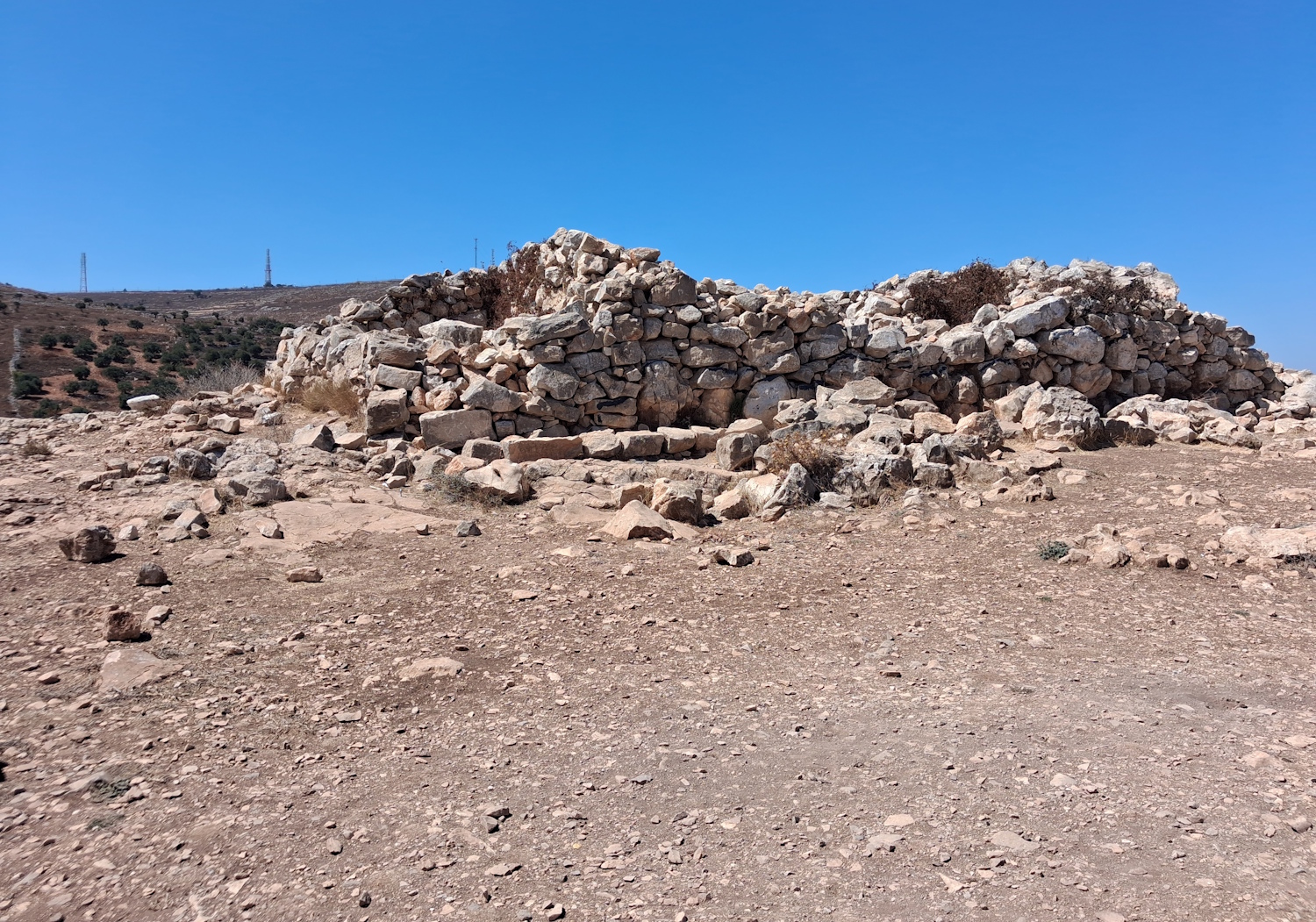
A remarkable journey to Mount Ebal explores Joshua’s altar, fascinating archaeological discoveries and the enduring biblical significance of Samaria and Israel’s ancient heritage.

22 September 2026
2.9 MINS
A downed US airman credits God, training and teamwork after surviving a devastating fall over Iran and enduring a remarkable rescue mission.

22 September 2026
3.8 MINS
Alex Antic’s grassroots victory gives South Australia’s Liberals a chance to rebuild from within — but federal intervention could turn renewal into rebellion.
21 September 2026
4.4 MINS
Forgiveness is a choice, not a feeling. That was the message Danny Abdullah brought to London's ARC conference, sharing how he and his wife chose to forgive the man who killed three of their children.

21 September 2026
4.4 MINS
On September 11, the Archbishop of Canterbury gave an interfaith award to a man who called Osama bin Laden the "Sword of God" and blames Jews and Christians for the war on Iran. The award was rescinded after public backlash.

21 September 2026
8.5 MINS
After a 20-week scan revealed possible heart abnormalities and genetic concerns, medical staff twice offered to abort a Christian couple's baby. Six weeks of fervent prayer later, the heart defect was gone — and their son is nearly ready to be born.

21 September 2026
2.4 MINS
It is truly concerning that this sort of incursion into free speech can even be suggested. Labor's Digital Duty of Care Bill is about controlling the narrative online, and must be defeated.


