



Why ‘Looking Within’ for Your Identity Doesn’t Work: We Also Need to ‘Look Up’
Human beings are not self-referential creatures. We have an innate desire for something transcendent, a reference point beyond ourselves. We are made for God.
‘Your days are numbered, Maverick. Your kind is heading for extinction.’
So said a US Admiral (played by actor Ed Harris) to Maverick (Tom Cruise) in the latest Top Gun movie. While the Admiral was referring to fighter pilots — and their breed heading for extinction thanks to AI and robots taking over the flying of aircraft — many in the secular West would say the same thing about religious people:
‘Your days are numbered, religious people. Your kind is heading for extinction.’
In this view, religion is dying out because (Western) society is becoming less religious. Science, reason, and rationality can take care of all our needs. And when it comes to our identities, all we need do is look within ourselves — ‘you do you’ — to find out who we are.
Except this approach doesn’t work.
In a previous post, I explored the failure of ‘you do you,’ so far as increasing narcissistic tendencies and being bad for mental health. My post was based on Christian author Brian Rosner’s new book, How To Find Yourself: Why Looking Inward is Not The Answer. But Rosner has more to say about why looking inward doesn’t work.
We Can’t Just Look Within For Identity
Rosner argues that we can’t define our identity by looking within because we’re social beings (we need to ‘look around’) who have a history (‘we need to look backward and forward’).
But he goes on to say there’s even more to our identity:
I submit that we need to look not only around, and backward and forward, but also upward. Some theologians insist that personal identity requires that you look well beyond yourself. Rowan Williams writes, “Without the transcendent we shall find ourselves unable, sooner or later, to make any sense of the full range of human self-awareness.” [1]
In our post-Christian secular environment, this is a provocative argument.
After all, isn’t religion dying out — aren’t Christians ‘headed for extinction’ according to census data? While formal religious adherence may be shrinking in the West, there’s more to the spiritual story than just how many people tick the religious box on the census.
In Australia, a McCrindle survey in 2012 found that nearly one-fifth of Australians identify as spiritual but not religious, more than ever before on any census. Even if looking up in traditional religious terms is on the wane, looking up, in general, is not. [2]
The Human Need to Look Up
Rosner argues that human beings have inbuilt spiritual needs, whatever they tick on the census box:
[E]ach of us wants something more than simply the satisfaction of our most basic desires. Authors across a range of traditions, both religious and otherwise, have noted such yearnings. C. S. Lewis, for example, wrote of the human capacity for “an inconsolable longing for we know not what.”
He continues:
In The Pilgrim’s Regress, [Lewis] describes the object of such longing as “that unnamable something, desire for which pierces us like a rapier at the smell of bonfire, the sound of wild ducks flying overhead, the title of The Well at the World’s End, the morning cobwebs in late summer, or the noise of falling waves.”
He concludes:
Such yearnings are, Lewis says, “good images of what we really desire; but they are not the thing itself; they are only the scent of a flower we have not found, the echo of a tune we have not heard, news from a country we have never yet visited.” Human beings are afflicted, or perhaps blessed, with a nostalgia for the garden, a painful yearning for our perfect past. [3]
While some atheists might write off such yearnings and any need for God as sentimental nonsense, it’s hard to deny the almost universal human experience of such deep emotions.
Modern Psychology and the Importance of Looking Up
Modern psychology affirms the importance of ‘looking up’ in one form or another.
The former head of the American Psychological Association, Martin Seligman, affirms the importance of living for something bigger than yourself. And Psychologist Michael Carr-Gregg, whose main interest is in child and adolescent development, has surveyed the literature about the effects of spirituality on human wellbeing and behaviour:
Spirituality, defined as a sense of connectedness or relatedness to something or someone that transcends the material world, is associated with better mental health. It can help increase self-esteem, aid in one’s search for meaning in life, improve family and special relationships and decrease risk-taking behavior. It can also provide a moral compass to help navigate life. [4]
Academic psychiatrist Andrew Sims’s summary of the many studies about the effects of religious belief in the American Journal of Public Health comes to similar conclusions:
Religious involvement correlates strongly with wellbeing, happiness, life satisfaction, hope and optimism, purpose and meaning in life, higher self-esteem, better adaptation to bereavement, greater social support, less loneliness, lower rates of depression, and faster rates of recovery from depression. [5]
Eternity in Our Hearts
According to the Bible, the human desire to ‘look up’ and be spiritual is central to who we are as God’s Image Bearers.
God has placed ‘eternity in man’s heart’ (Ecc 3:11), so we have an awareness that there must be more to life than our frustrating existence ‘under the sun’ (Ecc 1:14). While sin has distorted this spiritual desire so that human beings worship false gods (Rom 1:18ff), worship — ‘looking up’ is key to who we are.
But the modern ‘you do you’ tends to ignore this dimension, leading to all sorts of problems for people across our culture.
___
[1] Brian Rosner, How To Find Yourself: Why Looking Inward Is Not The Answer (Crossway; Wheaton: 2022), p. 72.
[2] Ibid., p. 73.
[3] Ibid., p. 75.
[4] Michael Carr-Gregg, “How to build happy and resilient children,” in Raising Resilient Kids (Mt. Evelyn: Collective Wisdom, 2018), p. 7. Quoted in Rosner, op. cit., p. 78.
[5] Cited by John C. Lennox, Can Science Explain Everything? (London: Good Book, 2019), p. 29. Quoted in Rosner, op. cit., p. 78.
___
Originally published at AkosBalogh.com. Photo by Juan Pablo Serrano Arenas.
One Comment
Leave A Comment
Recent Articles:

8 October 2026
3.6 MINS
John Anderson warns that Australia’s decline is rooted in spiritual and cultural disintegration, calling for a recovery of Christian foundations, social cohesion and national purpose.

8 October 2026
4.1 MINS
Aboriginal communities in Central Australia already know the gospel message. What they need now, Robyn Murray writes, is discipleship, encouragement and Christians willing to pray and participate.
8 October 2026
4.1 MINS
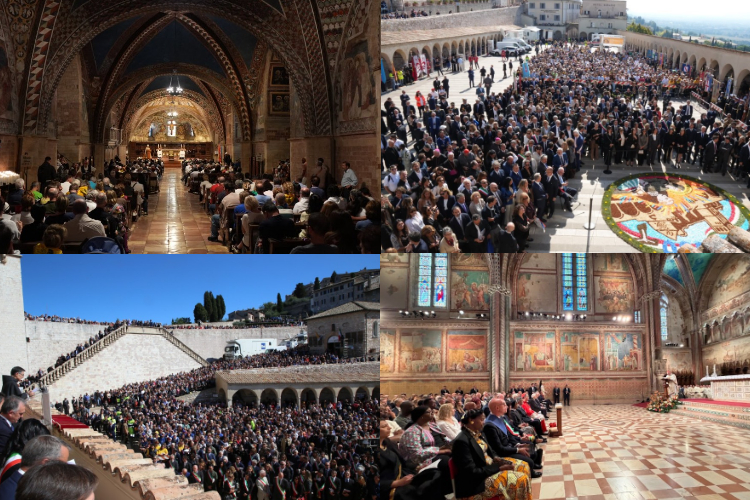
Italy honours St Francis of Assisi 800 years after his death, celebrating a saint whose devotion to Christ, radical simplicity and message of peace continue to shape generations.

8 October 2026
4 MINS
Christ’s authority and concern is not limited to the four walls of the church. They extend to the life of the nation, and we are called to take up our part in seeking its righteousness.
7 October 2026
1.5 MINS
Across the Middle East, North Africa and Anatolia, Christianity once shaped entire civilisations. Could Britain’s Christian heritage likewise become a memory rather than a reality?

7 October 2026
8.5 MINS
Gerald McDermott’s work challenges Christians to approach Israel through Scripture first, exploring God’s covenant faithfulness, Christian Zionism, Jewish identity and antisemitism.

7 October 2026
4.6 MINS
Medicine was created to heal and preserve life. Yet abortion, euthanasia and gender medicine increasingly redefine death and destruction as care, leaving the vulnerable dangerously exposed.



I don’t look within via my own understanding for identity. However i look within to discover the treasure in jars of clay, rivers of living water Jesus spoke about. The Born Again experience that does come from outside of ourselves after repentance and faith toward God via the Holy Spirit. The Great mystery that Paul speaks of in Colossians ” Christ in you the Hope of Glory “