



The Biggest Losers from the Voice Referendum
After the expenditure of millions of dollars, the endorsement of numerous celebrities, the support of the leaders of corporate Australia and having most of the free-to-air media in favour of the so-called Voice to Parliament, the Australian people overwhelmingly rejected the proposal.
Despite being described as racists, dinosaurs and worse, ordinary Australians unequivocally told the proponents that they would not support their confused proposition. Given the fact that almost all Australians would support recognition of indigenous people in the Constitution, it is worth considering the reasons for the result.
The simple explanation is that the ‘Yes’ campaign was an abject failure; indeed, an object lesson in how not to conduct a successful campaign. The Voice campaign chose to hide the details of their legislative mechanism behind the feel-good vibe of recognition, expecting that Australians would be satisfied.
As the campaign dragged out for months, questions that the ‘Yes’ proponents were unwilling or unable to answer grew, leaving them increasingly frustrated and desperate. Their campaign frayed as various leaders insulted their opponents; hardly the way to attract people to your cause!
Winners
Having failed dismally, the knives are already out for the people to blame. The list is long. But first, consider the winners. Heading the list is the Australian people, who overwhelmingly removed indigenous separation from the Constitution in 1967 and authorised through Parliament the expenditure of tens of millions of dollars each year to address indigenous disadvantage.
Their assertion is clear: we value the first inhabitants of this land and support practical programs to assist them, but we also want a united nation, not one divided by race. If John Farnham’s The Voice was the unofficial anthem of the ‘Yes’ campaign, Bruce Woodley and Dobe Newton’s I Am, You Are, We Are Australian was surely the anthem of most.
The biggest individual winner was Jacinta Nampijinpa Price, who transitioned from a largely unknown Senator for the Northern Territory into an authentic national figure in the Australian polity. Peter Dutton faced a dilemma when the former opposition spokesperson for indigenous affairs, Julien Leeser, resigned, as Liberal Party MPs could have expected one of their own to replace him under the coalition arrangements.
Instead, he made the right call to appoint Jacinta Price to the role, despite her relative inexperience as a parliamentarian and her membership of the Country Liberal Party. Not only did she bring the lived experience of an Aboriginal woman to the role; she remained confident, calm and authoritative throughout the campaign. Her co-campaigner Warren Mundine was also impressive. An indefatigable campaigner, Mundine’s talents have been shamefully overlooked by both major political parties.
Losers
There is a Melbourne Cup field for the biggest losers, but a few stand out from the field. My trifecta comprises Anthony Albanese, the woke leaders of corporate and sporting Australia, and the old indigenous elite. Mr Albanese is rightfully copping the lion’s share of the blame. After all, it was his decision about the subject, scope and timing of the referendum.
He was captured by Noel Pearson, Megan Davis and other proponents, and rejected the sensible advice of people like Frank Brennan and Greg Craven to narrow the scope of the proposition.
His failings were manifold. Instead of legislating his proposal, having a constitutional convention, waiting until his second term and/or separating recognition from the Voice mechanism, he chose to push ahead.
The history of referenda in Australia seems to have been completely ignored, especially the essential elements for success: a clear, easily understood proposal, and bipartisan support. The responsibility for achieving bipartisanship rested on the PM. He cannot blame others for his decision. It is notable that many Labor parliamentarians were quiet about the proposal in their own electorates.
The woke leaders of corporate and sporting Australia — often the one and the same people — are also losers. Their lack of self-awareness, their disdain for many of the people who are their shareholders, customers, or club members and supporters was manifest.
The arrogance and hubris of lecturing the public on how to vote and their financial support for the ‘Yes’ campaign when cost of living pressures are exacerbating, displayed the tin ear that many possess. It would be nice to witness some humility from the leaders of the big corporates. The same can be said of the corporate elite who also run the major sporting clubs and codes. To adopt words that Sir Donald Bradman uttered in another context, people “endure rather than enjoy” their lectures.
The old indigenous elite — Noel Pearson, Marcia Langton, Megan Davis, Pat Anderson and others — are also losers in favour of the new voices of Aboriginal Australians. Now there is a significant indigenous representation in the Parliament, power is shifting from the self-styled leaders of Aboriginal and Torres Strait Islanders to the elected representatives.
The majority of Australians wish to look ahead. They do not want entrenched division in the Constitution. They know that the life outcomes for indigenous people are not uniform — but are largely tied to location — and they support practical programs of assistance that work, not continual pleas of victimhood.
Takeaway
The simple explanation about a poor campaign hides a more substantial reason for the outcome, namely, a rejection of the proposal that some Australians should be treated differently in the constitution. The father of the Commonwealth, Henry Parkes, aspired to an Australia that comprised ‘one people’ with ‘one destiny’.
Parkes’ great cause was partially achieved with federation, but has always remained a work in progress. The 1967 referendum, which over 90 per cent of Australians endorsed, was another significant step in this journey, as is this vote. Australians prefer integration to division.
Finally, it would be wrong to interpret the outcome of the referendum as the determining factor in the next election campaign. One single example should suffice. Tens of thousands of Labor supporters who voted ‘no’ will still vote for Labor at the next election. The majority of Australians who voted ‘no’ were casting a judgment on whether or not a new constitutional institution should be created, not on the relative merits of the major parties.
However, the political take-out is to cast more doubt on the PM’s judgment, and his propensity to ignore and gloss over detail.
___
First published in The Spectator Australia. Photo: Wikimedia Commons
3 Comments
Leave A Comment
Recent Articles:
8 October 2026
1.6 MINS
A blackout at Australia’s $150 million Pre-COP climate summit in Fiji delivered an awkward lesson in energy reliability to delegates preaching the renewable transition.

8 October 2026
4.1 MINS
Aboriginal communities in Central Australia already know the gospel message. What they need now, Robyn Murray writes, is discipleship, encouragement and Christians willing to pray and participate.
8 October 2026
2.8 MINS
The MDBA’s case for further water buybacks rests on climate projections increasingly challenged by climate scientists, historical rainfall data and evidence of a greener Basin.
8 October 2026
4 MINS
Christ’s authority and concern is not limited to the four walls of the church. They extend to the life of the nation, and we are called to take up our part in seeking its righteousness.

7 October 2026
3.6 MINS
Victoria’s 18th March for the Babies will bring families together to peacefully affirm the value of every human life and call for a cultural change towards life.
7 October 2026
1.5 MINS
Across the Middle East, North Africa and Anatolia, Christianity once shaped entire civilisations. Could Britain’s Christian heritage likewise become a memory rather than a reality?
7 October 2026
6 MINS
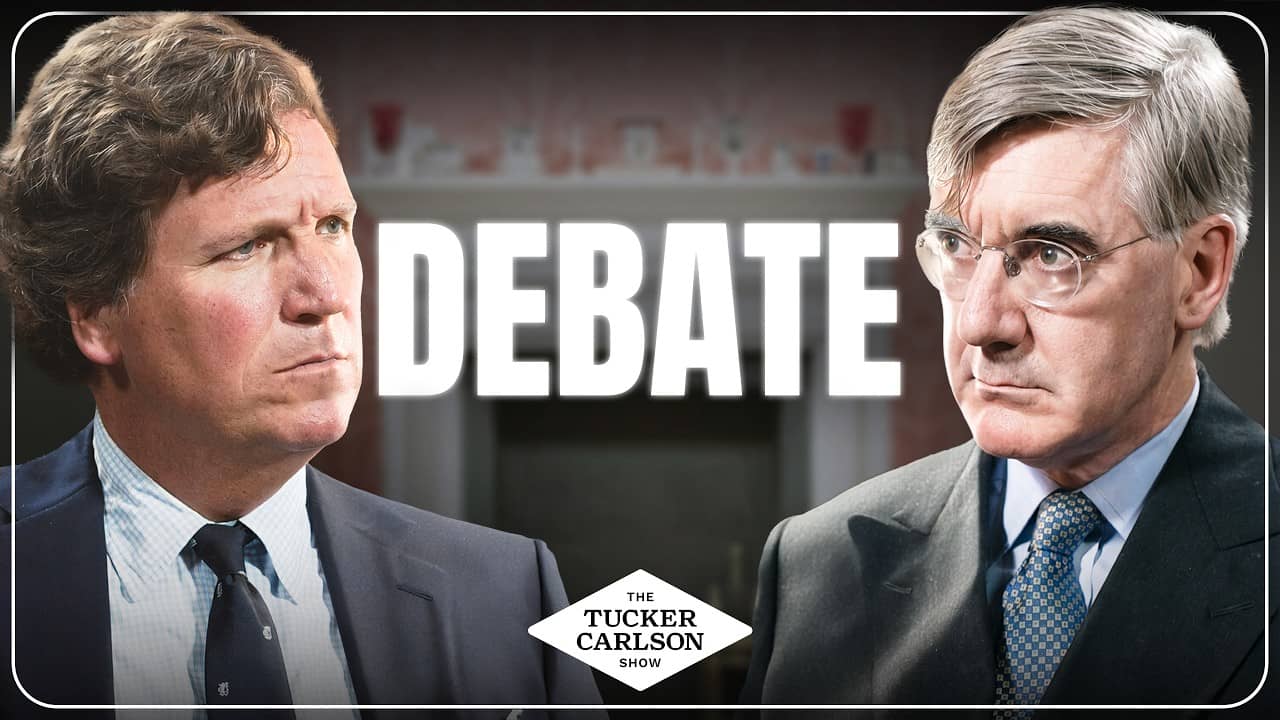
What can Tucker Carlson’s interview with Jacob Rees-Mogg teach us about political disagreement? Their clash over war, Russia and national defence highlights the importance of listening carefully and understanding an opponent’s position before attempting to refute it.



Thankyou Keven Andrew’s, you’ve “hit the nail on the head” concerning “The Voice” referendum. Australians don’t want a divided nation and they made that powerfully evident through their voice in the referendum, but it’s very sad that the result led to the “no’ voters being labelled uneducated imbeciles. That is not the Ausie spirit! We are to be a people united under the “Australian Lighthouse Spirit”, who keep powering forward, a united force for good, despite all that comes against us!
Thanks Kevin Andrews for this well thought out and well written article. I am, you are, WE ARE Australian! United.
Well said Kevin!!!!