



Fact-Checking Bodies’ Bias: Expert Warns of Danger in Labor’s Misinformation Laws
The Communications Legislation Amendment (Combatting Misinformation and Disinformation) Bill 2023 has been introduced into the Australian Parliament for discussion. The responsibility for administering the proposed bill is vested in the Australian Communications and Media Authority (ACMA), which is a statutory authority of the Commonwealth Government.
The proposed powers are designed to encourage digital platform services to be accountable for improving and implementing measures to counter the spread of misinformation and disinformation online. The Bill is not intended to censor individuals, but rather social media platforms and public communications.
On its website, the ACMA recommends that consumers check the veracity of online content with reliable fact-checkers such as AAP Fact-Check, RMIT FactLab, and RMIT ABC Fact Check.
Fact-checking is designed to determine the accuracy of claims by politicians, public figures, advocacy groups and institutions engaged in public debate.
In the video below, John Storey, Director of Law and Policy at the Institute of Public Affairs, talks to IPA Executive Director Scott Hargreaves about the issue of free speech and fact-checking bias.
Checking the Checkers
The Institute of Public Affairs (IPA) is a conservative, non-profit, free-market public policy think tank, based in Melbourne. It recently published research on whether the fact-checkers themselves exhibited political bias.
Their published research investigated 970 fact-check articles dating back to 2019 and established the following facts:
- 65 per cent of fact-checking of claims by political figures delivered verdicts favourable to left-of-centre politicians. Just 35 per cent could be assessed as favourable to right-of-centre politicians.
- 94 per cent (502 of 534) of fact-checking investigations relating to COVID-19 matters targeted critics of the official response to the pandemic.
- 81 per cent (124 of 153) of fact-checking investigations relating to climate change and energy policy targeted critics.
- Almost none of the controversial claims made by activists, such as predictions of imminent catastrophe, have been investigated by the fact-checkers.
John Storey, Director of Law and Policy at the IPA, conducted this research. He said, “Under the federal government’s proposed laws, fact-checking bodies will be given enormous weight to determine what social media companies censor in order to avoid fines that can potentially range into the millions of dollars.”
Fact-checkers around the world can be accredited to the “International Fact-Checking Network’ whose signatories commit to “non-partisanship and fairness” and to “not concentrate their fact-checking unduly on only one side.”
The IPA’s research shows Australian fact-checkers are clearly not adhering to these principles and cannot be relied on as arbiters of truth. Instead they are themselves subject to activists influence pushing their own political agendas.
The IPA points out that the federal government’s bill will create fact-checkers empowered by law to censor online opinion to the satisfaction of an opaque government body or the Minister herself.
The current findings were consistent with earlier research by the IPA into the Voice referendum campaign which showed of the 187 claims fact-checkers investigated, 170 of them, or 91 per cent, targeted those favouring the ‘No’ case.
Mr Storey noted: “It is clear these organisations are empowered to determine what is misinformation. It will only censor critics of official government policies and the centre-right.”
It is further revealed that a letter from the Minister for Communications, Michelle Rowland, to the Prime Minister indicates the Minister ‘expects that third-party fact-checkers will enforce censorship under the government’s proposed misinformation laws.’
Mr Storey concludes: “The government’s proposed misinformation and disinformation laws are the single biggest attack on freedom of speech in Australia’s peacetime history and have no place in a liberal democracy such as Australia.”
___
Photo by Andrea Piacquadio.
2 Comments
Leave A Comment
Recent Articles:
25 November 2026
4.4 MINS
Victoria votes this Saturday. We vote for candidates, not parties, but I want every Christian voter to know that one party in particular is a predictably good place to find safe pro-life candidates.
25 November 2026
3 MINS
The bill passed its first upper house vote on 19 November. Victoria’s equivalent law captures prayer ministry and carries penalties of up to 10 years in jail.
25 November 2026
2.8 MINS
Family First explains its preference strategy for Victoria’s election, outlining the pro-life principles, tactical decisions and key voting recommendations behind its how-to-vote cards.
25 November 2026
3.9 MINS
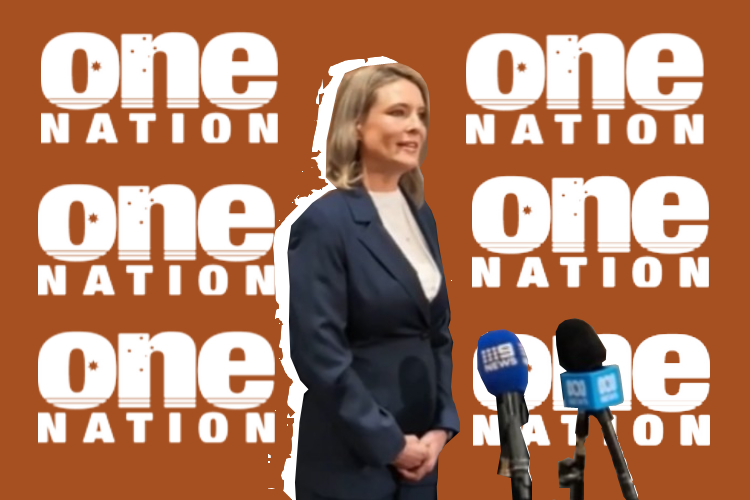
Katherine Deves is returning to politics as a One Nation candidate, promising to challenge Labor’s policies, champion women’s sex-based rights and fight for common sense.
25 November 2026
5.8 MINS
The cases of Russell Brand and seven Cornell students raise troubling questions about due process, media-driven accusations and whether justice is being sacrificed to public hysteria.
24 November 2026
2 MINS
A national Christian declaration against antisemitism is being launched in the wake of the Bondi massacre, calling believers to prayer, unity and practical action.
24 November 2026
4.1 MINS
US lawmakers and the State Department are pressing Egypt to free Christian convert Said Abdelrazek, while the Albanese government faces mounting criticism for its silence.



Great news story!!!!!!!
Great article, truly revolting bill as bad as the idea of censoring speech.
The idea of censoring businesses frustrates me as much as individuals. Businesses have a right to do trade and complying with censor/censure requests is expensive and legally problematic, as well as completely denying a businesses right to pass on the freedom of speech of its patrons – by not limiting their speech.