



Is Religious Freedom Without a Prayer in Australia?
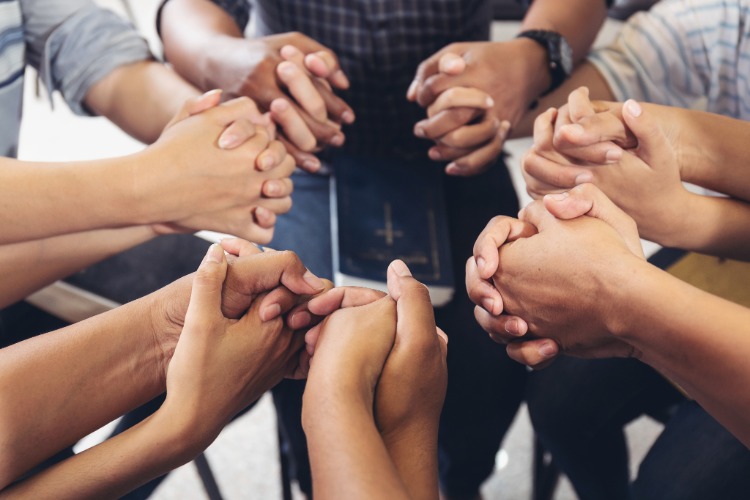
In times of persecution, a biblical response is to cry out for deliverance by way of prayer, and to pray for those who persecute us.
Across our country, the ability for Australians of faith to worship and proselytise has been increasingly curtailed in the name of “anti-discrimination” and “inclusion”. Now, with its proposed misinformation and disinformation laws, the federal government has Australians of faith in its sights in the name of “truth”.
The proposed laws have the very real potential to undermine religious freedom in Australia, and despite overwhelming objections from legal and faith groups, could be passed before Christmas.
Under the laws, social media companies will be threatened with enormous financial penalties if they fail to censor and remove content that is determined “reasonably verifiable as false, misleading or deceptive” by government officials and meets the nebulous threshold of causing “serious harm.”
Freedom of Expression
Last week, before a Senate committee hearing into the proposed laws, many religious leaders, including the Archbishop of Melbourne, the Most Reverend Peter Comensoli, made clear the threats to religious freedom posed by the laws are manifold.
On behalf of the Australian Catholic Bishops Conference, Archbishop Comensoli outlined the difficulty balancing, “the freedom of the individual to express their own beliefs and to challenge beliefs contrary to their own.”
Defending the government’s bill, Communications Minister Michelle Rowland, said that she wanted to make it as “explicit as possible” that nothing in the bill can inhibit religious expression. And while it is true that certain sections of the bill afford exemptions to the reasonable dissemination of content for a “religious purpose”, such exemptions do not extend to mainstream Australians of faith.
“Religious purpose” is not defined in the legislation; however, in its explanatory memorandum, it states that it could include “a post by a religious leader, promoting or explaining religious practices or doctrine.” Therefore, while it may be permissible for an ordained religious official to publish views on social media channels, the bill provides no assurance that content posted by a parishioner, informed by their genuinely held religious beliefs, would not be censored.
Consider a Catholic mother who posts her belief on social media that there is an immutable link between biological sex and gender. She may not be a religious leader — just a concerned parent with genuine faith-based beliefs — however, it is not clear from the bill that her post would be protected as “reasonable dissemination of content for [a] religious purpose.”
There is a very real possibility that employees of social media companies could interpret such comments as “vilification of a group in Australian society” that causes “serious harm” to groups identified by their sexual orientation or gender identity. It could, therefore, be censored as misinformation.
Overcompensation
A key feature of the proposed laws is that social media companies will be responsible for addressing misinformation on their platforms under the threat of astronomical fines of as much as five per cent of global turnover. This will create an environment where it will be in the platform’s interest to over-censor to avoid penalty. Yet, the bill offers no protections for Australians who are arbitrarily censored. Sure, one may be able to appeal to social media companies, but as anyone who has sought redress with any large organisation can attest, you will be on a hiding to nothing.
Even the government’s own communications department acknowledged this reality in its impact analysis of the laws, conceding that, “although the Bill does not require ‘over-censorship’, it is possible that digital communications platform providers could decide, in response to the Bill, to operate their platforms in a manner that goes beyond what the Bill requires of them.”
This admission demonstrates that over-censorship is an entirely foreseeable consequence.
Further, and more importantly, it was put to the senators present at the hearing that Australians of faith do not merely want an exemption to allow them to express their genuinely held beliefs — they simply want to enjoy their natural, God-given right to follow the teachings of their faith, and express them outwardly.
With an election on the horizon, those in the federal government will no doubt be offering up prayers of their own. It would be wise for those in power to realise that victory may depend on allowing religious Australians to do the same.
___
Margaret Chambers is a Research Fellow at the Institute of Public Affairs.
Republished with thanks to The Catholic Weekly. Image courtesy of Shutterstock.
Recent Articles:
10 October 2026
4.1 MINS
When Jesus rebuked the Laodicean church, this was not a sign of his lack of love, but proof of it and how greatly he longs to reward and bless us. He is knocking — will we answer?
9 October 2026
5 MINS
During a recent dialogue between high profile legal experts, a top Australian constitutional law expert was asked if Australia should have a Bill of Rights. His answer may surprise you.
9 October 2026
1.3 MINS
Season 6 of The Chosen is releasing next month, and until 15 November, your church has the opportunity to host a free pre-release screening of Episode 1. Here's how.
9 October 2026
2.9 MINS
Angus Buchan’s remarkable journey from farmer to evangelist is brought to life in a new documentary now streaming, revealing the faith, family and challenges behind his public ministry.

9 October 2026
1.8 MINS
Pen Power Australia has been busy confronting antisemitism and double standards, lodging letters, pursuing accountability and celebrating several important wins along the way.

9 October 2026
3.3 MINS
New South Wales healthcare workers who object to abortion and voluntary assisted dying face growing pressure, raising serious questions about conscience rights, employment and moral injury.
9 October 2026
2.9 MINS
God is intensely relational, and he puts us into a community of believers so we can use our gifts in service of Christ's body.


