


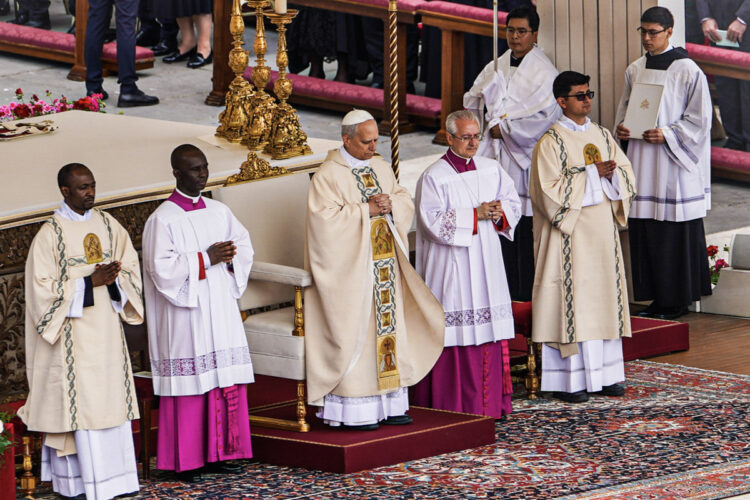
Sydneysiders Consider Pope Leo’s Papacy in a World of Increased Division and Technological Innovation
By Alex Woolnough
As Pope Leo XIV begins his papacy, Church leaders reflect on the transition from Pope Francis and how digital tools and AI could influence global Catholic engagement and unity.
“I apparently met Pope Leo once, but I have absolutely no recollection of the encounter.”
With this anecdote, Greg Craven, former vice-chancellor of Australian Catholic University and consultor for the Dicastery for Culture and Education, capped an evening of thought-provoking discussion under the theme “From Pope Francis to Pope Leo,” hosted by the non-profit Sydney Institute on 7 July.
The event opened with a talk given by Monica Doumit, Director of Public Affairs and Engagement at the Sydney Archdiocese, who considered what role media will play in Pope Leo XIV’s papacy.
“If one was to describe the Francis pontificate as controversial at times, part of the reason would have to be that he was the first pontiff to live under intense scrutiny,” she said.
“While Pope Francis was the first pope to be elected in the era of YouTube, Facebook and Instagram, it could be Pope Leo who harnesses its evangelical power.”
She highlighted how the nature of the papacy may even change given the differing online presences of Pope Francis and Pope Leo.
“From Francis to Leo, we moved from someone who didn’t know how to use a computer to one who chose his name, in part, at least, because of developments in AI,” she said.
“If Pope Leo XIII was considered the first modern pope due to his addressing workers’ rights, fair wages and social justice during the Industrial Revolution, then perhaps Pope Leo XIV will be considered the second modern pope because he too will need to address these problems in light of the new revolution of AI’s technological disruption.”
Doumit also considered how the advent of digital technologies could influence Pope Leo’s preaching to Catholics worldwide.
“On one hand, we can say of course [the message won’t change] because the Gospel is timeless for every generation,” she said.
Pope Leo a Force for Unity
“If Leo continues to focus his message on God’s love and peace, and he communicates it with all the tools available, then I think his message will not just resonate within the church but to the peripheries, physical and existential.”
Doumit’s lecture was followed by Craven’s address, which began with a focus on the achievements of Pope Francis’ pontificate.
“Francis repopularised the papacy at a time when just about no religion was popular,” he said.
“And that’s a very big achievement, particularly in a time where we are seeing some sort of spiritual resurgence among youth.”
Craven also discussed some of Francis’ shortcomings during his pontificate, stressing how these were topics that should only be addressed in the aftermath of his death.
“There were negatives, and they’re not things that we should really talk about during the reign of the pope, you simply don’t do that,” he said.
“However, he was a moody man, and could make decisions without much notice or discussion, particularly when it came to those who attended Latin Mass.”
Craven concluded his speech by considering whether the legacy of the Francis pontificate would affect the transition and nature of Pope Leo’s papacy.
“I don’t think [Pope Leo] will overthrow the Franciscan model, but I don’t think he’s going to slavishly follow his predecessor,” he said.
“I think, because of his Augustinianism, he will have an enormous emphasis on reconciliation and unity, and unity brought by genuine conversation and reflection.
“If Leo can be a unifying figure under a banner of genuine solidarity, I think he has real opportunities for further strengthening the mission of the church.”
___
Republished with thanks to The Catholic Weekly. Image courtesy of Wikimedia Commons.
Recent Articles:
2 October 2026
4.3 MINS
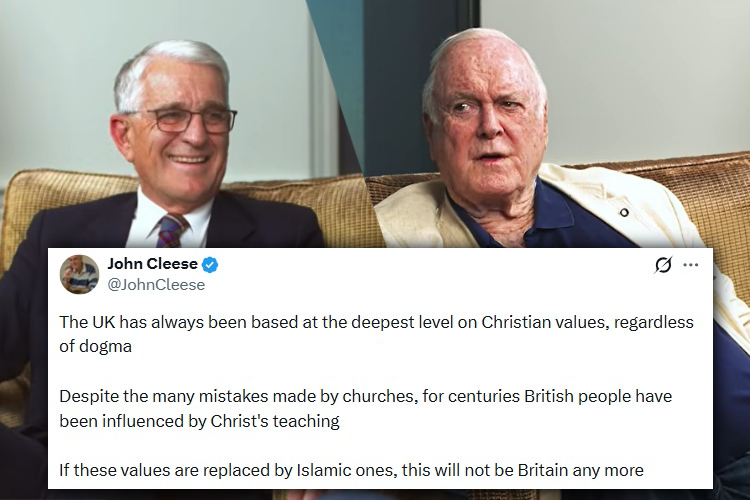
John Cleese’s views on multiculturalism, Christianity and criticism are resurfacing, offering a provocative challenge to assumptions about immigration, cultural identity and the West’s Christian foundations.
2 October 2026
11.6 MINS
New evidence challenges prevailing assumptions about adolescent sexuality and gender medicine, urging parents, clinicians and Christian leaders to prioritise honest inquiry, careful care and scientific integrity.
2 October 2026
6.6 MINS
A foiled airline attack highlights the courage of passengers and crew who confronted danger, while raising urgent questions about jihadist terrorism and the ideology behind it.
2 October 2026
3.4 MINS
New research highlights the strong links between active Christian faith, marital happiness, sexual satisfaction, family stability and the formation of future generations.

2 October 2026
5.2 MINS
Rising male unemployment, loneliness, pornography use and fatherlessness are compounding one another, raising serious questions about men’s wellbeing, family stability and the future of Western society.

2 October 2026
3.3 MINS
The Lord wants us to pray from a place of faith and resting in him. We can't awaken the Church, but he can — and he wants to do just that.
1 October 2026
3.1 MINS
Christian schools in Western Australia can currently hire staff who share their faith. Under reforms flagged by the Cook Government, they may lose that protection wherever faith is not deemed an “inherent requirement” of the role.


