


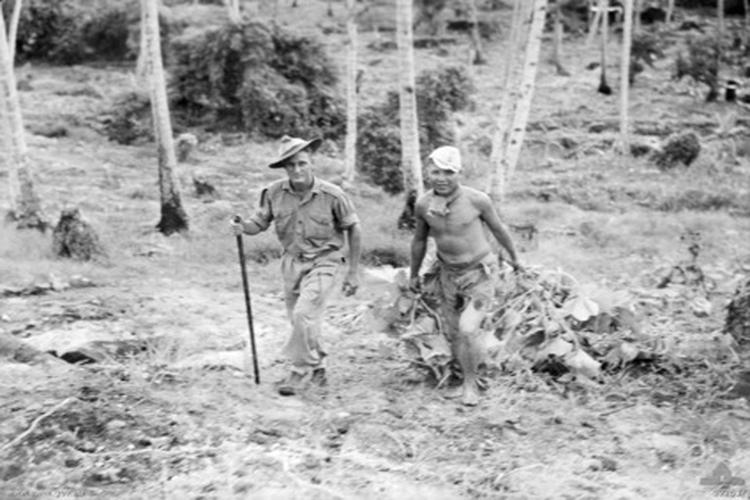
A Forgotten Hero of World War II
Dr Bernard Quin, an Australian GP, chose service over safety on Nauru, sacrificing his life to protect lepers and locals, leaving a legacy of faith, ethics, and courage.
In the sepia-tinted photograph, he has a Clark Gable moustache, carefully parted hair, khakis, captain’s epaulettes, and a cigarette.
In the background are palm fronds and bright sunlight. An Australian Rhett Butler in the last days of a war-blasted city, perhaps.
You can almost hear him whispering theatrically, “Frankly, my dear, I don’t give a damn.”
Dr Bernard Haseldon Quin did give a damn, though. He gave his life to protect the inhabitants of Nauru during the Japanese invasion in World War II.
He ought to be as much a role model for Australian doctors as “Weary” Dunlop, the heroic surgeon on the Burma Railway.
A Doctor’s Calling Beyond Comfort and Safety
Wind the clock back to 1935. Quin was a GP in the Victorian town of Echuca, a Catholic with a sturdy faith, respected in the community.
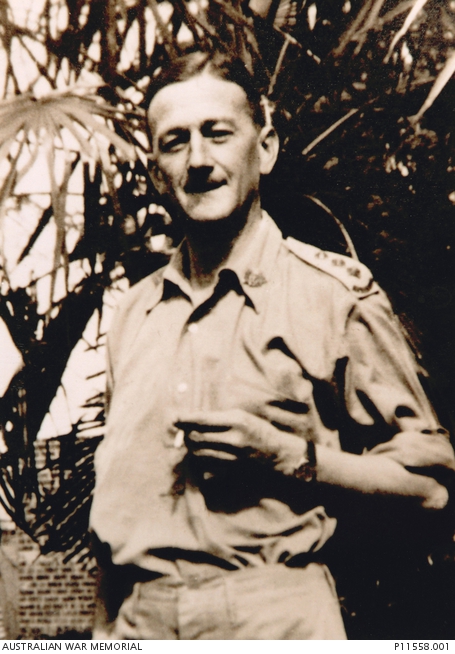
Dr Bernard Quin
But he had a wife and five children to support; it was the Depression, and money was tight. He made a tough call – he relocated with his family to the small Pacific island of Nauru to work as the government medical officer.
At the time, Nauru was an Australian protectorate. About 3,000 people lived there; only a few more than half were native Nauruans. Dr Quin had his work cut out for him. Nauru was in the grip of a leprosy epidemic.
From a single diagnosed case in 1920, an estimated 30 per cent of the population tested positive by the mid-1920s. Dr Quin must have known about it – in 1929, a Sydney newspaper had run a report under the lurid headline “Plague Spot Of Leprosy – Over 300 Cases!”
In fact, by that time, thanks to good medical care, a policy of segregation, and better nutrition, the disease was already waning. By 1940, only eight per cent of the population was being treated. Surely Dr Quin was responsible, at least in part, for that.
For Quin’s five children, it was an idyllic life, according to a memoir published by his grandson, Dr Patrick Doyle. But not for long.
Occupation, Atrocity, and the Price of Conscience
In 1940, the island was shelled by a German submarine, and Australian authorities realised that Nauru was effectively indefensible. All Australian civilians were evacuated, including Dr Quin.
But then he made a courageous decision: he returned. Four others, two Australians and two British, stayed there, too. They had decided that the interests of the locals needed to be protected if the worst happened. Perhaps the idea that the lepers needed his care weighed on Dr Quin’s mind.
And the worst did happen. In August 1942, the Japanese occupied Nauru. Two Catholic missionary priests were deported to the island of Truk.
The five remaining “Europeans” were imprisoned in a house near the local hospital. Years of hell began. Most Nauruans were deported to Truk.
The men were dragooned into slave labour; many of the girls were forced to become “comfort women”.
By the end of the war, some 40 per cent had died of violence, malnutrition or starvation. In percentage terms, this was a mortality rate far above any country in the European theatre in World War II.
Nauru had little strategic value, but the Allies finally took notice. On 25 March 1943, the Americans bombed the airstrip and destroyed 15 planes. For the Japanese garrison, it was a devastating blow.
Early the next morning, Lieutenant Nakayama Hiromi rolled up at the makeshift prison where the five Australians and British were imprisoned. The witness reports vary, but they all agree on the outcome. The Nauru 5 were murdered in impotent retaliation for the air raid. Their bodies were buried on the beach.
We’ll never know for sure exactly what happened. But this is what one of the Nauruans who were peeping at the scene from a hospital window told Australian interrogators after the war:
This was at about 5.30 am. I saw the Europeans. They were wearing their ordinary clothes – white shirts, long pants and boots. I saw a Jap grab one of the Europeans’ hands and push him down in a corner with Dr Quin. I later saw Dr Quin put his rosary on. I then saw a Japanese Officer take out his sword and cut off Dr Quin’s head and put the head in a box. When I saw that, I hid myself. At this stage, the others were still alive. It was an officer who cut off Dr Quin’s head. Dr Quin was praying when they cut his head off.
Four months later, Lieutenant Nakayama also disposed of the lepers. They were told that they were going to a better place than Nauru – as indeed they were.
All 39 patients in the leper colony were packed into a boat which was towed away. Out of sight of the island, the soldiers shelled and sank the boat and shot the desperate survivors.
Two Japanese soldiers were eventually tried for this crime. The utilitarian argument used by their defence attorney has a very contemporary ring in medical ethics circles.
If their camp had been bombed, the lepers would have escaped and spread their disease willy-nilly. “I think the step which was taken at that time was to sacrifice a few for the benefit of the majority,” contended the lawyer. It isn’t a good argument now, and it wasn’t then.
Nakayama was hanged in 1946 for the murders of the Nauru 5; the murderers of the lepers were sentenced to life imprisonment.
Dr Quin’s wife learned that her husband was dead as she read the afternoon paper on a tram a few months after the war ended. She got on with life and raised their children on her own.
In 1951, a simple monument was erected in Nauru to the memory of the five men near some government buildings.
And that was it. The sacrifice of the Nauru 5 was forgotten for 70 years.
A Forgotten Sacrifice, Finally Remembered
Finally, in 2014, the Australian Medical Association honoured Dr Quin with a President’s Award for making “an outstanding contribution to furthering the objectives of the AMA”.
In 2019, Governor-General David Hurley awarded a group bravery citation posthumously to the Nauru 5.
The relatives of these heroes would like to see their bodies returned to Australia. Since, strictly speaking, they were not in the military when they died, the Australian government has not been helpful. And archaeologist Matthew Kelly and historian Scott Seymour have been petitioning the Nauru government for permission and assistance to locate the bodies.
But their hopes have been dashed so many times that they have almost given up.
All of these five men were heroes. Seymour, who has spent years researching their background and deaths, has enormous admiration for their commitment and courage. “I just don’t think that you see that sort of thing anymore,” he told The Catholic Weekly.
The choices that Dr Quin made are particularly relevant to healthcare workers. He chose to care for lepers in a far-off land, and he chose to die for them and with his colleagues.
He was an outstanding example of both sturdy, undemonstrative Catholic faith and Australian mateship.
Doctor and ethicist Stephen Parnis recently cited Dr Quin in the annual Plunkett Lecture at Australian Catholic University in Sydney.
“One has to be prepared to pay a price for upholding ethical principles,” he said. “If that is not the case, then it really is a form of hypocrisy – that so-called cherished principles are treated more like platitudes, ready to be abandoned in the face of self-interest or potential adversity.”
Dr Bernard Quin was prepared. He lived by his principles, and he died for them.
___
Republished with thanks to The Catholic Weekly. Image courtesy of Wikimedia Commons.
3 Comments
Leave A Comment
Recent Articles:

18 September 2026
4.4 MINS
Up to 10,000 rallied in Sydney for a ban on sex-selective abortion. Twenty-four hours later, the NSW Legislative Council defeated John Ruddick's bill 21–16. The fight, says Dr Joanna Howe, is just beginning.

18 September 2026
3.5 MINS
Brothers Luke and Joel Smallbone have become one of the world's most loved Christian pop acts. As For King & Country, they have won four Grammys, 15 GMA Dove Awards and billions of song streams. And today they releasing their latest album.
18 September 2026
4.9 MINS
The government's $75 million deradicalisation program isn't working — and some wannabe terrorists have left more radical. So it's announced a new plan — which forbids identifying what's doing the radicalising.
18 September 2026
2.1 MINS
"Trans women are women." Repeat it enough and it starts to feel true. That's not an argument — it's a propaganda technique. And Australia's courts are now enforcing gender ideology.
17 September 2026
3.9 MINS
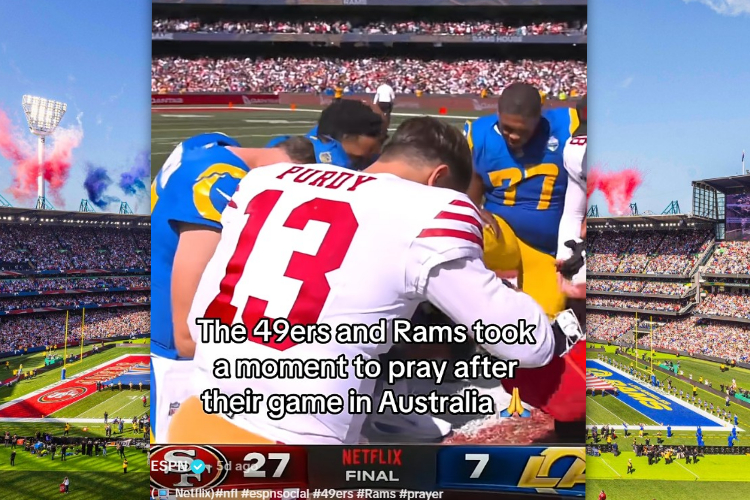
The NFL landed in Australia with a flyover, celebrities, and a 100,000-strong crowd. What caught the internet's attention was something the MCG hasn't seen much of lately: unashamed, public Christian faith.
17 September 2026
5.2 MINS
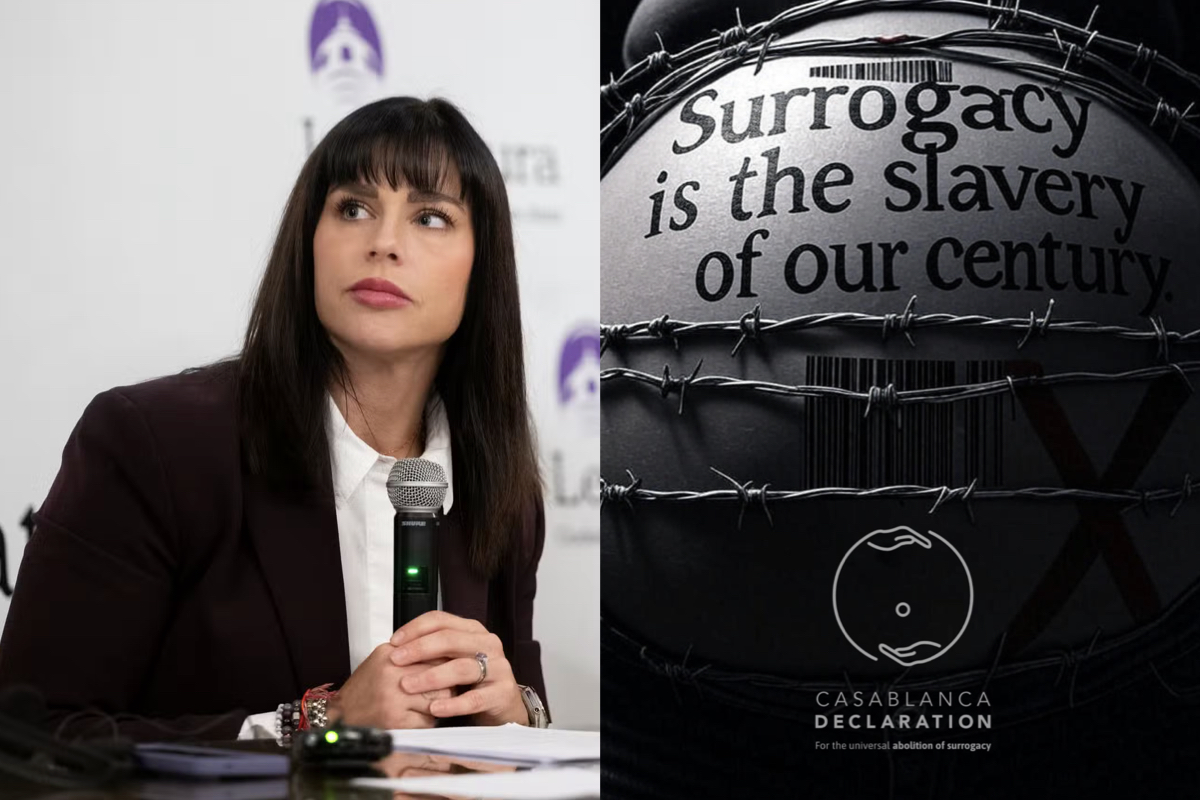
Surrogacy is often discussed through the hopes of adults seeking children. Meet the woman, born to a surrogate herself, who says the debate should begin instead with the experiences of surrogate mothers and children separated at birth.
17 September 2026
5.7 MINS
The Federal Labor Government is proposing to expand assisted suicide via telehealth — a choice to die over a video call, without a doctor ever being in the room. That's not compassion. That's the state deciding your life isn't worth the cost of a face-to-face visit.



My grandfather was a prisoner of war in Changi. He witnessed the Japanese beheadings often.
One day they were all told to kneel with their heads bowed. The Japanese officer went along randomly beheading prisoners. He stopped next to my grandfather and he was convinced it was for him. It wasn’t, it was for his best friend beside him. Nobody knew until his funeral that he saved numerous others there. Several old guys came up to my father and wanted to shake his hand. They said “your father saved all our lives” they then explained how the Japanese were starving them to death as a torture. My grandfather whenever he could early hours of the morning under cover of the dark would crawl through, under the barbed wire and steal the food scraps out of the rubbish bins to feed his mates. If he had ever been caught it would have been immediate beheading. He himself was a terribly broken man after it all and never spoke a word of what he went through. We only found out later through other prisoners what he had done and went through. His name is on one of the plaques on the trees in the avenue of honour at Ballarat, his birth home. I don’t know though if he was saved when he passed.
There are numerous stories of great bravery and kindness in the wars from all denominations, it isn’t confined to any in particular, and also from those who knew not God but showed their love for their fellow brothers in arms.
Lest We Forget.
Beautiful story about a great man praying while the Japanese chopped of his head!!! Great work Michael!
The freedoms that we have just lost, thanks to our spineless politicians, were won at such a great price. Thanks Michael and thanks Jon D for reminding us of that great price.