


The Dabbled Hand of Fate?
A turbulent flight over Bass Strait becomes a meditation on fate, fear, and providence — exploring what Christian faith offers when control disappears, and danger feels very real.
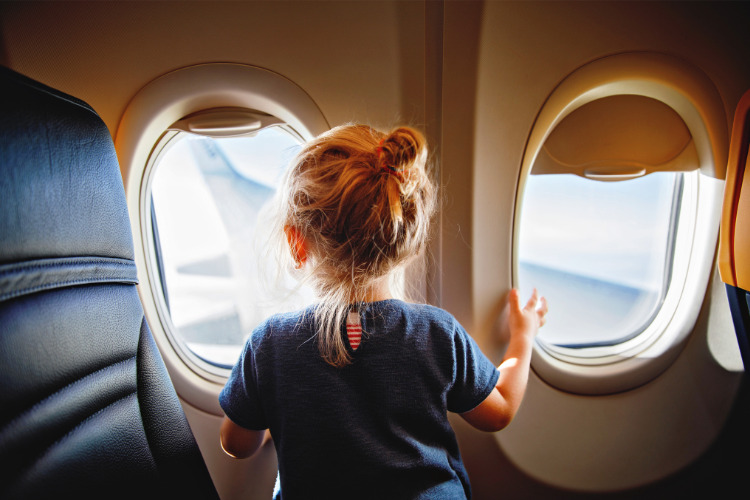
The air over Bass Strait had that unsettled feel that resists description until you are already inside it. Late on a Sunday night, my two youngest daughters and I boarded a small plane out of Devonport, tired and ready to be home after a family break in Tasmania. The cabin felt ordinary enough. The engines droned with mechanical reassurance. Everything suggested routine.
Then, not long after take-off, the plane dropped. It recovered. Then dipped again. And again.
The turbulence was abrupt and rough, the sort that offers little warning and no rhythm. We were jolted hard enough to remind everyone how small the aircraft really was. Later, the pilot calmly explained that a distant cyclone system was disturbing the air. His words were measured and professional—just remnants, just weather—but language has its limits. In moments like that, instinct arrives before explanation.
It is then, when control evaporates and responsibility sharpens, that old questions reappear. Is the world governed by chance? By fate? Or by something else altogether? Are our lives simply at the mercy of forces that spin and collide, or are we—somehow—held?
A nineteenth‑century playwright might have called it the “dabbled hand of fate.” Christians have always been uneasy with that phrase.
Fate, Fortune, and Uneasy Consolations
Across cultures, people have searched for ways to explain volatility. The ancient world spoke of fate as an impersonal power—fixed, indifferent, unavoidable. Greek tragedy is steeped in it. Lives bend and break beneath what must be. Fortune follows close behind, her wheel lifting and dropping people without apology.
Shakespeare inherited these ideas but never accepted them without question. His plays are haunted by fate, yet rarely settled by it. In King Lear, Gloucester despairs that the gods treat people like toys. In Macbeth, prophecy and ambition intertwine so tightly that it becomes impossible to tell where fate ends and choice begins.
That ambiguity matters. Shakespeare’s “dabbled hand” is not clean destiny. It is stained by human fear, rashness and guilt. Events unfold, but never in a way that absolves those who act within them.
Christian theology enters this long argument without pretending that the world is safe. Scripture is blunt about danger, storms, exile, betrayal and loss. What it refuses to concede is that any of these things are final.
Scripture and Unstable Ground
The Bible’s stories unfold in a world that feels alarmingly familiar. Seas rage. Political empires rise and collapse. Children are born into precarious circumstances. Leaders misjudge, panic or harden their hearts. Journeys end in shipwreck.
Yet again and again, meaning survives the uncertainty.
“The lot is cast into the lap,” Proverbs says, “but its every decision is from the Lord.” That line is often misunderstood. It is not a denial of randomness, nor an attempt to call everything good. It is a rejection of the idea that chance has the last word.
Jesus was unsentimental about fragility. He referred to a tower that collapsed, killing eighteen people, and refused to turn tragedy into a morality play. They were not worse than others. Accidents happen. The world is vulnerable.
And yet, He also spoke of sparrows—small, cheap, easily lost—and insisted that none fall outside the care of God.
Providence, in Christian thought, is not divine micromanagement. It is the conviction that uncertainty does not erase meaning.
Fear, Love, and Responsibility
Turbulence is uncomfortable enough alone. It is different when you are responsible for children.
Every parental instinct urges you to stay composed. You lower your voice. You feel your own fear and refuse to hand it on. But fear, in that moment, is not weakness. It is the cost of love. To care deeply is to become painfully aware of how little control you have.
Scripture does not scold that fear. Jacob fears as he nears Esau. Hannah weeps for a child she hopes for but cannot secure. Mary is told—quietly and without drama—that joy will one day give way to sorrow sharp enough to feel like a blade.
The Bible’s answer is never denial. It is trust, often faltering and incomplete.
“When I am afraid,” the psalmist admits, “I put my trust in You.” Fear is not excluded. It is relocated.
Faith Does Not Cancel the Storm
One of the more damaging Christian misunderstandings is the belief that faith guarantees smooth passage. The Gospels tell a different story.
The disciples follow Jesus and promptly find themselves in a violent storm. Waves break over the boat. Jesus sleeps. Their question is raw rather than theological: “Don’t you care if we drown?”
It is telling that Jesus addresses their fear before the wind. Then, and only then, the sea is stilled.
The point is not immunity from danger. It is presence within it. A faith built on predictability will not survive disruption. A faith grounded in presence may.
Beyond Chance and Control
Christian belief rejects the idea that life is ruled by blind fate. It also rejects the fantasy of total human control.
Instead, it insists that God works through real conditions: weather systems, technical limits, flawed decisions, human weakness. Turbulence has a physical cause. It can also become a moment of prayer, reckoning or quiet dependence.
Paul captures this tension without softening it. “In all things,” he writes, “God works for the good of those who love Him.” He does not say that all things are good. He says God works within them.
That distinction is everything.
Tolkien and the Shape of Grace
No modern writer explored providence more subtly than J.R.R. Tolkien. Middle‑Earth is not a gentle place. It is violent, morally complex and often bleak.
And yet, beneath its events runs a quiet insistence that more is happening than chance alone can explain.
Gandalf reflects that Bilbo was “meant” to find the Ring, though not by his own design. The word matters. It suggests purpose without coercion. Meaning without manipulation.
Tolkien allows free will its full weight. Characters make terrible choices. But he refuses to believe that they are abandoned to randomness. Grace, in his stories, often appears dressed as coincidence.
Courage Without Certainty
One of Tolkien’s enduring insights is that courage does not require clarity. Frodo does not choose his moment in history. None of us do.
“All we have to decide,” Gandalf says, “is what to do with the time that is given to us.”
For Christians, this is not grim resignation. Time is given. Life is received. Responsibility is real, even when outcomes are not.
In turbulence, there is little to control. But there is still posture—attention, calm, prayer, presence.
Shakespeare’s Cracked Light
Despite his tragedies, Shakespeare regularly gestures toward something like grace. Suffering strips illusion. It exposes character. It forces recognition.
Hamlet eventually concedes that “there’s a divinity that shapes our ends, rough‑hew them how we will.” The line accepts human agency without granting it ultimacy. We rough‑hew. We act. But we do not author the whole.
Proverbs echoes the same tension: we plan, but our steps are finally established elsewhere.
Assurance That Is Not Safety
Christian assurance is often mistaken for a promise of protection. It is closer to a promise of keeping.
Paul’s claim that nothing can separate us from the love of God does not deny harm. It denies final defeat.
This is why Christian courage lacks bravado. It speaks quietly. It sits beside children in shaking seats and offers reassurance not because danger is imaginary, but because love outlasts it.
What Is Taught Without Words
On that flight, theology was not theoretical. It was practised.
My daughters did not need arguments. They needed nearness. Much of Christian faith is transmitted this way—not through explanation, but through posture. Calm is learned by proximity.
“Perfect love drives out fear,” John writes. Not perfect reasoning. Love.
Mortality and the Final Horizon
The deepest uncertainty is not weather or machinery but death itself. Every flight, if we are honest, rehearses dependence.
Christianity does not minimise death. It places it within a larger story.
“Do not let your hearts be troubled,” Jesus says—not because trouble will vanish, but because it need not rule. “In my Father’s house are many rooms.”
Hope, here, is not statistical. It is promissory.
Not a Dabbled Hand
Is fate dabbled—stained and careless, as Shakespeare suggested? Christianity answers no.
The hand that holds the world bears scars. It has entered chaos rather than avoiding it. It is not distant. It is cruciform.
The cross insists that God does not stand apart from suffering. The resurrection insists that suffering does not have the last word.
Touchdown
Eventually, the turbulence passed. The plane steadied. It descended. Wheels met the runway with the unromantic confidence of engineering doing its work.
No applause. No spectacle. Just arrival.
Christian faith finds meaning here as well—not only in deliverance, but in preservation. In the ordinary mercy of getting home.
We collected our bags. We stepped into still air. Life resumed.
And something remained: a sharpened awareness of fragility, and of being held.
A World That Shakes
Uncertainty is not a theory. It is a condition.
The Christian claim is not that it disappears, but that it does not rule. Storms are real. Fear is real. But they are not ultimate.
The hand that governs the world is not dabbled, blind or careless. It is steady, wounded, and faithful.
And in that assurance, believers live—not promised calm skies, but freed from despair.
___
Image courtesy of Adobe.
3 Comments
Leave A Comment
Recent Articles:
12 October 2026
4.6 MINS
Learn how journalists use loaded language, selective quotes and misleading headlines to shape public opinion, using a controversial report about James and Joanna Howe as a case study.
12 October 2026
12.9 MINS
God’s judgement can seem difficult to reconcile with His goodness. But Scripture presents God’s perfect justice as something we can celebrate — and His present offer of mercy through Jesus as the good news.
12 October 2026
3.1 MINS
The proposed livestream of Nidal Hasan’s execution has reignited debate over justice, deterrence and public accountability, with critics comparing American justice to ISIS propaganda.
12 October 2026
3.7 MINS
An EU court case over baptismal records could pit data protection laws against religious freedom, raising serious questions about whether governments can compel churches to erase sacramental history.
12 October 2026
3.3 MINS
In the week leading up to Christ’s crucifixion, Jesus' soul was troubled. He responded with a bold prayer, and his example challenges us to that same boldness.
11 October 2026
2.6 MINS
Jesus offers us intimate friendship, which produces great joy as we walk closely with him.
10 October 2026
4.1 MINS
When Jesus rebuked the Laodicean church, this was not a sign of his lack of love, but proof of it and how greatly he longs to reward and bless us. He is knocking — will we answer?



Absolutely brilliant article about the mystery of Gods grace and love in the middle of a turbulent world.
We can remember that whatever happens to us God is with us and will carry us through
lovely piece. in the centre of the storm, God has us.