


How to Identify as a Christian on the Census When the ABS Gives You No Box to Tick
Census night is less than a week away, and the religion question is more confusing than it should be. Here’s exactly how Christians — practising or not — should answer it, and why the ABS should fix its census form.
Census night is Tuesday 11 August. What Australians write on their census form that night will help decide, for the next five years, how Christian our country is officially said to be.
Whether you’re a Christian or only loosely affiliated with Christianity, getting the answer right is important — especially as confusion and concerns of bias and donkey voting swirl around the religion question again this year.
More on those controversies in a minute. First, here’s the Daily Declaration’s official guide on how to answer the religion question so it accurately reflects your Christian affiliation.
How to Answer the Religion Question
The religion question — Question 24 — provides Australians with ten options to choose between, as well as the opportunity to write your own answer. Among the listed options are the six largest Christian denominations in Australia: Catholic, Anglican, Uniting Church, Greek Orthodox, Presbyterian and Baptist. If you see your denomination there, tick it.
Even if your identity as a Christian is more important to you than your denominational tie, still choose your denomination. The reason is simple: your answer here helps determine how much funding your denomination may receive for schools, hospitals and chaplains — and even where new churches are allowed to be built.
If you belong to a denomination that isn’t listed — such as Lutheran, Pentecostal, Salvation Army, Seventh-day Adventist, or to a more specific Catholic or Orthodox tradition — select “Other” and write it down.
If you attend a church that has a generic or branded name and you’re not sure which denomination it belongs to, don’t write the church’s name. Instead, take 30 seconds with a search engine and type “What denomination is…” along with the name and location of your church. Then select “Other” on your census form and write that answer. If the answer still isn’t clear to you, just write “Christian”.
If you don’t attend church or are unsure about denominations but still consider yourself a Christian by upbringing or general worldview, select “Other” and write “Christian”.
And to any Christian tempted to tick “no religion” because your faith feels more like a relationship than a religion, don’t tick “no religion” — unless you want to be counted the same as an atheist! The best way to express your identity would be to select “Other” and write “Christian”.
In short:
Your denomination is listed (Catholic, Anglican, Uniting Church, Greek Orthodox, Presbyterian, Baptist) → tick it.
Your denomination isn’t listed (Lutheran, Pentecostal, Salvation Army, etc.) → select “Other” and write your denomination.
You don’t know the denomination of your church → look it up, select “Other” and write it down. If you still don’t know, write “Christian.”
You don’t go to church but still consider yourself Christian in some sense → select “Other” and write “Christian.”
You have a relationship with God but don’t see yourself as “religious” → select “Other” and write “Christian.”
Why the Religion Question is Confusing for Christians
So, what of those controversies? For the average Aussie Christian, Question 24 contains at least three highly unusual features.
First, it lists “no religion” at the very top — a change that was made in 2016, retained in 2021 and will reappear this year. For a question about religion, this is a curious priority — especially given that far more Australians identified with a religion (53.8%) than no religion (38.9%) in the last census.
Second, it doesn’t allow Christians to identify simply as Christians. While the six largest Christian denominations are listed, none of them are clearly marked as belonging to Christianity. The result: Australians who consider themselves Christian by background or general outlook, but have no formal tie to a denomination, have no easy way to say so.
Third, the privilege it denies to Christians it extends to adherents of Islam, Hinduism and Buddhism — despite Christianity dwarfing all three combined.
According to the Australian Bureau of Statistics (ABS), the religion question is designed this way due to practical constraints. The ten-item list provided, it says, simply reflects “the most common responses” — and that to expand the list would make the question “too long and burdensome” (though the census form provides up to 16 tick boxes for other questions).
As for the 2016 decision to reposition “no religion” to the top of the list, the ABS said this was done in response to public submissions that warned of “perceived bias in the question format and consequent potential underestimates of the number of people who stated they had no religion”.
Is the ABS Undercounting Christian Affiliation in Australia?
However, there’s good reason to believe the change made by the ABS in 2016 has produced a bias of its own that now runs in the opposite direction.
McCrindle Research, in its 2025 report An Undercurrent of Faith, found that 65% of Australians either consider themselves a Christian or are warm towards Christianity.
Separately, in 2024, National Church Life Survey (NCLS) Research found that 58% of Australians say they believe in God or a higher power.
Neither of these measures is identical to the census religion question, but both hint that Christian affiliation in Australia is larger than the 43.9% recorded in the 2021 census.
Notably, the 2016 push that saw “no religion” placed first on the census form came from groups that insist Australians should only name a religion if they actively practise it.
However, the ABS itself says the opposite in its own 2026 Census Dictionary, where it describes religious affiliation as “the religion a person nominates an association with” even if that affiliation “may be different from their practice of, or participation in, religious activity“. Indeed, according to the ABS, the religion question “is not designed to measure the level of adherence to beliefs or participation in practices common to” the religion a person nominates.
Importantly, the ABS has elsewhere acknowledged that the order in which options are listed on census forms has a real effect on how people answer. Among those effects is “donkey voting” — the well-documented phenomenon of people choosing the first available option in a list rather than the one that’s true.
Taken together, this means the ABS made a change in 2016 that serves the secular lobby’s goals at the direct expense of its own — and as a result, it is likely undercounting Christian affiliation in Australia.
The ABS can make its case for its current design of the census religion question. But in its current form, the question does not reflect how theologists or anthropologists classify the world’s religions, or how adherents themselves understand their place within them. It applies a flattening secular logic to a question that was never secular to begin with.
How the ABS Can Fix Its Religion Section
Identifying the flaws in the ABS census form is one thing — but what can be done about it?
Below we have provided an example redesign of the religion question that we believe would more accurately measure the religious affiliation of Australians and resolve the various problems identified above.
This redesign:
- Reflects the reality that a clear majority of Australians hold some religious affiliation, rather than treating “no religion” as the default starting point.
- Makes it easy for Christians to simply identify as Christians if they wish.
- Provides Sunni and Shia options within Islam — a distinction the ABS’s own classification system already recognises internally.
- Gives Hindus, Buddhists, Sikhs and Jews the same room to specify a tradition if they wish.
- Gives “no religion” its own equally detailed breakdown that better reflects the diversity of non-religious outlook in Australia.
- Uses a Yes/No filter question the ABS itself tested for 2026 but didn’t adopt.
- Expands religion from a single question to four questions, better reflecting the role that religion and faith play in the lives of Australians.
Here is our proposed update:
24 Does the person have a religion?
Answering this question is optional.
☐ Yes
☐ No ▶ Go to 2725 If yes, which religion?
• Mark one box only, or select ‘Other, please specify’ and enter the religion.
• The religions listed were those most commonly reported in the 2021 Census, in descending order.
☐ Christian
☐ Islam
☐ Hinduism
☐ Buddhism
☐ Sikhism
☐ Judaism
☐ Other (specify) ___________________26 If you identify with a specific tradition within your religion, tick or write it below.
• Optional. Complete only the section matching your answer to question 25.
• A person can select one response only.If Christian
If you wish to record more detail than the boxes below allow, tick ‘Other, please specify’ and enter the full name — for example Seventh-day Adventist, Salvation Army, Chaldean Catholic, Maronite Catholic or Coptic Orthodox.
☐ Catholic
☐ Anglican
☐ Uniting Church
☐ Eastern Orthodox
☐ Presbyterian
☐ Baptist
☐ Pentecostal
☐ Lutheran
☐ Other (specify) ___________________If Islam
Sunni and Shia are the two largest traditions within Islam. If another tradition applies — for example Ahmadiyya, Alawi or Alevi — tick ‘Other, please specify’ and enter it below.
☐ Sunni
☐ Shia
☐ Other (specify) ___________________If Hinduism
If you wish to record a specific tradition, enter it below.
___________________If Buddhism
If you wish to record a specific tradition, for example Theravada, Mahayana or Vajrayana, enter it below.
___________________If Sikhism
If you wish to record a specific tradition, enter it below.
___________________If Judaism
If you wish to record a specific tradition, enter it below.
___________________27 If no, which best describes the person’s belief?
• Mark one box only.
• ‘Agnostic, secular or no specific belief’ covers those with no particular philosophy or worldview.
• ‘Spiritual but not religious’ covers those who hold personal spiritual beliefs outside an organised religion.
• Use ‘Other, please specify’ to record a specific philosophy or group, for example Humanism or Rationalism.
☐ Atheist
☐ Agnostic, secular or no specific belief
☐ Spiritual but not religious
☐ Other (specify) ___________________
How to Provide Feedback to the ABS
This year’s form is already locked in and will be the one every Australian fills out on 11 August. But the question over how the ABS will measure the religious affiliation of Australians in the 2031 census and beyond remains live — and you have an opportunity to provide feedback.
Use the links below to make your voice heard. You may wish to raise the points made in this article — the “no religion” placement, the missing “Christian” option, the imbalance between Christianity and other faiths — and feel free to link back to this piece (the URL is https://dailydeclaration.org.au/2026/08/05/christian-census-abs/).
If you’d like a response from the ABS, use the bureau’s General enquiry form. If you’d rather stay anonymous, use the ABS’s Feedback form.
Even if the 2026 census form is confusing, your answer doesn’t need to be. If your denomination is listed, tick it. If it’s not listed, write it. If you don’t know your denomination, look it up. If you’re unsure or you don’t attend church but consider yourself Christian in a general sense, write “Christian”. If you have a relationship with God but aren’t “religious”, write “Christian”.
Then share this article.
___
Image courtesy of Unsplash.
16 Comments
Leave A Comment
Recent Articles:
8 October 2026
3.6 MINS
John Anderson warns that Australia’s decline is rooted in spiritual and cultural disintegration, calling for a recovery of Christian foundations, social cohesion and national purpose.
8 October 2026
1.6 MINS
A blackout at Australia’s $150 million Pre-COP climate summit in Fiji delivered an awkward lesson in energy reliability to delegates preaching the renewable transition.
8 October 2026
4.1 MINS
Aboriginal communities in Central Australia already know the gospel message. What they need now, Robyn Murray writes, is discipleship, encouragement and Christians willing to pray and participate.
8 October 2026
4.1 MINS
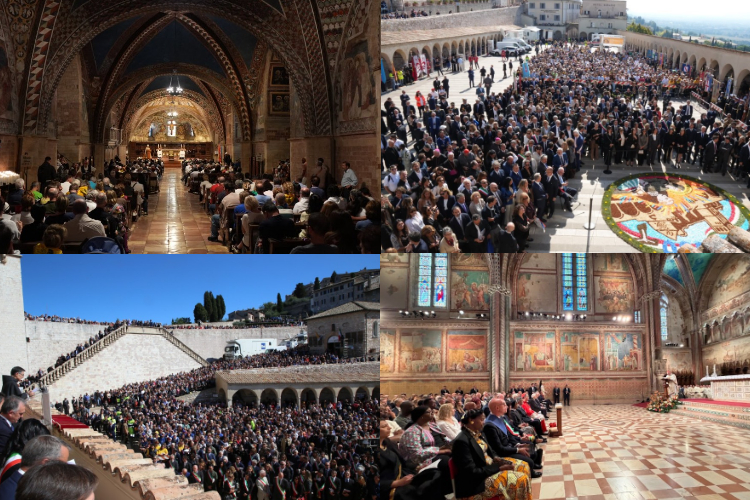
Italy honours St Francis of Assisi 800 years after his death, celebrating a saint whose devotion to Christ, radical simplicity and message of peace continue to shape generations.
8 October 2026
2.8 MINS
The MDBA’s case for further water buybacks rests on climate projections increasingly challenged by climate scientists, historical rainfall data and evidence of a greener Basin.
8 October 2026
4 MINS
Christ’s authority and concern is not limited to the four walls of the church. They extend to the life of the nation, and we are called to take up our part in seeking its righteousness.
7 October 2026
3.6 MINS
Victoria’s 18th March for the Babies will bring families together to peacefully affirm the value of every human life and call for a cultural change towards life.



Kurt, thank you. The design of this year’s question on religion is a clear demonstration of a ‘terribly designed survey.’ The ABS should know better than to publish a question that has so many faults in it. The fact that they have is demonstration of their bias, particularly against Christians and Jews.
current ads on TV seem to promote “no religion ”
I ve been curious about Why. So thanks for your article which is very helpful!
I’ve decided to call myself a Messianic Jew and stand with my Jewish brothers and sisters on this vital question as well as my own personal belief system.
Good one, Christine.
In the ridiculous section asking people to identify sexual orientation, I put “Normal.” That’ll give someone a headache. I hope.
5 Aug 2026
Hi,
Thanks for your helpful article. I am curious about the statement: “Even if your identity as a Christian is more important to you than your denominational tie, still choose your denomination. The reason is simple: your answer here helps determine how much funding your denomination may receive for schools, hospitals and chaplains — and even where new churches are allowed to be built.”
I followed the hyperlink and the words ‘fund, funding, and contribution’ do not occur in the text from the link. I understand the logic behind planning and zoning concerns – but in terms of ‘funding your denomination may receive…” – I’m just wondering, why would any Christian organisation want to receive State funding?
If I’m misinterpreting your meaning, then please correct me. Unfortunately, many Christian schools and other organisations tied to local churches or denominations do receive funds from the State – which means the State can exert control measures on Christ’s church. I’m afraid I don’t see Biblical precedence for this and I’ve also seen the terrible abuse from the State that has resulted – both here and in other countries, like Canada.
I don’t think our LORD builds His Kingdom by using the coffers of civil government. It reminds me of Uzzah putting out his hand to steady the ark of God on the ox-cart. The Kingdom is built on the efforts, savings and giving of His people. Here endeth the lesson. :) I’d appreciate your response as I’m quite often mistaken in what others write. God bless.
Parliamentarians use statistics to further their plans. To try and statistically reduce Australia’s number of Christians helps the anti-Christian agenda – eg attacks against Christian schools.
Does anyone have thoughts about the ‘Gender’ issue?
thank you
Thank you for all this information about the census. I really appreciated the thoroughness in your article. It was so helpful.
I pray the information in the census remains safe and confidential. If hackers wanted to find a data base with ‘who identifies as what’- then the census information could be exploited. May God protect the incoming information and use it for honest and helpful purposes. May no one be able to change the data once its entered.
Just wondering why the Religion question seems so much more important than the gender question. A valid point made in the interview above is that many Australians seem more than happy to have their children attend a church school, or place their aged parents in a church affiliated old peoples home or attend a hospital for health issues but do not wish to be associated with the Christian faith. This is especially evident in rural areas where government assistance is considered to be not viable.
Great advice. Love your your suggestions of how the question of religion should be framed in future Censuses to get an authentic image of Australian society.
Can I respectfully suggest that you embrace the power and reach of the Australian Christian Lobby (ACL). They have a strong voice and reach into to political arena: Federal and State. They are non denominational and have established and effective networks. our current focus is advocating for children from failed abortions being denied any medical or humanitarian assistance. Presently State governments authorise murder of defenceless babies with my money. I would love to be able to support all worthy causes but I am of limited means – 77 year old pensioner that still has to work hard to earn additional income to cover ever increasing cost of living costs including rent.
I’ve been informed from those doing the census counting, that anything written eg. Christian, next to ‘other’ will be ignored and just counted as ‘other.’
i.e. nothing!!
I would have done what you said ….but!
Please advise at this late hour.
On the gender question I filled in: other – woman, I didn’t want to fill in straight!
Neither did I, Janny. So I put “Normal”.
I really appreciate your article. I feel quite disappointed with the 2026 census because I want my voice to be heard. Australia is a Christian country, and I believe it’s important to raise concerns about the census — such as the absence of a “Christian” option, the placement of “no religion,” and the imbalance between Christianity and other faiths. I believe “Christian” should be listed clearly under religion, not just as an option among others. Additionally, Auslan (Australian Sign Language ) should be categorised under languages rather than as another option, as these details may not be properly counted. Auslan is for everyone, young and old. I also feel that the gender options should be simplified to just female or male at birth, in line with biblical teachings. It’s important to uphold the truth and prevent any manipulation of words that could lead people astray, blinded by falsehoods conflicting with the Lord’s truth.