


The Big Mistake Secular People Make About Religious Discrimination
There’s a big mistake many secular people make about religious discrimination.
It’s a mistake I’ve seen repeated many times. Even by (or especially by) educated secular commentators. This mistake is a fairly recent one. But it’s impact is serious: it’s corroding religious freedom in Australia.
What’s the big mistake?
1) The Big Mistake:
Thinking it’s discriminatory for a religious organisation to only employ people of the same religion.
The big mistake is a simple one: thinking it’s discriminatory for a religious organisation to only employ people who adhere to the organisation’s religious beliefs (including on the issue of sexuality).
Political commentator Professor Peter van Onselen epitomises this secular mistake when he writes about the government’s proposed Religious Discrimination Bill:
[R]eligious organisations want new laws so they can continue to discriminate against people on the basis of their sexuality or gender… If religious leaders want to discriminate on the grounds of their beliefs they have to accept that in doing so they are getting exemptions from societal norms of good behaviour the rest of us believe in and are required to abide by.
In other words, religious organisations discriminate unfairly when they say they want to maintain policies that allow them to select staff based on religious beliefs and practice.
According to this secular view, if it’s wrong for the Commonwealth Bank or Qantas to discriminate against employee hiring/firing based on employees’ religious beliefs, then why should religious schools, charities, aged care homes etc be allowed to discriminate? How is that fair and just?
But this view misses something vital:
2) What Many Secular People Miss:
Religious organisations are different to secular businesses
Secular commentators like van Onselen are missing something important.
Organisations like the Commonwealth Bank and Qantas have a business-related mission: whether to store/lend money, or to fly aeroplanes.
To fulfil that mission, it’s irrelevant what religion their employees are. All things being equal, both Christians and non-Christians are equally fit to fly aeroplanes or lend money to customers. (Hence the importance of anti-discrimination laws being applied to these companies).
But with organisations designed to advance a particular political, cultural or religious goal, it’s a different situation. Having staff and employees (perhaps even customers) that are aligned with the goals and ethos of the organisation is often necessary for such an organisation to function, let alone achieve its purpose.
So to use a personal example, I grew up as an immigrant Hungarian here in Australia – a cultural minority. We have our own Hungarian scouting movement (yes, I’m serious), staffed by scout leaders of Hungarian ethnicity.
The whole purpose of the Hungarian scouting movement is to further Hungarian culture among its ‘customers’ – in this case young 1st and 2nd generation Hungarians.
This means that non-Hungarians are barred from being scout leaders – or even scouts for that matter. Allowing (or forcing) non-Hungarians to join would compromise the organisation’s mission, and reason for existence. Hungarian Scouts would then lose its unique Hungarian identity – and would cease to operate as a result.
Now, having cultural/racial minority groups staff according to their culture/race remains uncontroversial.
And the same is still true for other organisations that are brought together for other reasons: the Labor party is free to select staff who hold to Labor values. Greenpeace is free to hire staff who hold to their core values, even if it means sacking a staff member who openly questions Climate Change on their own social media account, in their own private time. (Greenpeace would be hard pressed to retain its environmentalist identity, let alone further its environmental mission, with staff members who are climate sceptics!)
And exactly the same logic should apply to religious organisations, who exist to promote a religious purpose. Whether it’s a religious school that exists for the purpose of promoting its religion among school students. Or a religious charity that exists to help poor people, in a particular way (according to religious values). Or a church run preschool that exists to provide preschool services, but in a Christian way.
Just as political parties, cultural groups, and environmental organisations have a mission and identity that they preserve by hiring/firing staff accordingly, so do religious organisations.
As legal Professor Nicholas Aroney from the University of Queensland put it recently:
[A] religious organisation cannot maintain its religious identity unless its personnel themselves adhere to the religion.’
Up until five minutes ago, this was common sense. But now it’s becoming controversial.
And yet, there’s a big problem with framing this issue as one of ‘discrimination’.
3) The Problem With Framing The Issue As ‘Religious Discrimination’
You end up tarring nearly every secular organisation with ‘discrimination’.
Framing the issue of religious organisations hiring/firing staff who adhere to their ethos as ‘religious discrimination’ is problematic:
If you believe religious organisations who demand that staff adhere to their religious worldview are ‘discriminating’, then you run into all sorts of problems when it comes to other cultural/political/issues-based organisations:
• Are cultural organisations that demand their staff to be a particular race (e.g. Hungarian Scouts) discriminating on racial grounds?
• Are political organisations (like the Labor party) that demand their staff hold to Labor political views discriminating on political grounds?
• Are issues-based organisations (like Greenpeace) that demand their staff hold to particular views on animal rights and climate change discriminating on ideological grounds?
If we’re going to be consistent, and condemn religious organisations for discriminating on religious grounds, then logic demands we condemn the above organisations for discriminating on equally problematic grounds (racial discrimination, anyone?).
Now I’m sure Peter van Onselen and others from the secular Left would never demand that cultural/racial minorities be forced to include others from outside their culture/race into their racially-based organisations.
They would never demand that the Labor party accept card carrying Liberal voters. Nor would they ever demand Greenpeace keep staff that openly disparage Greta Thunberg and Climate Change.
But evidently, for many secular people it’s right and proper to demand religious organisations accept staff who don’t practice the organisation’s religion.
Having and maintaining a religious identity and mission is thus seen by many as less valid than having and maintaining a cultural/political/issues-based identity and mission.
But this begs the question: why is it any less valid for a religious organisation to strive to maintain its religious identity than for, say, the Hungarian Scouts to maintain their race-based identity? The answer to this question isn’t obvious (unless perhaps you have a narrow view of religion).
And so, there’s a more accurate way of understanding this issue:
4) A Better Way Of Understanding This Issue
It’s not a ‘right to discriminate’, but a ‘right to select’ staff that adhere to the organisation’s ethos.
If we’re to be logically consistent, and afford religious organisations the same freedom of association that we afford cultural/political/issues-based organisations, then we need to view staffing policies through a more intellectually accurate lens than ‘discrimination’.
And that lens is the right to select, rather than right to discriminate.
In other words, just as we give a cultural/political/issues-based organisation the right to select staff that adhere to its mission, ethos and identity, a religious organisation should also have the same right to select staff that adhere to its mission, ethos and identity – even if it’s a religious mission, ethos, and identity.
Thus, giving a Christian school the right to select staff based on their mission and ethos of Christianity is no different to giving Greenpeace the right to select staff based on their mission and ethos of environmentalism.
Giving religious organisations such a right is not a ‘privilege’, ‘special treatment’ or an ‘exemption’: it’s merely logical (and moral) consistency.
Will Logical and Moral Consistency Win the Day?
If not, the non-religious will also suffer.
The Federal government is trying to address some of these concerns through their proposed Religious Discrimination Bill, and for that they’re to be commended.
Unfortunately, the Bill does fall short of providing religious organisations the same freedom of association afforded to secular issues-based organisations.
As Christians, we should pray and advocate that logical and moral consistency wins the day – not just for our sake, but for a just and good outcome for all of society. Because once you view the world through an inconsistent moral lens, then it’s not just Christians that suffer. Eventually, everybody suffers.
___
Originally published at AkosBalogh.com
Photo by Manika Trevisan on Unsplash.
3 Comments
Leave A Comment
Recent Articles:

13 October 2026
2.6 MINS
Allegra Spender’s proposed bill reignites debate over discrimination protections, religious freedom and the right of faith-based schools to uphold their beliefs and values.

13 October 2026
3.9 MINS
Tasmania’s proposed conversion practices law raises serious concerns for churches, parents and faith-based schools, with broad definitions, severe penalties and uncertain protections for religious freedom.

13 October 2026
5.5 MINS
Stephen Baldwin’s journey from drug addiction to sobriety, Christian faith and family life reveals how surrender, daily discipline and renewed hope transformed his life.

13 October 2026
2.1 MINS
Victoria’s assisted dying deaths have surged by 300 per cent since legalisation, while a disturbing case involving a patient’s partner raises urgent questions about safeguards.

13 October 2026
1.8 MINS
Australia faces mounting geopolitical, economic and defence threats, but its political leaders lack the statesmanship, bold vision and decisive communication needed to prepare the nation.

13 October 2026
2.8 MINS
The church in Ephesus had so much going for it. Yet despite their hard work, perseverance, endurance, and discernment, there was something deeply wrong: they had left their first love.
12 October 2026
4.6 MINS
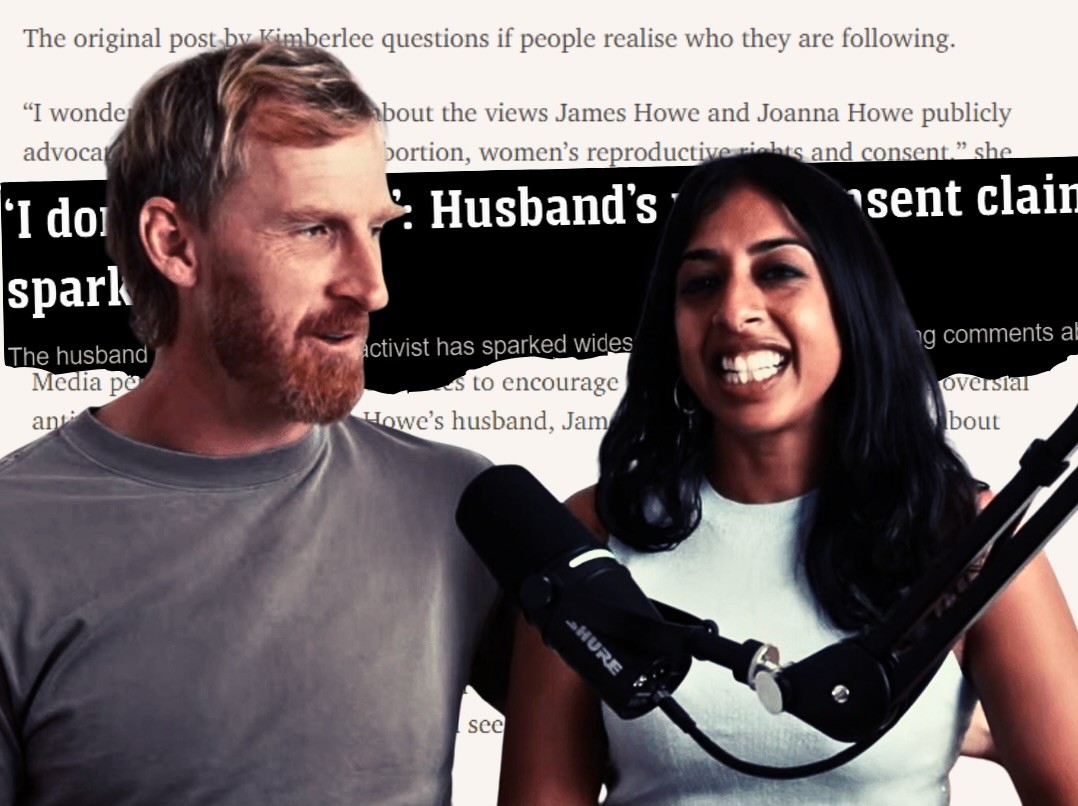
Learn how journalists use loaded language, selective quotes and misleading headlines to shape public opinion, using a controversial report about James and Joanna Howe as a case study.



Commonsense arguments Akos – but a commodity that is sadly lacking in this crazy age.
Thanks Akos,well said. Article needs to get into the wider community.
Amen well said