



Should Transsexuals Be Allowed to Be Euthanised?
Jackie Trad (aptly nicknamed “The Terminator”) wants Queensland to follow the lead of Western Australia and Victoria in giving people state-provided assistance to end their own lives. Ironically, the fact that Trad’s political career is still alive — after having been referred to the corruption watchdog — multiple times — is testimony to just how strong the human will to life is. However, Trad was reported as saying in The Australian:
“I have no doubt that as a government, we will do the same thing that we did with the termination of pregnancy and that is to respectfully consider the law reform commission’s suggestions and recommendations and draft legislation and present a bill… Given how far we have come under Annas tacia’s leadership on this issue, given that it is Labor Party policy, I think you can be confident Labor will … keep this process moving forward.
What’s more, I’m told that it is only a matter of time before politicians in NSW pull the trigger — pun intended — on legalising euthanasia. Apparently, they’re just waiting for the COVID-19 crisis to settle down before dealing with it in the same way that they did with the issue abortion last year.
Before they do, though, it’s crucial that politicians stop and consider where all of this will eventually lead. Proponents will initially talk about having rigorous safeguards and the like, but it will only be a matter of time before they are loosened. Just take the example of Nathan Verhelst in Belgium.
In September 2013, Nathan was euthanized by the medical authorities due to “unbearable psychological suffering”. What was the cause of his emotional grief? It was that Nathan deeply regretted his decision to have transitioned into a “man”. In his book The Madness of Crowds (Bloomsbury, 2019), Douglas Murray recounts what took place:
“In total she had three major sex-change operations between 2009 and 2013. At the end of this process ‘Nathan,’ as he then was, reacted to the results. ‘I was ready to celebrate my new birth. But when I looked in the mirror I was disgusted with myself. My new breasts did not match my expectations and my new penis had symptoms of rejection’. There was significant scarring from all the surgery Verhelst had undergone, and he was clearly deeply unhappy in his new body…
The life that Nathan had clearly hoped for had not come about, and depression soon followed. So in September 2013, at the age of 44 – only a year after the last sex-change procedure – Verhelst was euthanized by the state. In his country of birth euthanasia is legal and the relevant medical authorities in Belgium agreed that Verhelst could be euthanized due to ‘unbearable psychological suffering’. A week before the end he held a small party for some friends. Guests reportedly danced and laughed and raised glasses of champagne with the toast ‘To life’. A week later Verhelst made the journey to a university hospital in Brussels and was killed by lethal injection. ‘I do not want to be a monster,’ he said just before he died.”
The story is heartbreaking on so many levels. Not the least of which was the callous disregard for Nancy’s (‘Nathan’s’) life by her biological mother. Tragically, Murray records that:
“After Verhelst’s death his mother gave an interview to the local media in which she said, ‘When I saw “Nancy” for the first time, my dream was shattered. She was so ugly. I had a phantom birth. Her death does not bother me. I feel no sorrow, no doubt or remorse. We never had a bond.”
This is precisely why politicians need to maintain legal protections for people. Palliative care treatments for those who are dying have never been better in the history of the world. But as the old saying goes, before you remove a fence, you first have to ask why it was erected in the first place.
We rightly want to protect people from self-harm, and millions of dollars are invested in helping people with depression and suicidal tendencies. But if euthanasia is legalised then this is — as Aldous Huxley presciently predicted — the ‘Brave New World’ that we will endure. A place where the question of what constitutes “unbearable suffering” morphs into all manner of definitions. And that’s a world that is both inhumane and undignified.
[Image by Ben Davis, Caldron Pool]Recent Articles:
12 October 2026
4.6 MINS
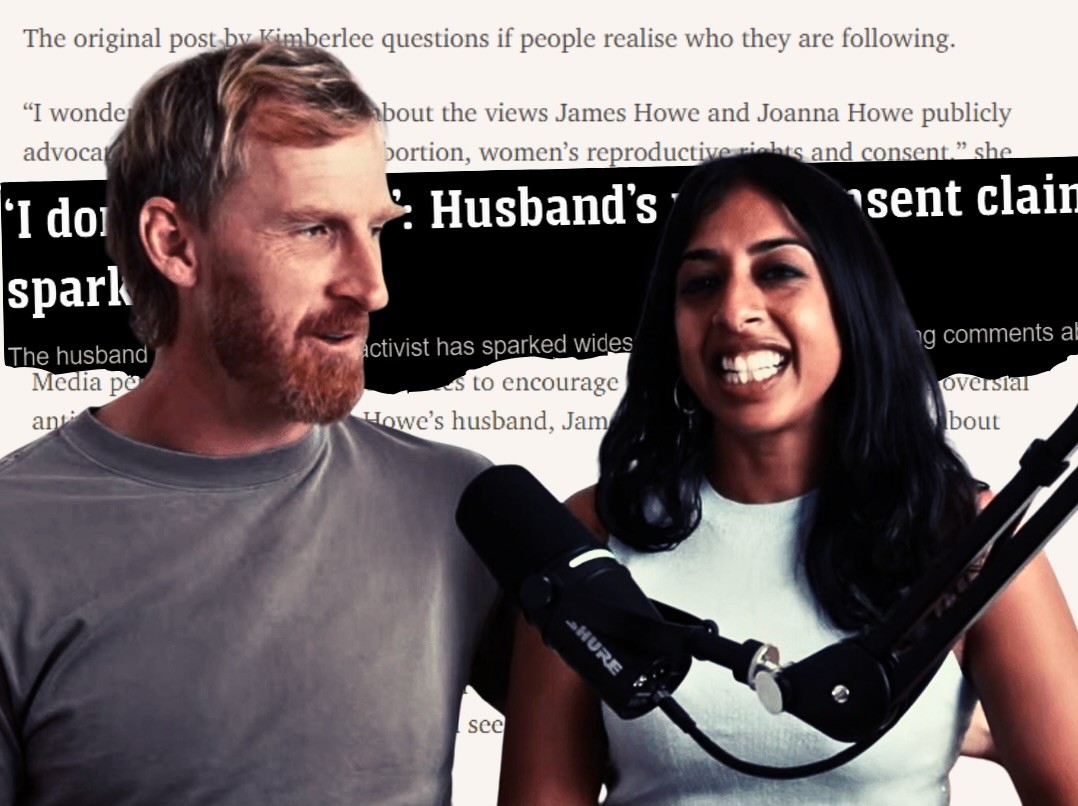
Learn how journalists use loaded language, selective quotes and misleading headlines to shape public opinion, using a controversial report about James and Joanna Howe as a case study.
12 October 2026
3.3 MINS
In the week leading up to Christ’s crucifixion, Jesus' soul was troubled. He responded with a bold prayer, and his example challenges us to that same boldness.
11 October 2026
2.6 MINS
Jesus offers us intimate friendship, which produces great joy as we walk closely with him.
10 October 2026
4.1 MINS
When Jesus rebuked the Laodicean church, this was not a sign of his lack of love, but proof of it and how greatly he longs to reward and bless us. He is knocking — will we answer?
9 October 2026
5 MINS
During a recent dialogue between high profile legal experts, a top Australian constitutional law expert was asked if Australia should have a Bill of Rights. His answer may surprise you.
9 October 2026
1.3 MINS
Season 6 of The Chosen is releasing next month, and until 15 November, your church has the opportunity to host a free pre-release screening of Episode 1. Here's how.

9 October 2026
1.8 MINS
Pen Power Australia has been busy confronting antisemitism and double standards, lodging letters, pursuing accountability and celebrating several important wins along the way.


