



4 Different Types of Arguments Christians Should Use In the Public Square
There was a time when people in the West held to Christian morality as the default norm. It was seen as ‘self-evident’ and obvious. Whether it was universal human rights, loving others, or caring for the marginalised, such morality was by and large accepted as the gold standard.
But these days, that’s less and less the case.
As our society moves away from a Christian-ish view of morality, some Christian moral viewpoints are now controversial. Just consider the ‘lightning-rod’ issues of abortion, euthanasia, not to mention gender and sexuality. In response, Christians may find themselves withdrawing from moral debates (or in many cases, pressured into silence). It’s just not worth the ensuing fight, or even hate, we might tell ourselves.
But as God’s people, we’re called to love our neighbour and do good to those around us, as we have opportunity (Gal 6:10). This often involves promoting justice and the welfare of others (cf. Mic 6:8): whether at our kid’s schools, in our workplaces, local neighbourhoods, or at a political level.
And so, how can Christians engage in these issues, when our views are increasingly contested? How do we make the case for a justice that more closely aligns with God’s standards, than our culture’s standards?
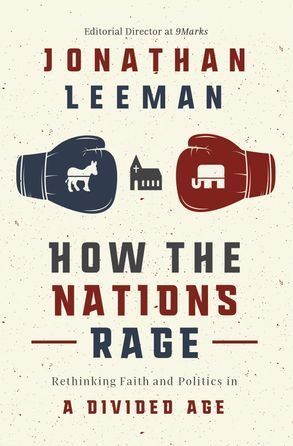 I’m currently reading a book that explores this issue: How The Nations Rage — Rethinking Faith and Politics in a Divided Age, by American author Jonathan Leeman. Leeman has much to say about how Christians should engage our society, and his perspective is worth considering.
When it comes to engaging on moral issues in the public square, Leeman defines himself as a ‘principled pragmatist’ (p. 181):
For the purpose of biblical justice and within the bounds of biblical morality (principled), make whatever arguments work (pragmatist).
In other words, when we pursue biblical justice in our society, we are free to use different types of arguments to persuade others, (as long as those arguments are within the bounds of biblical morality). Of course, there are no guarantees that these — or any — arguments would persuade non-Christians. But they help us to act wisely and faithfully, especially in our diverse democracy.
Here are the 4 different types of arguments:
1) The ‘Luther’ Approach: Appeal to Conscience
In this argument, you appeal to your conscience as the reason to do something, or not to do something. The strength of this argument is that it appeals to something our western society still holds dear (to some degree): the idea of not burdening another’s conscience, aka freedom of conscience. While this freedom is shrinking (especially in areas of sexuality), it is still there.
This argument is often useful when you’re wanting to carve out space for yourself (and/or others) not to take part in particular activities.
For example, Christians are able to make use of this in a variety of different ways: from withdrawing their kids from certain types of sex education, to medical practitioners declining to take part in abortions.
2) The Martin Luther King ‘Natural Law’ Approach
As Leeman points out (p. 183),
A natural law appeals to an outside, transcendent law, but it presumes that every human being can apprehend to it on terms they recognise.’ This was the approach of movements like the Black Civil Rights Movements in the US. MLK appealed to it when he wrote:
‘A just law is a man-made code that squares with the moral law or the law of God. An unjust law is a code that is out of harmony with the moral law.’
Most secular non-Christians still believe that morality is not purely subjective, but is based on principles that transcend time and culture. Thus, for example, taking an innocent life is always wrong, even if the local government and culture say it’s acceptable (e.g., in Nazi Germany).
Christians can therefore appeal to standards like the UN’s International Declaration of Human Rights, which seeks to describe such inalienable rights, including things like freedom of speech and freedom of religion.
Here’s an example of how I framed religious freedom as an appeal to freedom of association, which secular people see as an inalienable right for other minorities.
3) The ‘Evidence-Based’ Approach
This is the sociologist’s approach: using various forms of data to prove a point. So, for example, Christians might use this argument to promote robust religious freedom, by saying that religions like Christianity have a positive impact on those who practice it, but also on the wider society.
The Weakness of These Three Approaches
All of the above approaches might prove useful on different occasions, as they’re accessible by non-Christians. They rely on the common ground we have with others no matter what their worldview. And so, they’re well suited to our pluralistic democracy.
However, according to Leeman, they all share the same weakness (p. 184):
All three lack the force of conviction because the very thing they are good at — finding common ground — affirms our modern intuitions that all authority and moral legitimacy rests in every individual’s consent. Unless I can be convinced that something is true on my terms, it must not be true. And so, you owe it to me to convince me on my terms. Ironically, the very attempt to persuade risks hardening people in the deeper certainty that they are right.
In other words, it’s like we’re playing a game with rules that say, ‘you need to convince me, otherwise it can’t be true’. It’s a risky game, as it can backfire. Yet it has its place.
4) The ‘Polycarp’ Approach
In contrast to the first 3 types of arguments, there is a fourth type of argument that Leeman calls the ‘Polycarp’ approach (p. 185):
Polycarp was a pastor in second-century Smyrna (modern-day Turkey). In 155 he was arrested and asked by a Roman proconsul to worship the emperor and curse Christ. Polycarp replied, “For eighty and six years have I been his servant, and he has done me no wrong; how can I curse my King, who saved me?”
He continues (p. 185):
The proconsul threatened him with being burned at the stake. Polycarp replied that the proconsul could only light a fire that lasted for a moment. God threatened both of them with an eternal fire that would never go out. The proconsul ordered his death, and Polycarp burned at the stake.’
Polycarp didn’t try to convince the Roman Consul with any of the above three arguments but simply declared his actions were driven by faith in Christ.
Now, declaring that our actions are driven by our faith in Jesus may not go down well in public-square arguments. But faithfulness to Christ — not to mention intellectual honesty — will often require it.
Moreover, we need to recognise that every moral position is a ‘religious’ position at its heart, as they’re all based on various underlying beliefs. We’re all ‘doing religion’ when we take moral positions: from the secular pro-choice feminist, to those arguing for Sharia law. It’s impossible to hold moral positions without being driven by underlying beliefs. Thus, the public square is not ‘neutral’, but a battleground of gods, each trying to get its own way.
What might the Polycarp approach look like for Christians today?
In the case of the Victorian anti-gay conversion laws, it may well be time for Christians to lead with ‘I won’t obey this law because Christ is my King’, rather than merely arguing for our religious freedom (although that can be thrown into the mix as well).
Here is a current example of the Polycarp approach to public square engagement by the Moderator General of the Presbyterian Church of Australia, Peter Barnes, concerning the Victorian anti-gay conversion laws.
Honesty and Wisdom in the Public Square
In summary, because of the time and place God has placed us — a pluralistic democracy — we do well to make use of the various types of arguments to try and persuade our society to move toward justice.
But we also do well to be open and honest about what drives our views — faithfulness to Christ Jesus — before moving on to show people why our version of justice would make for the best laws. (p. 186)
___
Originally published at AkosBalogh.com
Photo by Christina @ wocintechchat.com on Unsplash.
Recent Articles:

13 October 2026
2.8 MINS
The church in Ephesus had so much going for it. Yet despite their hard work, perseverance, endurance, and discernment, there was something deeply wrong: they had left their first love.

12 October 2026
12.9 MINS
God’s judgement can seem difficult to reconcile with His goodness. But Scripture presents God’s perfect justice as something we can celebrate — and His present offer of mercy through Jesus as the good news.

12 October 2026
3.7 MINS
An EU court case over baptismal records could pit data protection laws against religious freedom, raising serious questions about whether governments can compel churches to erase sacramental history.

12 October 2026
3.3 MINS
In the week leading up to Christ’s crucifixion, Jesus' soul was troubled. He responded with a bold prayer, and his example challenges us to that same boldness.
11 October 2026
2.6 MINS
Jesus offers us intimate friendship, which produces great joy as we walk closely with him.
10 October 2026
4.1 MINS
When Jesus rebuked the Laodicean church, this was not a sign of his lack of love, but proof of it and how greatly he longs to reward and bless us. He is knocking — will we answer?
9 October 2026
1.3 MINS
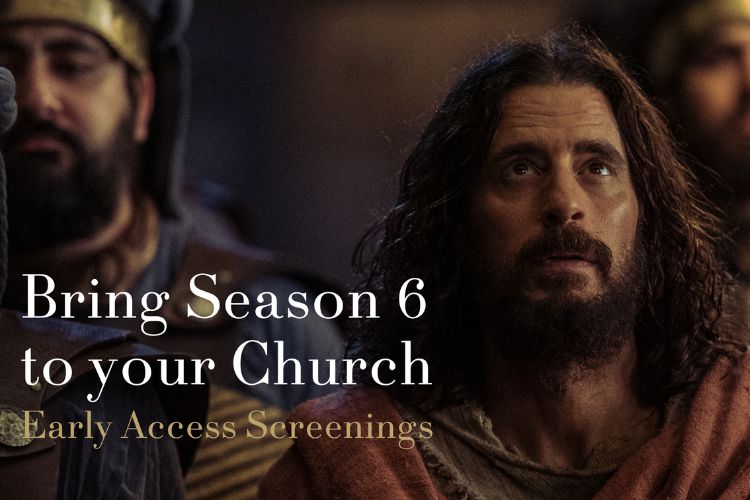
Season 6 of The Chosen is releasing next month, and until 15 November, your church has the opportunity to host a free pre-release screening of Episode 1. Here's how.


