Proverbs’ 7 Pillars of Wisdom, Part 2: Prudence, Discernment & Knowledge
In this series, we are considering the seven pillars of wisdom mentioned in Proverbs 9:1, which I contend are prudence, discernment, knowledge, discretion, judgment, understanding and counsel.
Pillar One: Prudence
Today, many associate prudence with the idea of cautiousness. But prudence comes from the Latin prudentia, which means sagacity, or the ability to see ahead.
To be prudent is to govern and discipline yourself by the use of reason — and biblically speaking, by the wisdom provided by the Holy Spirit. It means being able to discern the correct course of action to take in specific situations and at the appropriate time.
Classically, prudence is regarded as one of the four cardinal virtues, the other three of which are justice (fairness, righteousness), fortitude (courage, endurance) and temperance (restraint, moderation).
To the cardinal virtues, the Church Fathers added three theological virtues — namely, faith, hope and love. These appear first in 1 Thessalonians 1:3, and later in 1 Corinthians 13:13, where Paul highlights love as the preeminent virtue. The Catholic Church eventually came to regard the cardinal and theological virtues together as the seven virtues.
(These remain distinct from the seven virtues that oppose the seven deadly sins.)
The Ancient Greeks and Christian philosophers such as Thomas Aquinas considered prudence to be the cause, measure and form of all virtues.
Left unchecked, prudence could morph into cunning. But what sets prudence apart is the intent with which it is practised. An act becomes cunning or a kind of “false prudence” when it is done for evil ends or with evil means.
By contrast, true prudence is the ability to judge between virtuous and vicious actions in specific, real life scenarios. Prudence includes the ability to read the circumstances of a situation to distinguish when an act might be either cowardly or courageous. To risk one’s life, for example, might be done for reckless reasons, or for honourable martyrdom. Prudence is the ability to tell these two apart.
Pillar Two: Discernment
Webster’s 1828 Dictionary defines discernment as the power or faculty of the mind, by which it distinguishes one thing from another, such as truth from falsehood or virtue from vice. It notes that the errors of youth often proceed from a lack of discernment.
To be discerning is to go beyond the mere perception of something and making more nuanced judgments. Someone who is discerning is considered to possess wisdom and be of good judgment, particularly when they perceive details that are overlooked by others.
In Christian usage, discernment may have several meanings. It can describe the process of determining God’s desire in a situation or identifying whether something is good or evil. Often, discernment is related to the search for one’s vocation — namely, whether God is calling one to be married, single, consecrated, ordained, or in some other specific calling.
The discernment of spirits is mentioned in several New Testament passages, and is used in both Catholic and Charismatic theology to indicate judging different spiritual agents for their moral influence in a given situation.
When we ARE in the process of discernment, there are steps we can take in order to do so. For example, taking time to make a decision is vital in discernment. Decisions made in a hurry can be tainted by a lack of contemplation. But when time is variable to assess a situation, it improves the discernment process.
Using both the “head” and the “heart” is another important step in discernment. Making a decision with the “head” means first reflecting on the situation and emphasising the rational aspect of the decision-making process. The “heart” is also important, in that it involves experience and emotion, which a purely rational approach lacks.
Ignatius of Loyola (1491-1556) designed a series of spiritual exercises that helped him discern life choices, and these included identifying the issue; taking time to pray about the choice; making a wholehearted decision; discussing the choice with a mentor; and then finally trusting the decision made.
For the Christian, discernment means making decisions in accordance with God’s will. Christian discernment emphasises Jesus — making decisions that align with His character, as revealed in Scripture.
Pillar Three: Knowledge
The first place we encounter knowledge in the Bible is in the Garden of Eden, at the tree of the knowledge of good and evil. This tree contained the knowledge that separated man from God:
And the Lord God said, “The man has now become like one of us, knowing good and evil.
He must not be allowed to reach out his hand and take also from the tree of life and eat, and live forever.”
— Genesis 3:22
This highlights to us that, biblically speaking, knowledge can be wielded for either good or evil. The Encyclopedia of the Bible elaborates:
The Bible frequently commends knowledge and wisdom… [but] nowhere does Scripture modify the high value it places on knowledge by deprecating “mere” human reason.
Reason and knowledge are integral parts of the image of God in which man was created.
Knowledge can be defined as a familiarity, awareness or understanding of something. In many Christian expressions, knowledge is one of the gifts of the Holy Spirit. And whereas human knowledge is very limited and gained mostly by observation and experience, God has perfect knowledge of everything.
In the final installment in this series, we will look at the final four of the seven pillars of wisdom: discretion, judgment, understanding, and counsel.
[Photo by Vladislav Babienko on Unsplash]Recent Articles:
24 November 2026
2 MINS
A national Christian declaration against antisemitism is being launched in the wake of the Bondi massacre, calling believers to prayer, unity and practical action.

24 November 2026
4.1 MINS
US lawmakers and the State Department are pressing Egypt to free Christian convert Said Abdelrazek, while the Albanese government faces mounting criticism for its silence.
24 November 2026
4.8 MINS
Wes Huff’s public confession of plagiarism raises difficult questions about integrity, accountability and forgiveness, while offering a powerful reminder that God’s grace remains sufficient for the repentant.

24 November 2026
3.9 MINS
St Paul’s teaching on principalities and powers challenges Christians to look beyond human explanations for society’s moral decline and recognise the importance of spiritual warfare and prayer.

23 November 2026
3.1 MINS
Rev Fred Nile was a fearless Christian voice in Australian politics, a tireless defender of biblical values and a controversial figure whose legacy deserves both honour and reflection.
23 November 2026
5.3 MINS
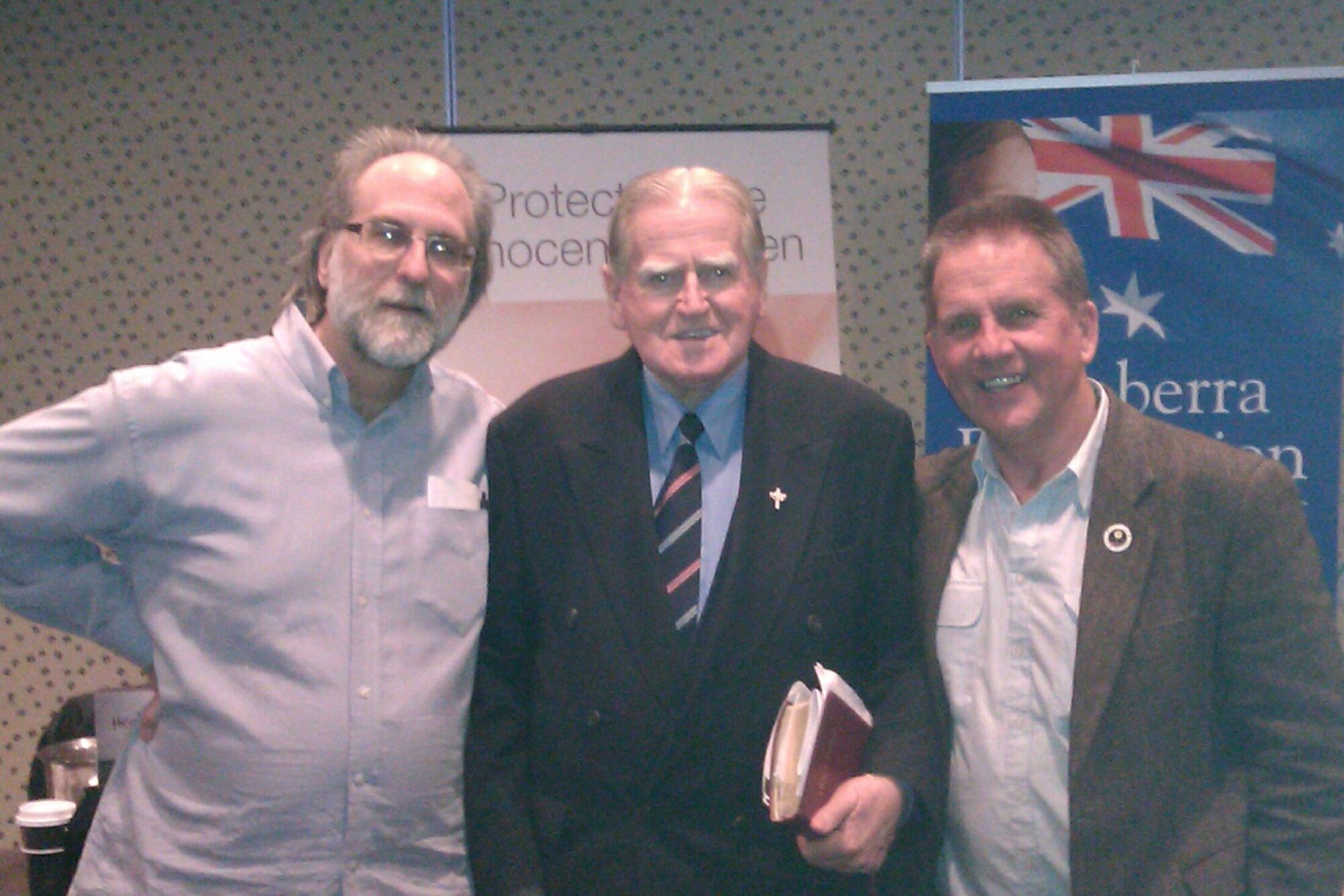
The Reverend Fred Nile devoted more than four decades to Christian public service, standing firmly for his convictions and leaving a lasting legacy of faith and courage.

20 November 2026
4.5 MINS
Christ’s authority extends over every sphere of society. The church must reclaim its prophetic voice and challenge ungodly civil governance.