


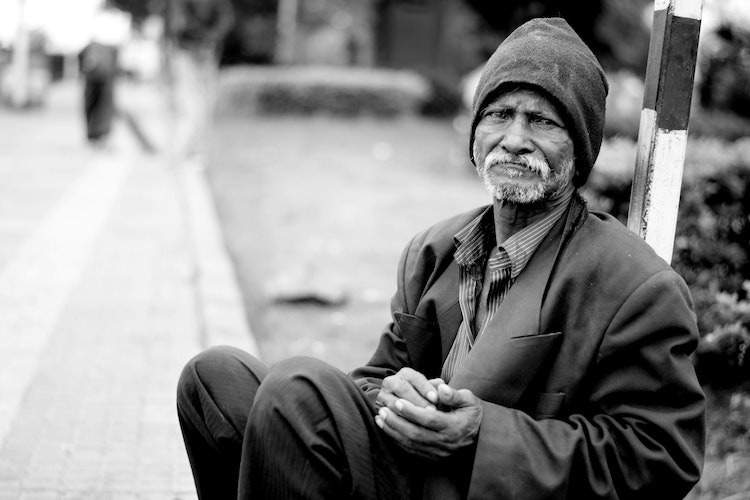
Should Churches House the Homeless?
Concern, along with careful thinking, are both needed to really help others.
People can often come up with what seem like good ideas, and often with good intentions. But sometimes, they are not thought through very well. Christians, of course, can be just as guilty of this as anyone else. Let me explore one such idea that you find now and then, as in the form of a meme on social media.
The gist of it is this: ‘Why not let the homeless sleep in our churches?’ One of these memes put it this way: “If churches really cared about people, they wouldn’t leave all those nice warm pews empty overnight… while people slept in a park.”
Now, is it good that folks are thinking about the homeless? Yes. And is it good that they have some genuine concern for their welfare? Yes again. However, just a few moments of reflection would reveal that a host of serious problems and obstacles can be associated with such proposals. Let me offer just some:
- Firstly, of course, most towns, cities, suburbs and states have ordinances and laws about such things. For example, some areas are set aside for residential purposes, some for industrial, and so on. I am no authority on all these legal issues, but I would imagine that any Western church wanting to allow folks to sleep in their buildings each night would need to deal with a mountain of government bureaucracies and forms, including all these housing codes.
- Related to this would be a whole raft of anti-discrimination laws and the like that a church would have to agree to. Consider some obvious issues. Would the church have men sleep in one area and women in another? That in itself might be deemed to be discriminatory. And what if a trans man or trans woman wants to sleep with those of the opposite sex? Would a church be forced to go along with that very risky setup?
- And even if you were a mid-sized church in a mid-sized town, planning to take in, say, just a dozen folks each night, who would supervise it? Obviously, they cannot be left there unattended. Not only is there a risk of sexual assault and the like, as I just alluded to above, but what about if they are shooting up heroin and the like? Will the believers there also turn their church into a drug-injecting room?
- Certainly, some church members would need to take turns spending the night there, or the church would have to pay some folks to do this, including perhaps even security guards. And if you take them in for the night, will you also feed them as well? I would imagine there are as many laws and regulations about food servicing as there are about housing and sleeping.
- What if a few homeless folks proved to be a real handful – troublemakers who get into fights, disrupt others, or steal things? Will they be excluded? Again, will that violate state ordinances, and how will that be enforced?
- It would seem essential that some sort of vetting process would have to be in place to determine who can and who cannot be taken in. What if an escaped prisoner, a terrorist, or an armed robber rolls up and asks to be looked after? No questions asked?
- The number of possible rather unpleasant scenarios can be multiplied at length. What if a homeless male gets a homeless female pregnant while sleeping there? Can she sue the church and demand lifelong compensation to raise the child?
- What if a person sleeping there picks up a disease from a not-so-clean mattress or bedding donated by a church member? Can he sue the church and demand all sorts of compensation as well?
- What if a morning wedding is scheduled for the church building, and some of the homeless folks do not want to vacate the premises too early? Indeed, if this is just a provision for sleeping overnight, what hours will be scheduled for this? Maybe 10 pm to 7 am? Midnight to midday?
- Again, a small army of church volunteers will be needed to keep all this going, whether in terms of washing sheets and blankets, cleaning floors, maintaining high levels of hygiene and cleanliness, and so on. If a larger church took in one or two hundred people each night, that volunteer army would need to expand in numbers greatly.
- What if some of the homeless folks were violent and destructive, breaking windows, smashing pews or church chairs, and so on? Would there be enough volunteer help available to fix or replace all that for the Sunday morning service?
- One would imagine that this sort of major ministry would see churches having their insurance rates raised dramatically. Not all churches would be able to afford this.
- And I do not doubt that church members themselves might be divided on all this, some approving, some disapproving. Unless there was some sort of unanimity in the congregation about such a plan, this could easily fracture a church as well.
- Finally, I have seen reports of churches actually having to shut down altogether after failed experiments of this sort involving some of the problems mentioned above.
Lest all these ‘what ifs’ seem just theoretical, there are plenty of real examples that can be mentioned. Here is one case I just came upon:
A Castle Rock church has filed a lawsuit, after it received backlash from the city for providing temporary shelter for unhoused people on its property. In a complaint filed on Jan. 4, 2024, Church of the Rock alleged the Town of Castle Rock and the zoning manager tried to prohibit it from providing shelter for “people experiencing temporary homelessness.” According to the complaint, “as of November 2021, there were two campers on the property.” The RVs were parked in a private back lot, according to the suit.
“From at least 2019 through November 2023, these campers have been used on an occasional basis to provide overnight shelter for certain temporarily shelter challenged persons participating in the Rock’s compassionate care programs,” according to the document. On Sept. 29, 2023, the church received a “letter of determination” from the zoning manager, stating the church was violating zoning regulations and that it can’t have RVs used as residences parked onsite.
Learning From Others
I am not trying to just pour cold water on the idea of churches taking in the homeless overnight, and maybe many of the issues I raised above can be dealt with somewhat easily. I don’t know – I am just thinking out loud here. But before we all get on this ‘the church for the homeless’ bandwagon, it is imperative that we do indeed think long and hard about it.
And, of course, I am not trying to say churches should not be involved in helping the poor, the needy, and the homeless. Christians have been doing this more or less for 2000 years now. But in the West today, things have changed quite dramatically. Indeed, many of the tasks once performed by churches and Christian bodies have now been taken over by the state – be it education, welfare provision, aged care, and so on.
We do know that all sorts of Christian groups and churches over the centuries did provide accommodation and assistance for countless individuals. Some might have used a church building to do this, or they might have made use of other facilities.
We are aware that William and Catherine Booth and their Salvation Army, for example, did much to help the poor and indigent, establishing homes for them, along with farming communities where the poor folks from the cities could be trained in things such as agriculture.
One such place was Hadleigh Farm, set up in 1891. Of interest, whether in the cities or the country, the Booths insisted that these poor folks would do some daily work in exchange for their room and board. It was not a welfare state situation where permanent dependency could occur. The aim was to make them productive and self-sufficient members of society as much as possible.
So again, it is good that Christians are thinking of various ways they might be able to help out here. But sometimes, just throwing around glib and not very well thought through memes is not the best starting point. Many non-government helps and services for the poor and homeless have been done and can be done.
Private Individuals
One thing I have also noticed on social media is a case in point. It involves rather wealthy individuals using their own funds – along with other funding – to help out in this way. As one article puts it:
The Colorado Coalition for the Homeless (CCH), a non-profit organization in Denver, recently decided to make an investment and purchase an $8.4 million former hotel in hopes to help alleviate homelessness in the area. The newly-renovated building, now called Fusion Studios, has since become a building with 139 mini-apartments for the homeless.
Since 1985, CCH has been working to provide housing and support to the continuously increasing number of homeless people in the United States. In Denver alone, there are at least 5,755 homeless people. When John Parvensky, President and CEO of the organization, learned that Quality Inn and Suites, a local hotel on the major road was up for sale, he grabbed the opportunity to turn it into a homeless shelter. Using funds from the city, state, and private organizations, CCH purchased the hotel, renovated the property, and renamed it to Fusion Studios.
I know nothing about this group. Whether it is just a secular outfit or a religious-based group, I do not know. But that is just one of many ways in which NGOs can be of some help in this area. But as I mentioned, the state is increasingly usurping most of the areas that churches used to be involved in, including providing a place to sleep for the homeless.
So, in the West, at least, there might continue to be an uneasy relationship between church and state as both groups work in areas such as this.
___
Originally published at CultureWatch. Photo by Pixabay.
4 Comments
Leave A Comment
Recent Articles:
9 October 2026
1.3 MINS
Season 6 of The Chosen is releasing next month, and until 15 November, your church has the opportunity to host a free pre-release screening of Episode 1. Here's how.

9 October 2026
2.9 MINS
Angus Buchan’s remarkable journey from farmer to evangelist is brought to life in a new documentary now streaming, revealing the faith, family and challenges behind his public ministry.

9 October 2026
3.3 MINS
New South Wales healthcare workers who object to abortion and voluntary assisted dying face growing pressure, raising serious questions about conscience rights, employment and moral injury.
9 October 2026
2.9 MINS
God is intensely relational, and he puts us into a community of believers so we can use our gifts in service of Christ's body.
8 October 2026
3.6 MINS
John Anderson warns that Australia’s decline is rooted in spiritual and cultural disintegration, calling for a recovery of Christian foundations, social cohesion and national purpose.
8 October 2026
4.1 MINS
Aboriginal communities in Central Australia already know the gospel message. What they need now, Robyn Murray writes, is discipleship, encouragement and Christians willing to pray and participate.
8 October 2026
4.1 MINS
Italy honours St Francis of Assisi 800 years after his death, celebrating a saint whose devotion to Christ, radical simplicity and message of peace continue to shape generations.



in Toowoomba Qld, a very successful programme runs for the 3 winter months. Lifeline and 7 local churches house some homeless people. Toowoomba in winter has very cold temperatures reaching below 0. These people are taken to a different church each night where volunteers serve them the evening meal and breakfast and give them a place to sleep. It is coordinated well on a roster system. So each church looks after them for one night a week. Unfortunately there is a growing number of homeless people in Toowoomba so only a small percentage can be helped, but it is a start.
I am against it. Terrible pitfalls and legal complexities, especially in this modern era, prevent this experiment from working, plus ,we are not dealing in the main with ordinary, normal Homeless people like in days of yore, but, especially in the big cities, with often violent persons with serious mental and drug habits, or , rapists , thieves and murderers who have been released from prison who frequently have not reformed.You have explained very well, Bill, why it can’t work , but, good on you, people of Toowoomba who have made it work despite all that, but, you are an unique case.
It definitely needed the combined churches to participate. It wouldn’t work with just one or two churches doing it. All those reasons against it, that Bill wrote, are very valid.
Many thanks Barbara and Countess Antonia