


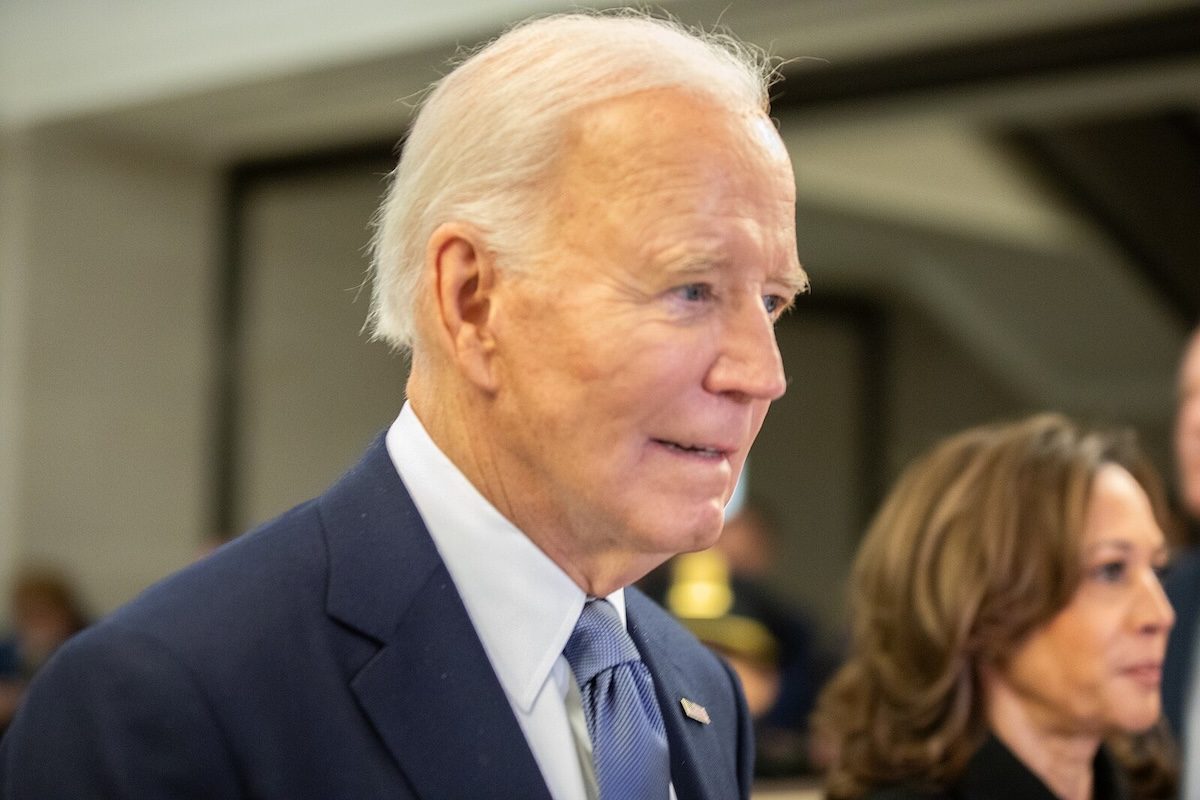
Analysis: Biden Unaware of Executive Orders ‘Signed’ by Autopen
Most of Biden’s executive orders were reportedly signed by autopen, fuelling questions about his term as US president and the role of White House staff in the alleged scandal.
President Joe Biden issued 162 executive orders over the course of his Oval Office tenure, but according to a new report, most of them were signed by “autopen,” giving rise to concerns that unelected White House staffers may have had more say in shaping policy than the president. The report is furthering those concerns and suggesting that Biden may not have even been aware of the existence of the orders being signed in his name.
The American energy advocacy group Power the Future published the report Wednesday, examining eight Biden-era executive orders on climate change and U.S. energy policy, and found “no evidence” that Biden ever spoke about or acknowledged the existence of any of these orders. “Not in a press conference. Not in a speech. Not even a video statement,” Power the Future’s report stated. Power the Future Executive Director Daniel Turner said in a statement, “Americans deserve to know which unelected staffers or radical unnamed activists implemented sweeping change through an autopen. The Biden energy agenda destroyed the livelihoods of energy workers and fuelled the record-high inflation that broke the budgets of millions of Americans.” He asked, “The question is simple, and deserves an immediate answer: what did Joe Biden know, and when did he know it?”
According to the Oversight Project, dedicated to government accountability, practically every order signed by Biden was signed via autopen, with the exception of his announcement withdrawing from the 2024 presidential election. The Oversight Project cited House Speaker Mike Johnson (R-La.), who questioned Biden on an executive order affecting liquefied natural gas (LNG) and reported that the president didn’t remember signing the order. “He looks at me, stunned, and he said, ‘I didn’t do that,’” Johnson recounted. He continued, “And I said to him, ‘Mr. President, yes you did, it was an executive order, like, you know, three weeks ago.’ And he goes, ‘No, I didn’t do that.’ … It occurred to me … he was not lying to me. He genuinely did not know what he had signed.”
“For investigators to determine whether then-President Biden actually ordered the signature of relevant legal documents, or if he even had the mental capacity to, they must first determine who controlled the autopen and what checks there were in place,” the Oversight Project wrote in a social media post. The accountability organisation continued, “Given President Biden’s decision to revoke Executive Privilege for individuals advising Trump during his first Presidency, this is a knowable fact that can be determined with the correct legal process…”
Background to the Biden Autopen Scandal
The “autopen” has been the subject of significant controversy in recent years due to Biden’s excessive use of the technology. Devices have been around for centuries, allowing individuals to replicate their signature or sign multiple documents at once. Thomas Jefferson, for example, kept an early prototype, then called a “polygraph,” in the White House and another in his residence at Monticello. The device allowed a user to sign multiple documents at once but did require the signer to be present and to actively use the machine.
In the late 1930s, an automated version of the machine was developed, called the “autopen,” which would store a template of a signature that could be reproduced without the presence of the actual signer. The autopen became commercially available in the early 1940s and was quickly purchased by politicians, government officials, celebrities, and others. The first U.S. president to use an autopen was reportedly Harry Truman, although he only used the device to sign checks and answer mail. Likewise, most other presidents — such as John F. Kennedy, Richard Nixon, or Gerald Ford — who used an autopen relegated their use of the instrument to signing checks, correspondence, and autographs.
George W. Bush considered using the autopen to sign executive orders and legislation and even got the Department of Justice’s (DOJ’s) approval to do so, but still insisted on signing such documents himself, flying to Washington, D.C. to sign emergency legislation in 2005, for example. Barack Obama was the first president to use the autopen to sign legislation, giving his approval to sign Patriot Act extensions via autopen while he was visiting France in 2011, the National Defence Authorisation Act while vacationing in Hawaii in 2012, and fiscal legislation in 2013.
President Donald Trump has openly refused to use autopen signatures for executive orders and other legal documents. “We may use it, as an example, to send some young person a letter because it’s nice,” Trump told reporters in March. Contrasting his limited use of the autopen against Biden’s much broader use, Trump added, “But to sign pardons and all of the things that he signed with an autopen is disgraceful.” Trump has also suggested that pardons — and, potentially, executive orders — signed by the Biden administration via autopen may be legally “void” if the president didn’t know what he was signing or didn’t authorise its signature.
The Washington Stand asked the DOJ about potential investigations and, if applicable, prosecutions of the Biden administration’s autopen use and was told, “No comment here.”
___
Republished with thanks to The Washington Stand. Image courtesy of Wikimedia Commons.
2 Comments
Leave A Comment
Recent Articles:
7 October 2026
3.6 MINS
Victoria’s 18th March for the Babies will bring families together to peacefully affirm the value of every human life and call for a cultural change towards life.
7 October 2026
1.5 MINS
Across the Middle East, North Africa and Anatolia, Christianity once shaped entire civilisations. Could Britain’s Christian heritage likewise become a memory rather than a reality?
7 October 2026
6 MINS
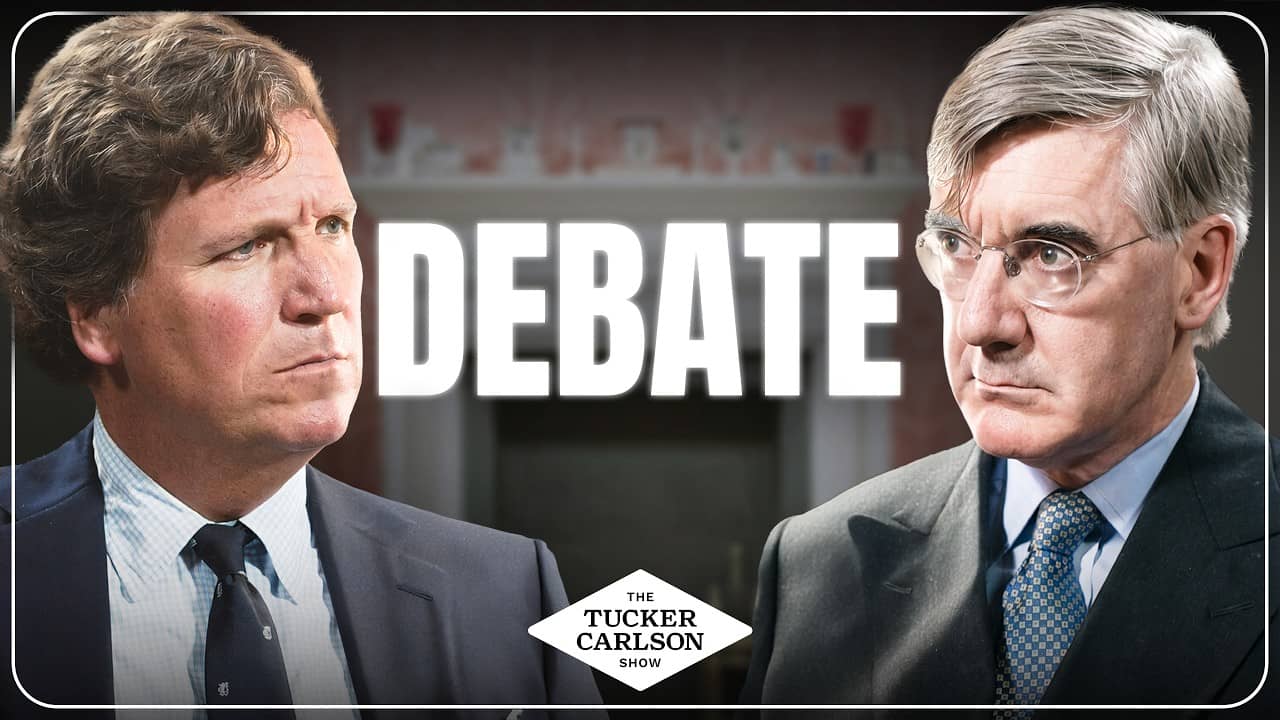
What can Tucker Carlson’s interview with Jacob Rees-Mogg teach us about political disagreement? Their clash over war, Russia and national defence highlights the importance of listening carefully and understanding an opponent’s position before attempting to refute it.

7 October 2026
8.5 MINS
Gerald McDermott’s work challenges Christians to approach Israel through Scripture first, exploring God’s covenant faithfulness, Christian Zionism, Jewish identity and antisemitism.
7 October 2026
4.6 MINS
Medicine was created to heal and preserve life. Yet abortion, euthanasia and gender medicine increasingly redefine death and destruction as care, leaving the vulnerable dangerously exposed.

6 October 2026
3.4 MINS
Christians cannot afford to let headlines and social media shape their view of Israel. Scripture provides a foundation for understanding Israel, God’s promises and our response.

6 October 2026
6.7 MINS
Fresh revelations about the foiled FlyDubai terror plot expose the attacker’s alleged extremist history, while a courageous pilot’s actions prevented an unthinkable catastrophe.



The Swamp gets murkier. May the truth be revealed, and Government follow up on the expose.
without evidence this is false witness and there is no evidence
spreading false witness is as bad as bearing it