


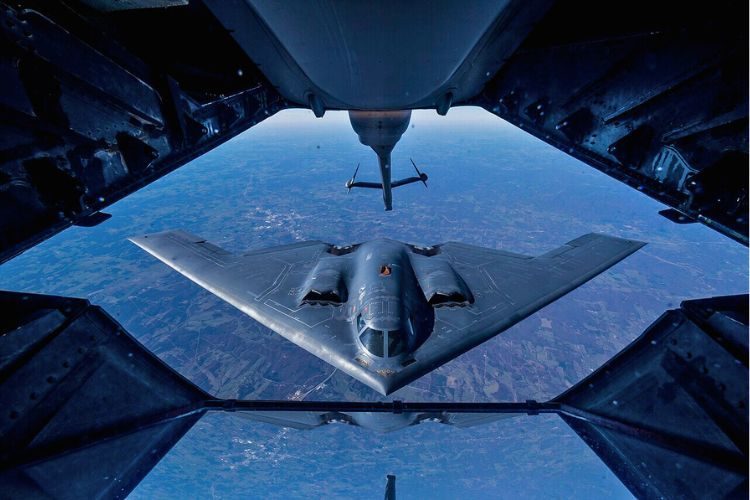
Was Iran’s Nuclear Program ‘Obliterated’ by the US Strikes?
In the wake of Saturday’s surprise U.S. missile strike on Iran’s three nuclear enrichment facilities, conflicting reports have surfaced that suggest that the sites may have not sustained the “complete and total” destruction that the Trump administration has claimed. Experts say more information is needed before a definitive assessment can be made on the extent of the damage that was done to Iran’s clandestine nuclear program.
On Tuesday, a damage assessment of Iran’s Fordow, Natanz, and Isfahan nuclear sites by the Pentagon’s Defense Intelligence Agency was leaked, claiming that the U.S. strikes failed to destroy large components of the Islamist regime’s nuclear enrichment program and that a number of underground structures remained intact.
‘Total Obliteration’: Trump Administration
But the Trump administration pushed back against the analysis Wednesday, with the president remarking during the NATO Summit in the Netherlands,
“I believe it was total obliteration. I believe they didn’t have a chance to get anything out because we acted fast.”
White House Press Secretary Karoline Leavitt also released a statement calling the assessment “flat-out wrong.”
“Everyone knows what happens when you drop fourteen 30,000-pound bombs perfectly on their targets: total obliteration.”
Secretary of Defense Pete Hegseth also insisted that the Iranian targets were destroyed. “Based on everything we have seen — and I’ve seen it all — our bombing campaign obliterated Iran’s ability to create nuclear weapons. Our massive bombs hit exactly the right spot at each target and worked perfectly,” he told CNN.
Before Saturday’s strike, questions remained on whether even the U.S.’s 30,000-pound Massive Ordnance Penetrator (MOP) bombs could, in fact, decimate Fordow, Iran’s most heavily fortified nuclear enrichment facility buried deep within a mountain in the central region of the country.
The MOP, the most powerful bomb in the U.S. military’s arsenal, is designed to plow through approximately 200 feet of rock before detonating. Experts say the objective would be to use multiple MOPs to drive a wedge into the mountain and repeatedly target the wedge in order to create an earthquake that would damage the underground structures.
Saturday’s strike involved a total of 75 precision-guided munitions, including over two dozen Tomahawk missiles. The strike was the first time that MOP bombs have been used in combat.
‘Destroyed’: Israel Atomic Energy Committee
Israeli sources say that the three Iranian facilities were indeed destroyed. “Israel is doing a report on it now, I understand, and I was told that they said it was total obliteration,” President Trump remarked Wednesday, saying that Israel sent agents to the nuclear sites to confirm their condition. A report from the Israel Atomic Energy Committee stated,
“We assess that the American strikes on Iran’s nuclear facilities, combined with Israeli strikes on other elements of Iran’s military nuclear program, has set back Iran’s ability to develop nuclear weapons by many years.”
Did Trucks Transport Enriched Uranium Out of Fordow?
Meanwhile, questions also remain about whether Iran evacuated their uranium stockpiles from Fordow before Saturday’s strike. Satellite images published Monday appeared to show a convoy of over a dozen trucks lined up near Fordow’s tunnel entrance last Thursday and Friday. The vehicles reportedly “came and went over a 24-hour stretch,” moving “unidentified contents roughly half a mile away.”
But on Monday, Senator Markwayne Mullin (R-Okla.), a member of the Senate Armed Services Committee, stated that the Islamist regime did not move nuclear material out of Fordow before the strikes.
“Our intelligence report says they didn’t. In fact, we actually believe they stored more of it in Fordow because they believe Fordow was impenetrable.”
“However, if we find out that we didn’t, we will be working with our allies to finish the job, or we will finish the job,” Mullin added.
More Reliable Intelligence Required
Still, experts like Lt. Col. (Ret.) Bob Maginnis, Family Research Council’s senior Fellow for National Security, say that more reliable intelligence needs to be gathered before a conclusive assessment can be made.
“There is some confusion over battle damage assessment, and the leaked document from the Defense Intelligence Agency (DIA) is not — in my opinion, having worked for them for decades — the most reliable,” he told The Washington Stand.
“What you need to understand is damage assessment like this is done primarily using satellite imagery and done by the Central Intelligence Agency, not by DIA.
“Once the CIA has done their damage assessment, they’ll brief the president and then perhaps others at the Pentagon and elsewhere.
“I don’t think that’s been done.”
Maginnis went on to predict that the convoy of trucks seen at Fordow last week likely did transport nuclear material out of the facility before the strike. He noted,
“Having worked with the Persians off and on for more than 50 years, I assess that likely those trucks were loaded with enriched uranium from Fordow and have now either left the country or are in a place that is hard to reach, along with the remaining Iranian nuclear scientists and engineers.”
“There is a lot unknown at this point,” Maginnis underscored.
“It was, in my opinion, very premature for the president to declare those three facilities destroyed before we had better assessments.
“If, in fact, the Mossad [Israel’s intelligence and covert operations agency] comes back and Israeli Prime Minister Benjamin Netanyahu says, ‘We have ground truth that they were destroyed,’ and it’s validated by the Central Intelligence Agency, then I think we’ll have more confidence.”
___
Originally published at The Washington Stand. Image of B-2 Bomber via Wikimedia Commons.
Recent Articles:

13 October 2026
2.6 MINS
Allegra Spender’s proposed bill reignites debate over discrimination protections, religious freedom and the right of faith-based schools to uphold their beliefs and values.

13 October 2026
5.5 MINS
Stephen Baldwin’s journey from drug addiction to sobriety, Christian faith and family life reveals how surrender, daily discipline and renewed hope transformed his life.

13 October 2026
2.1 MINS
Victoria’s assisted dying deaths have surged by 300 per cent since legalisation, while a disturbing case involving a patient’s partner raises urgent questions about safeguards.

13 October 2026
1.8 MINS
Australia faces mounting geopolitical, economic and defence threats, but its political leaders lack the statesmanship, bold vision and decisive communication needed to prepare the nation.
12 October 2026
3.1 MINS
The proposed livestream of Nidal Hasan’s execution has reignited debate over justice, deterrence and public accountability, with critics comparing American justice to ISIS propaganda.

12 October 2026
3.7 MINS
An EU court case over baptismal records could pit data protection laws against religious freedom, raising serious questions about whether governments can compel churches to erase sacramental history.

9 October 2026
5 MINS
During a recent dialogue between high profile legal experts, a top Australian constitutional law expert was asked if Australia should have a Bill of Rights. His answer may surprise you.


