



Leftist South Korean Government Pursues Death Penalty for Previous President
In a Tuesday hearing, South Korean special prosecutor Cho Eun-suk asked the court to seek the death penalty for former President Yoon Suk Yeol, who has been charged with insurrection after briefly declaring martial law in December 2024. The request portends evil for the health of South Korean democracy, as the current leftist government may be “working toward establishing totalitarianism,” Asia expert Gordon Chang told The Washington Stand. “The situation in South Korea is deteriorating rapidly.”
The controversy dates back to 3 December 2024, when then-President Yoon declared martial law in the country for the first time since 1979. Yoon explained his declaration as a way to draw attention to alleged “anti-state” activities by the left-wing opposition party, the Democratic Party of Korea, which he argued was in league with North Korea. Within hours, members of the National Assembly, which was controlled by the Democratic Party, overturned Yoon’s order. Yoon formally rescinded it at 4:30 a.m. the next morning.
Although the martial law declaration had lasted only hours, the fallout lasted much longer. In April 2025, Yoon was removed from office by impeachment. In June, the Democratic opposition triumphed in a snap election, with Lee Jae Myung becoming the country’s new president. Yoon now faces eight separate trials by different prosecutorial bodies, while his wife has also been thrown in prison.
Lawfare, Political Retribution, and the Criminalisation of Conservatism
The sweeping prosecution by a special prosecutor of the current left-wing government has caught up Yoon’s family, aides, conservative allies, and even church leaders. At least 29 conservative legislators have been targeted by the leftist administration.
Special prosecutor Cho’s prosecution parallels that conducted by Jack Smith, which attempted to charge Donald Trump with crimes in connection with the Capitol riot on January 6, 2021. The difference is, in South Korea, they found their mark, charging Yoon with insurrection against South Korea’s democratic political order, a charge punishable by life imprisonment or death.
The Cho prosecution seeks to highlight unfavourable parallels with the 1979 coup led by General Chun Doo-hwan, who expanded martial law nationwide and slaughtered between 200 and 2,000 protestors in 1980. Chun had blamed the uprising on “North Korean communists and gangsters.” He was ultimately convicted and sentenced to death in 1996, although the sentence was later commuted.
Prosecutors alleged that Yoon directed a scheme for staying in power that dated back to October 2023, in which he was motivated by a “lust for power aimed at dictatorship and long-term rule.”
To enforce the insurrection charge, prosecutors had to make a choice between asking for the death penalty and life imprisonment. In asking for the death penalty, the prosecution claimed that “There are no mitigating circumstances to be considered in sentencing,” as “the defendant has not sincerely regretted the crime … or apologised properly to the people.” South Korea has not executed any convict since 1997.
Yoon has not apologised because he maintains his innocence, arguing that declaring martial law was a legitimate use of his presidential power, and that he did so to “safeguard freedom and sovereignty.”
Warnings of Democratic Backsliding and Emerging Authoritarianism
“We underestimate the maliciousness of the government of Lee Jae Myung,” Chang declared. “The prosecution of Yoon Suk Yeol was unjustified. He was acting within his constitutional powers, and he had reason to declare martial law. He declared martial law in accordance with constitutional procedures, and he rescinded it in accordance with constitutional procedures.”
“One can argue whether it was a politically smart thing to do,” he allowed, “but he had reason to do so because the national assembly, through successive impeachments, had paralysed the government. And he certainly did not commit insurrection, which is what he’s being charged with now.”
The court is expected to issue a ruling on February 19.
The Yoon prosecution resurrects an unfortunate pattern of lawfare in South Korea, which places the country’s democratic institutions on shaky ground. Since the country’s independence in 1948, one former president was sentenced to death, another to life imprisonment, two more to prison, and one committed suicide (although some of the sentences were later commuted). Two more saw their children prosecuted.
Yoon is the first president to be arrested before leaving office.
“The warning here is that Lee Jae Myung is destroying Democratic institutions, and he’s taking a vibrant democracy and turning it into an authoritarian state,” Chang warned. “And we don’t know if it’s going to stop there because he has sympathies — certainly people in his government have sympathies — that suggest they’re working toward establishing totalitarianism.”
“Lee Jae Myung may be turning South Korea into the next Venezuela. Maybe he’s turning into something worse. But the United States needs to say something because we have an obligation to defend South Korea,” he added. “President Trump needs to speak out, in public as well as private, because the situation in South Korea is deteriorating rapidly. We do not want to end up with a treaty obligation to a communist state.”
___
Republished with thanks to The Washington Stand. Image courtesy of Wikimedia Commons: Yoon Suk Yeol arrest protest.
Recent Articles:
15 October 2026
3.6 MINS
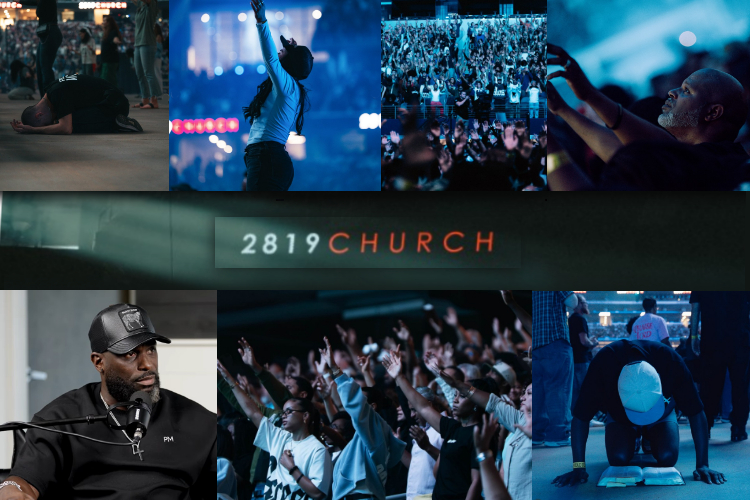
An 80,000-strong gathering in Texas signals a hunger for revival, as Pastor Philip Anthony Mitchell warns that Christian indifference could leave future generations without the faith.

15 October 2026
6.1 MINS
Historian Frank Furedi warns that the West is waging a war against its own past, censoring books, rewriting history and severing future generations from their heritage.

15 October 2026
7.2 MINS
A man’s death in a tiger enclosure sparks chilling online reactions, exposing a growing willingness to judge human worth by usefulness, behaviour and ideology.

15 October 2026
3.9 MINS
Canada plans to legalise euthanasia through advance requests, raising concerns about consent, dementia patients’ rights and whether earlier decisions should determine the circumstances of death.

14 October 2026
2.8 MINS
Queensland recorded 1,082 assisted suicide and euthanasia deaths in 2025–26, as the review board called for consultation on potentially widening eligibility criteria.
14 October 2026
5.5 MINS
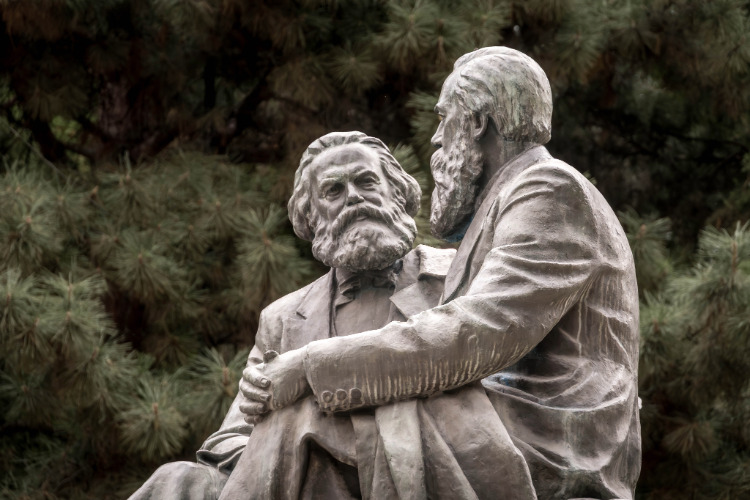
As Christianity fades from public life, Marxism or Communism offers a substitute faith built on oppression, liberation and political salvation — but at what cost?
14 October 2026
5.3 MINS
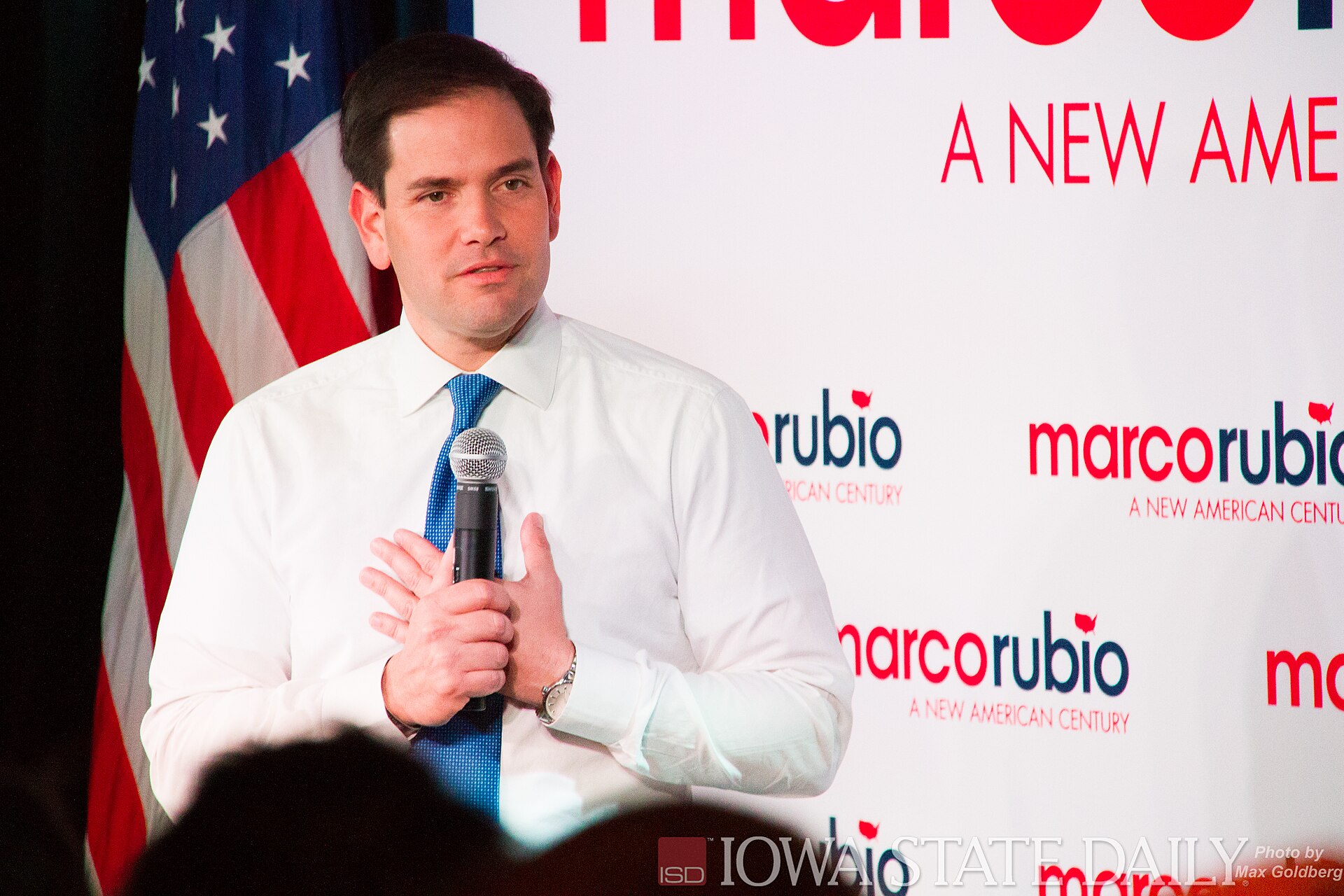
Marco Rubio’s Athens speech celebrates the Greek, Roman and Christian foundations of Western civilisation, warning that cultural self-loathing and radical ideologies threaten its future.


