


‘Quiet Revival’ Debate is Reopened After New British Research from Ligonier
New research suggests more Britons, especially younger men, are attending church—but growing numbers need solid biblical teaching to understand the faith they are exploring.
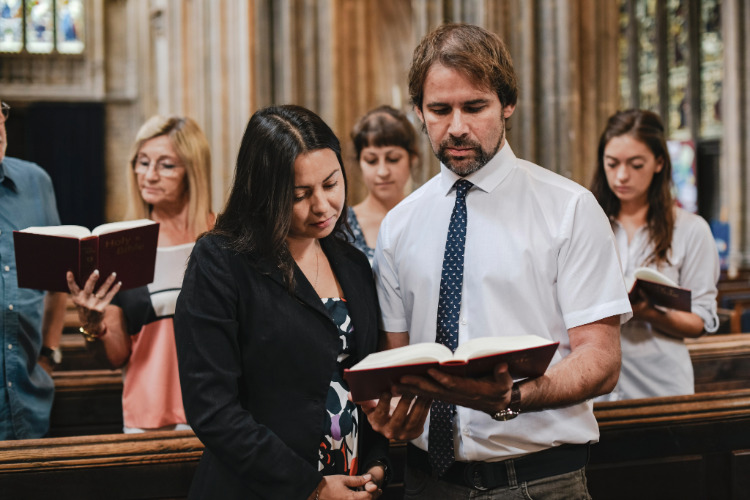
A new survey from Ligonier Ministries UK gives fresh evidence that something is happening in British churches: 28 per cent of evangelicals surveyed say they began attending Sunday church services for the first time as adults within the past one or two years.
These newcomers are disproportionately younger adults, and the survey finds a particularly notable presence of men among them. It is the clearest new piece of evidence we have that the reports of renewed interest in Christianity, and especially among younger men, are not simply wishful thinking.
That does not, however, prove that Britain is experiencing a revival. The phrase ‘quiet revival’ has fallen into some disrepute since the Bible Society research that helped popularise it was found to have serious methodological problems. The research was withdrawn, and rightly so.
But the failure of one survey does not mean that the phenomenon which people thought they were seeing was imaginary. The phrase gained traction in the first place because churches were reporting people’s renewed interest in Christian ideas, new faces in congregations and, particularly strikingly, more young men attending.
Newcomers Need More Than a Church Door
Ligonier’s research helps us get a better sense of what may be happening. The picture it presents is both encouraging and sobering. Yes, there really do appear to be significant numbers of people newly engaging with church. But many of them arrive with little understanding of the Christian faith.
Among Ligonier’s ‘new evangelicals’, 71 per cent agreed that God accepts the worship of all religions, while 57 per cent agreed that the Bible contains helpful accounts of ancient myths but is not literally true. That should make us pause and ask what’s really going on here.
The great temptation is to see fuller churches and conclude that the job has been done. But people coming to church is not the same thing as people becoming Christians, and identifying as an evangelical is not the same thing as having a well-formed Christian understanding.
What, then, should churches do? We need to teach the Bible. That may sound almost embarrassingly obvious. But the survey suggests that it is precisely what this moment requires. Newcomers need to be taught who God is, who Jesus Christ is, why His death and resurrection matter.
They need to be taught what sin is, why salvation is necessary, and why Christ alone is the Saviour. They need to discover that Christianity is not simply a set of spiritual insights or moral values, but a revealed truth about God and His saving work in history.
A Growing Need for Biblical Literacy
And the need is not confined to newcomers. Ligonier found troubling changes among evangelicals generally. Sixty-three per cent of evangelicals now agree that ‘everyone sins a little, but most people are good by nature’, compared with 49 per cent in 2018. Meanwhile, only 47 per cent agree that even the smallest sin deserves eternal damnation, down from 61 per cent in 2018.
Outside the church, the situation is even more striking. The survey found a substantial increase in ‘don’t know’ responses among the general population to basic Christian propositions.
Thirty-nine per cent of UK adults, for example, were unable to say whether there is one true God in three persons. Ligonier interprets these findings not simply as rejection of Christianity, but as evidence of a growing loss of basic theological categories. That is a mission field, and it is also a discipleship challenge.
Perhaps the most useful conclusion is therefore not to settle the argument over whether ‘quiet revival’ is the right phrase. Something appears to be happening, and younger men seem to be part of it. But the church’s response must not be governed by the desire to keep the momentum going at all costs.
If God is bringing people through our doors, we must be ready to teach them. We need churches where the Bible is opened, explained and applied week after week. We need preaching that does not assume biblical literacy. We need Christianity explained from first principles.
We need to help new believers become patiently grounded in the doctrines of the faith. And we need to remind older believers that sound doctrine is not an optional extra for the spiritually serious; it is the means by which Christians learn to know the God whom they worship.
The encouraging news is that people appear to be asking questions again. The challenge is whether our churches are prepared to give them biblical answers. I don’t know whether Britain is waking up. But if it is, the church must be ready to tell people what they are waking up to.
___
You can read more about Ligonier’s State of Theology (UK) Survey here.
Republished with thanks to The Evangelical Times.
One Comment
Leave A Comment
Recent Articles:

19 October 2026
6.7 MINS
Europe’s escalating unrest raises urgent questions about immigration, national identity, secularism and the decline of Christian influence, prompting calls for repentance, prayer and renewed leadership.

19 October 2026
12.4 MINS
Greta Gerwig’s "Narnia: The Magician’s Nephew" trailer raises questions about C. S. Lewis’s Christian vision and the faithfulness of the new Netflix adaptation. Here are my initial impressions and concerns.

19 October 2026
2.7 MINS
The UK Greens’ vote to define Zionism as racism has exposed deep divisions within the party, raising questions about its future leadership and political direction.

19 October 2026
3 MINS
Paul prayed that we would be awakened to a deeper revelation of the Father and who we are in Christ, so that we will make Jesus known to others more passionately.

18 October 2026
2.7 MINS
Every season of life belongs to Christ, and we don't retire from discipleship as we grow older. In fact, our older years hold unique gifts for the younger generations.

17 October 2026
3.4 MINS
Seeking the face of God means surrender, laying aside our agenda and wants. Revival begins when we want God himself more than we want the outcome.

16 October 2026
4 MINS
Katie Zacharia’s first days as White House Press Secretary have sparked fierce media criticism, but her remarkable testimony of surviving an abortion attempt tells a deeper story.



We do know from personal contacts in past year that in London a number of evangelical Church of England churches have seen many young adults join churches become saved baptised and being discipled. Leaders of those churches say they have seen more young adults and young come to Christ in past 2 years than several decades previously.