



A World Forever Changed
The coronavirus pandemic has seriously altered our lives. We ponder how it has affected our religious practice, and how the faithful can adjust to restrictions that have sundered physical communities.
A crisis on the scale of COVID-19 permeates all aspects of society, for better or worse, across political, economic, and social environments.
Lasting Impacts
A global, novel virus that keeps us contained in our homes — maybe for years — is already reorienting our relationship to government, to the outside world, even to each other. There are changes coming. Will borders stay closed? Will touch become taboo? What will become of churches? Will religious worship look different?
There is no question in my mind that our lives have changed since COVID-19 was unleashed on the world stage. The Coronavirus will change the world permanently. Here’s how. The areas where the greatest impacts will become evident include, for starters, the Economy & Markets, then Education, Race Relations, Entertainment, Technology, Environment, Sports, Diplomacy, Work, Politics (elections) and for us as Christians, religion and the church, which is where I wish to delve deeper.
Accelerated Decline
Prior to the COVID-19 pandemic, the religious landscape in Australia had already been undergoing considerable changes. Mainstream Christianity has been on the decline. Increasing Australians, and especially our youth, identify as spiritual but not religious and/or religiously non-affiliated atheists, agnostics or what has become known as the “nones” (Pew Research Center 2019).
The COVID-19 epidemic will likely, if not already, exacerbate these changes, making it unlikely that some older people, who typically attend church, will continue to do so. Instead, many regular churchgoers are already turning to services online or on TV. Such changes will inevitably lead some people to realise they can practise their religion in other ways, through small virtual or in-person groups or simply by watching services virtually. Welcome to the world of the ‘hybrid’ church.
This will, and already has, most likely deepen the reluctance in ‘giving’ for many congregations with some denominations having experienced diminishing contributions from congregants for decades. The prognosis must be that some churches will go under, others will merge, whilst some will continue on a part-time or limited basis. Just as the anxieties of the past have led many to search for greater meaning in their lives, the pandemic has at least made it easier for people to explore their spirituality, with the move to online religious worship.
An Essential Service
As churches have long been a social cornerstone of Australian society, and an important source of community support and aid, it is my hope that as the religious and spiritual landscape reconfigures in a society more reliant on digital technologies and focused on individual spiritual development, that we do not forget the importance of collectively working to better our communities and sharing resources with those in need. May I quote one of my favourite verses — “Let us not stop meeting together…” (Hebrews 10:25)
Why am I so glum? Under COVID with its growing mutations, even going to the grocery store requires a battle plan: What to wear? When to go? How to safely retreat? Fear, confusion, and upheaval have led to a hunger for news. Research shows that news consumption globally rose 36 per cent under COVID.
Media Manipulation
Journalists are accustomed to reporting in extraordinary times, but COVID-19 is a singular moment in our lifetime. We have seen the virus batter our hospitals, ravage our nursing homes, and lay bare racial disparities long ignored. There are countless important stories to tell, as we face job losses, financial pressures, and increased hostilities, including those that persecute the church for opening its doors whilst sports, major events, and pubs are free to operate uninhibited.
The media is part of the transformation of Australia which is undergoing. The media will also need to address the lack of true diversity in its ranks. The media today is predominantly pro-death, anti-Christian, and conservative-averse. Amongst journalists, it is de rigueur to persecute anyone with a Christian worldview, as evidenced by my own experience at FamilyVoice where we advocate for family, freedom, and faith.
Disconnected Community
As Christians, we are fond of saying and emphasising the triumph of hope and life over fear. But how do people of faith observe one of the holiest days of the year if they cannot rejoice together on Christmas morning? I know of one Anglican church near me that is closing its doors on Christmas day — do you believe this?
How do Jews celebrate their deliverance from bondage when Passover Seders must take place on Zoom, with the elderly left to wonder why their internet connection froze? Can Muslim families celebrate Ramadan if they cannot visit local mosques for Tarawih prayers or gather with loved ones to break the fast?
Renewal of Faith
All faiths have dealt with the challenge of keeping faith alive under the adverse conditions of war, diaspora, or persecution — but never all faiths at the same time. Religion in the time of quarantine will challenge conceptions of what it means to minister and to fellowship. But it will also expand the opportunities for those who have no local congregation to sample sermons from afar.
There is no argument that the pandemic has altered the way many people come together to worship, and according to some church leaders, that change is here to stay. For me, as a novice social researcher, the practice of our faith under COVID will be forced to become more private, less community, less socially focussed, but more challenging. The major causes of the Protestant Reformation include those of political, economic, social, and religious backgrounds. Will there be a need for a ‘Reformation’ in the way the church functions post-COVID? I suspect so. Soli Deo gloria.
___
One Comment
Leave A Comment
Recent Articles:
30 September 2026
2.8 MINS
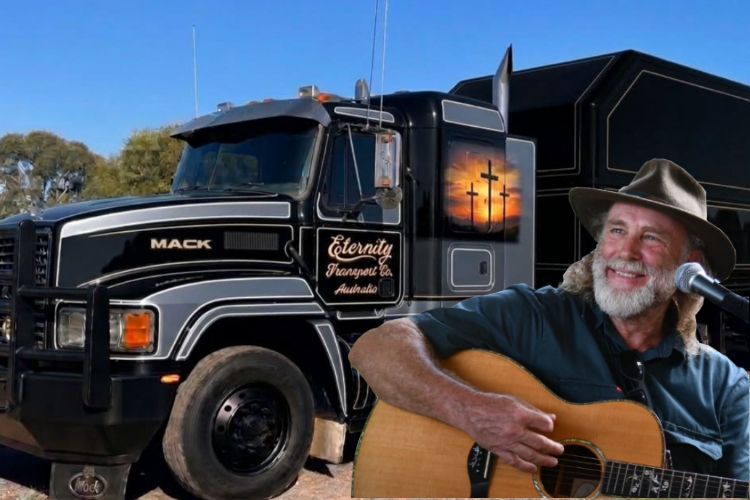
Steve Grace’s Eternity Truck is bringing music and the Gospel beyond church walls, taking a mobile concert stage to remote communities and country towns.
30 September 2026
3.2 MINS
In an increasingly secular and pluralistic Australia, Christians must recover their confidence in proclaiming Jesus Christ as the unique, sufficient and only Saviour.
30 September 2026
3.8 MINS
The Government says online safety requires accountability, yet its proposed powers would let the eSafety Commissioner create anonymous accounts and AI-generated material.
30 September 2026
5.2 MINS
Globalism and nationalism shape how we understand nations, sovereignty and world affairs. But what does Scripture reveal about this tension—and its prophetic significance?

30 September 2026
6.3 MINS
An elderly Christian woman’s disputed death under Canada’s MAiD system raises troubling questions about consent, safeguards, family involvement and the value placed on human life.
29 September 2026
15.9 MINS
Western Christians must carefully consider Palestinian Christian claims about Israel, the legacy of dhimmitude, and how fear and persecution may shape today’s political narratives.
29 September 2026
2.8 MINS
A Minneapolis priest’s emotional response during Communion has captivated viewers worldwide, prompting a personal explanation of his spiritual experience and calls for theological discernment.



Very well explained… The clash of the church and state, the melding thereof… Media in the corner of information suppression or promotion.
Somebody laughing said, ” I have had people over the years say, oh I wish I lived in Biblical times! Congratulations, you are! ”
Truth there.