



International Covenant Ignored as Faiths Granted Only Negative Rights
Historically, threats to religious freedom have arisen mostly from the dominance of one religion over others, or from the state sanctioning an official religion.
More recently, some states, such as the Chinese communist regime, have endeavoured to repress religious belief and practice entirely.
While these situations are still the case – formally or informally – in parts of the world, the threats to religious freedom in Western nations like Australia are more subtle and often arise in the context of protecting other, conflicting rights.
An imbalance between competing rights and the lack of an appropriate way to resolve the ensuing conflicts is the greatest challenge to freedom of religion in Australia.
This arises largely because of the near absence of any constitutional or legal protection for religious freedom; and the protection of other rights, mainly against discrimination.
Limited Protections
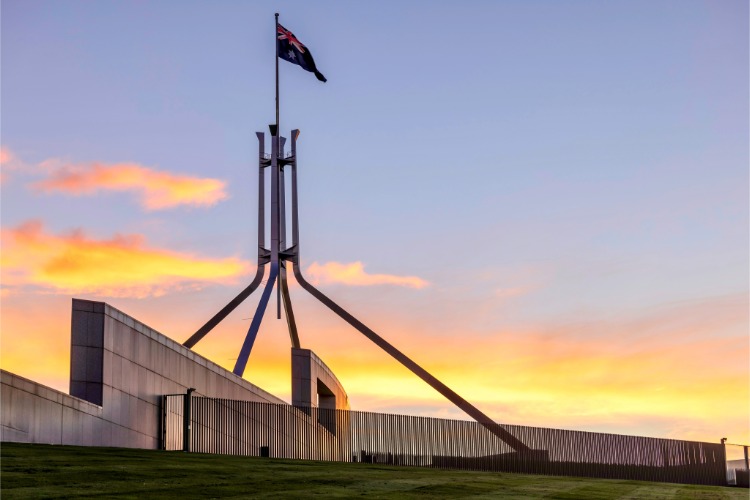
There is limited constitutional protection of religious freedom in Australia. Section 116 of the Constitution merely precludes the Commonwealth from making laws for establishing any religion, imposing any religious observance, or prohibiting the free exercise of any religion. It also precludes a religious test for public office.
The provision has been interpreted narrowly by the High Court. Nor does it preclude a state from making such laws. Second, the Australian Parliament has not fully fulfilled the obligations it agreed to under the 1966 International Covenant on Civil and Political Rights.
Article two of the Covenant obliges each state party, where not already provided for by existing legislative or other measures, “to take the necessary steps … to adopt such laws or other measures as may be necessary to give effect to the rights” recognised by the Covenant.
The Covenant recognises a series of rights, including to peaceful assembly and association, family and the protection of children, the expression of opinion, freedom of religion and against discrimination.
There are many laws in Australia implementing Article 26 against discrimination. However, Article 18, which protects “the right to freedom of thought, conscience and religion” is not adequately reflected in Australian law.
Religious freedom should be protected positively as one of the fundamental universal freedoms, not negatively as a subsidiary exemption to other laws.
The consequence is protection for one right, but not another.
This is most apparent with the advent of non-discrimination laws which do not allow for differentiation of treatment by religious individuals and organisations.
It is also manifested in a decreasing threshold for when religious freedom may be limited. For example, the Victorian Charter of Rights and Responsibilities allows “reasonably necessary” limitations; while the ACT Human Rights Act has the even lower threshold of “reasonable” limitations. The International Covenant requires that limitations be “necessary”.
While religious exemptions within non-discrimination laws do provide some protection, they leave religious freedom in a vulnerable position with respect to the right to non-discrimination, and do not acknowledge the fundamental position that freedom of religion has in international human rights law.
These reflections highlight the inadequacy of the current situation. First, Australia’s domestic law contains very little protection for freedom of religion. Second, this is compounded by the incorporation through a series of Commonwealth, state and territory statutes of one universally recognised freedom – against discrimination – into domestic law, but the exclusion of others, including freedom of religion. And third, where exemptions are provided, they create a tenuous and negative protection, rather than the positive protection provided for in the International Covenant.
Beyond Exemptions
Even these exemptions are now being diminished or removed. Moreover, there is a failure to recognise that under international jurisprudence, there is no hierarchy of rights, that each and every right should be given full expression to the extent possible.
Instead of negative protections, such as exemptions from anti-discrimination laws, religious freedom should be protected by positive laws that reflect Article 18 of the International Covenant. An objection to this approach is that it will fall to courts to interpret the provisions and find the balance between competing rights. This objection is weakened by three factors.
First, courts and tribunals are already interpreting various laws relating to rights. Second, exemptions in existing discrimination laws are in serious danger of being narrowed or removed entirely, as has already occurred in the Northern Territory. Third, discrimination laws are increasingly being used as a sword to attack religious freedom, rather than as a shield, as originally envisaged.
The legislative stalemate reflects the current political impasse in which sensible compromise has been stymied.
This situation is neither sustainable nor does it achieve the goal of protecting religious freedom, which is being eroded gradually.
Religious freedom should be protected positively as one of the fundamental universal freedoms, not negatively as a subsidiary exemption to other laws. The enactment of Article 18 of the International Covenant would establish a firm foundation that is currently lacking in Australia.
___
Originally published in News Weekly. Photo by Sora Shimazaki.
One Comment
Leave A Comment
Recent Articles:

24 September 2026
3 MINS
The US warns that Labor’s Digital Duty of Care bill could see platforms suppress independent journalists and commentary on “sensitive or controversial topics”, and would encourage platforms to engage in “pre-emptive censorship to avoid the risk of liability”.

24 September 2026
3.6 MINS
All Blacks and Springboks players united in prayer after their Baltimore clash, while Christian captain Siya Kolisi and Ardie Savea continue to testify openly about Jesus.
24 September 2026
4.8 MINS
The Digital Duty of Care Bill claims to be about safety. But the actual wording allows the Minister for Communications to decide what "harm" means, and a senator has already confirmed who that power is really meant to silence.
24 September 2026
6.3 MINS
True redemption is far more than a public comeback or second chance. Scripture points to Christ’s costly sacrifice, repentance, surrender and resurrection.

23 September 2026
4 MINS
A renewed petition targets pro-life law professor Dr Joanna Howe, as she and husband James fight back against claims they say have damaged their careers and reputation.

23 September 2026
6.6 MINS
Government-funded research on boys, masculinity and the manosphere deserves rigorous scrutiny, especially when contested theories begin shaping education, regulation and public policy.
23 September 2026
4.2 MINS
For too long, maintaining regional Victoria’s crumbling roads has been an issue of “out of sight, out of mind” for the state’s incumbent Labor government.



This is above my pay grade Kevin but I understand enough to appreciate a point so creatively and strategically made .
Thank you and God bless you.