



Misinformation / Disinformation Legislation: An Analysis
The Communications Legislation Amendment (Combatting Misinformation and Disinformation) Bill 2024 was introduced in Parliament on 12 September 2024, and immediately referred to a Senate Committee.
The Bill is 73 pages long, with a 143-page Explanatory Memorandum and 66-page Impact Analysis. With submissions to the Committee due by 30 September, we have been given very little time to analyse this incredibly complex and important piece of legislation.
From our initial analysis, we have a number of significant concerns. While the Bill is an improvement on the previous iteration, and provides some protections for religious speech, its fundamental structure still puts the power of censorship in the hands of unaccountable private corporations.
Note: These concerns are indicative from initial analysis, and not exhaustive.
The definition of misinformation and disinformation is broad
The definition covers content that is “reasonably verifiable as false, misleading or deceptive” and “reasonably likely to cause or contribute to serious harm”. Disinformation is when “there are grounds to suspect” that the person “intends [to] deceive another person” or “the dissemination involves inauthentic behaviour” (13(1-2)).
“Serious harm” is given a lower and broader standard than other legislation and includes “vilification” of a group. Vilification is not defined, though concerningly, the Explanatory Memorandum cites the Anti-Discrimination Act 1992 (NT) as an example of a vilification prohibition. This prohibition includes the extremely low bar of “reasonably likely to offend”. The Memorandum states that the inclusion of vilification as a harm in the Bill “aligns broadly with the approach” taken in the NT, Act and other State based anti-discrimination acts.
This creates an extremely low standard of “serious harm” that includes “reasonably likely to offend”.
The exemptions for speech are limited and subjective
The exemption for religious speech is limited to “reasonable dissemination”. The standard of “reasonable” has been recognised to be highly subjective.1 The explanatory memorandum says that the “reasonable” test attaches to the dissemination and not the substance of the content. However, the memorandum goes on to say, “If content is in the first place so unreasonable, it will also be unreasonable to share it any further.”
This leaves the exemption entirely dependent on what a judge, or content provider, determines is “reasonable”.
Private companies are expected to interpret and apply this law
The breadth of definition and the subjective nature of the exemptions are problematic when interpreted by a judge. They are extremely dangerous when left in the hands of private companies famed for their opaque processes and rapacious profit-making. These companies become the judge, jury and executioner of content while claiming the mandate of Government.
These companies are incentivised to take as broad an interpretation as possible to avoid legal repercussions (including ACMA enforcing new standards). The nuance of what is or is not “harmful” speech, or “reasonable” religious expression will be lost behind caution, profit, and ideology.
Automatic processes will automatically censor religious speech
Due to scale, the only option that digital providers have is automatic AI-based and rules-based censoring. To avoid false negatives that allow “misinformation” to remain, the systems will be biased towards false positives and will falsely detect content as “misinformation”.
There is no transparent means of appeal or recourse
Users of digital platforms already report great difficulties in appealing the removal of their content. Adding in the legal risk of non-compliance, and the ability to blame Government policy for over-zealous censorship, will make the process even harder. Many platforms also have mechanisms for “shadow-banning”, where a user is not notified of censorship, but their content is prevented from being seen by others.
Additionally, while digital providers are required to provide some form of reporting, there does not appear to be a mechanism for knowing what content has been censored and for what reason.
At minimum, this legislation should require full transparent reporting of the content that has been censored, and an independent enforceable appeals process, including
- immediate notification to users when their content has been removed or restricted
- regular reporting by providers of all content that has been restricted – made available to Government and researchers
- independent and transparent appeals process, including the ability to exercise the exemptions in the Act to demonstrate that content is not misinformation.
Our Concerns
It is reasonable to expect that, out of an abundance of caution, a digital provider will take the most expansive interpretation of this law. It is easy to imagine a scenario where legitimate debate about religion or ethics can be considered by a provider (either via an algorithm or a busy “fact checker”) to be “reasonably likely to offend”, or otherwise “harmful”, and not a “reasonable” expression of faith. Examples include:
- Debates between faiths where one faith member declares that another faith is wrong and “going to hell”
- Debates on whether a faith’s ethical standards on gender or sexuality are oppressive
- Statements about whether or not a man can transition to become a woman
- Discussions about whether sexual expression is right outside of heterosexual marriage
It is also easy to foresee that activist campaigns against these corporations (that are wholly dependent on advertising for revenue), or internal ideological pressures, would tip the balance of censorship to one side or the other of the ideological spectrum.
In that inevitable scenario, there is no mechanism for independent review and appeal, and no data available for detecting systematic failures.
It is difficult to see how tinkering with the definitions or exemptions will correct the problem. The fundamental issue is that profit-focused, risk-averse and politically manipulatable private corporations are given the mandate to monitor speech with significant financial penalties for not being strict enough, no penalties for being too strict, and no mechanisms to defend freedom of speech and enforce strict adherence to definitions and exemptions.
___
Republished with thanks to Freedom for Faith. Image courtesy of Adobe.
One Comment
Leave A Comment
Recent Articles:
25 November 2026
4.4 MINS
Victoria votes this Saturday. We vote for candidates, not parties, but I want every Christian voter to know that one party in particular is a predictably good place to find safe pro-life candidates.

25 November 2026
3 MINS
The bill passed its first upper house vote on 19 November. Victoria’s equivalent law captures prayer ministry and carries penalties of up to 10 years in jail.
25 November 2026
2.8 MINS
Family First explains its preference strategy for Victoria’s election, outlining the pro-life principles, tactical decisions and key voting recommendations behind its how-to-vote cards.
25 November 2026
3.9 MINS
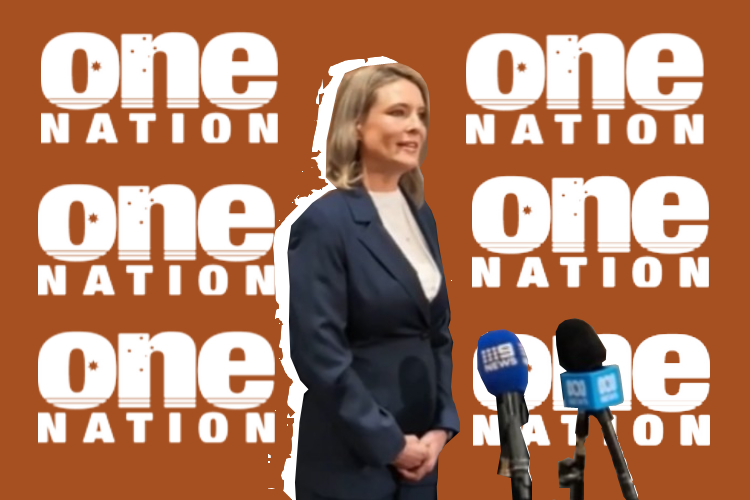
Katherine Deves is returning to politics as a One Nation candidate, promising to challenge Labor’s policies, champion women’s sex-based rights and fight for common sense.
25 November 2026
5.8 MINS
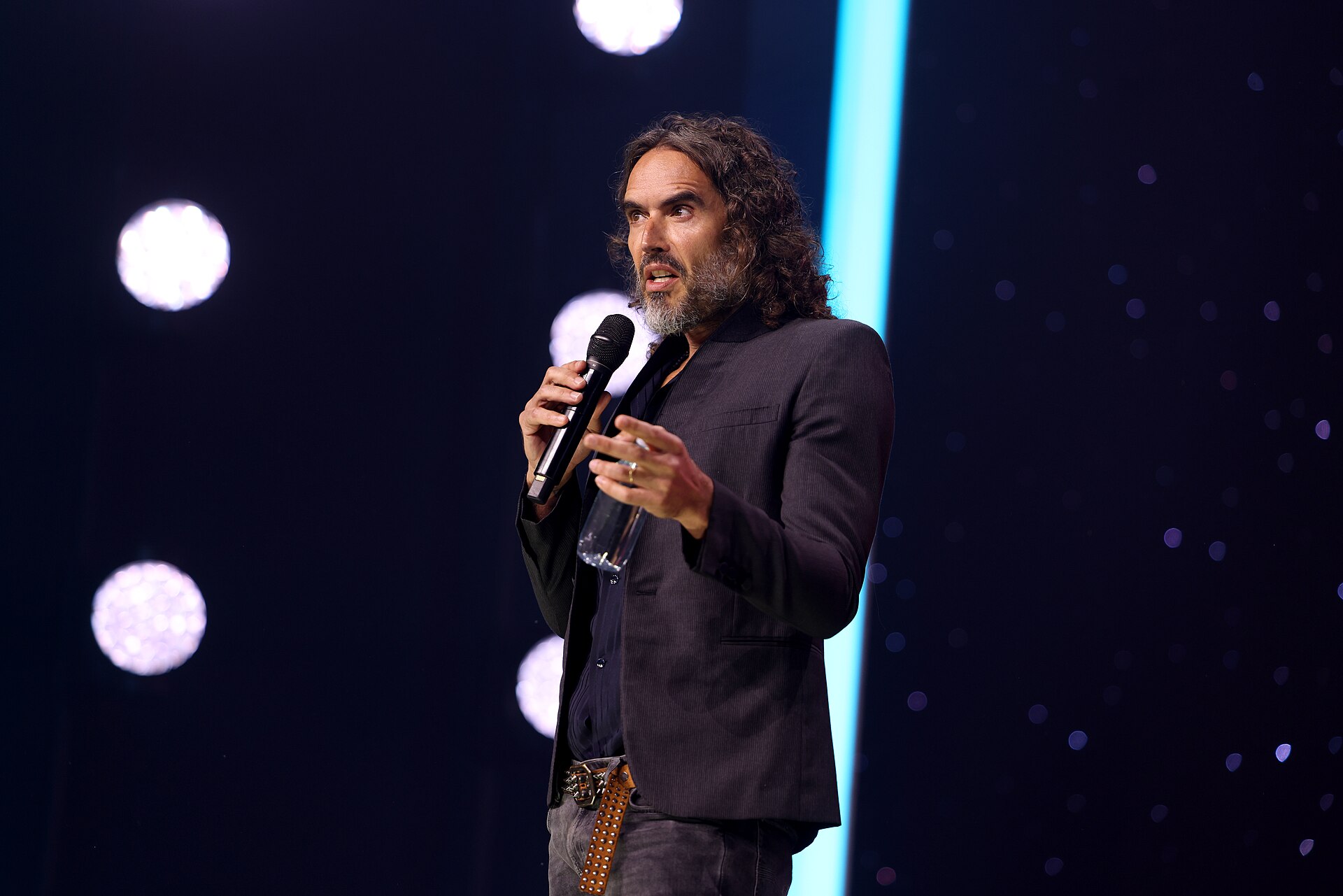
The cases of Russell Brand and seven Cornell students raise troubling questions about due process, media-driven accusations and whether justice is being sacrificed to public hysteria.

24 November 2026
2 MINS
A national Christian declaration against antisemitism is being launched in the wake of the Bondi massacre, calling believers to prayer, unity and practical action.

24 November 2026
4.1 MINS
US lawmakers and the State Department are pressing Egypt to free Christian convert Said Abdelrazek, while the Albanese government faces mounting criticism for its silence.




Fantastic analysis. All readers remember to make a submission and sign a petition where you can.
I wrote to my states Greens MPs hoping they will see the surveillance side as within their limited scope of promoting civil liberties. Next up independents and labor. This bill needs to be opposed at every avenue as the cost to speech is potentially too great.