


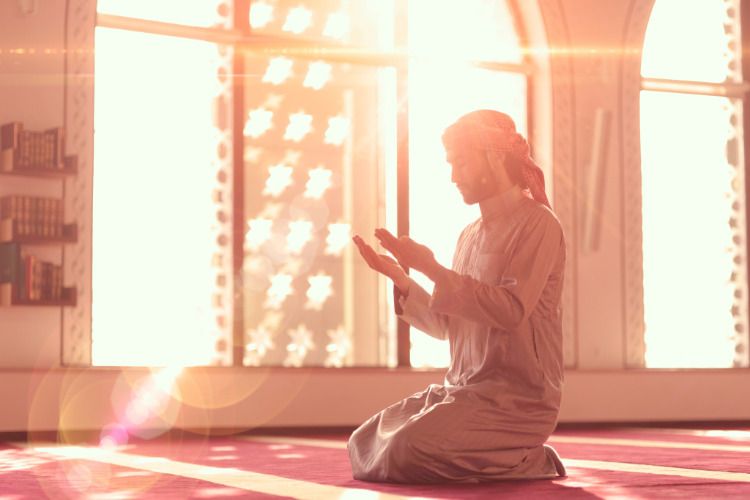
Fear and Faith: Understanding Islam with Courage and Compassion
As someone who teaches, speaks, and trains the church to share Christ with Muslims, I often encounter two vital questions: Can we be concerned about Islamic ideology without fearing Muslims? And how should Gospel-centred Christians respond?”
It is a fair and necessary question that sits at the crossroads of theology, culture, and compassion. The answer is yes, but walking that line requires wisdom, humility, and courage. In a time when fear, anger, and misinformation dominate conversations about Islam, followers of Jesus have an opportunity to model something different.
We can be people of conviction and compassion, guided by truth but grounded in love. This balance is not easy, but it is both possible and powerful when our confidence is rooted in Christ.
Islam and Muslims Are Not the Same Thing
The first and most important truth in this conversation is this: Islam and Muslims are not the same thing. Islam is a system; Muslims are people trapped in that system.
Islam is the ideology; Muslims are the image-bearers. To confuse the two is to fight the wrong battle. When we treat people as the problem, we can fall into hatred. When we treat false ideas as harmless, we fall into compromise. The Gospel calls us to clarity about both.
Islam promises submission but not salvation. It offers law without grace, devotion without the assurance of pardon. It binds the conscience under commands but cannot cleanse the heart from guilt. Those who live within its shadow are not villains to be feared but souls to be pitied, prayed for, and pursued in love.
This is why Christians must see Islam for what it is: a spiritual system that enslaves, not a community of people to despise. The sharper we recognise the chains, the more we must remember the Captive. Every Muslim is someone loved by God, held captive by an ideology that blinds them to the Son who died for them. They do not need our suspicion; they need our witness. They do not need our retreat—they need our courage.
To fear Muslims is to forget who the real enemy is. Scripture tells us that our struggle is not against flesh and blood, but against the spiritual powers that hold humanity in darkness (Eph. 6:12). Islam is one of those powers, namely a fortress of ideas exalting itself against the knowledge of Christ. Yet the Gospel is stronger. It alone can demolish strongholds and set captives free.
So we must speak clearly and love deeply. We confront the lie because we love those deceived by it. We reject the false system while embracing the people caught within it. The Christian stands with a Bible in one hand and mercy in the other, discerning without despising, resisting without retreating, and loving without fear.
Islam as a Belief System
The fundamental tenet of God’s absolute oneness (tawhid) precludes any partners, incarnations, or mediators. Thus, the Christian confession of the Trinity, that Jesus Christ is the eternal Son who shares in the divine essence, is therefore regarded within Islam not merely as error but as blasphemy. To ascribe deity to Christ is, in Islamic thought, shirk, the unforgivable sin of associating others with God.
In Islam, salvation does not come through the cross or through divine grace. It comes through submission, through yielding to God’s will. It also involves accumulating good works that earn divine favour. Conversely, Christianity proclaims a radically different Gospel. It envisions a God who steps into human history. He bears our sin, and saves the unworthy through grace rather than merit. These are not minor doctrinal disputes or cultural preferences; they represent two incompatible visions of God and redemption, one centred on human obedience, the other on divine grace.
Because of this, Christians cannot afford to treat Islam merely as another faith among many. It is an alternative moral and social order with far-reaching influence. Under traditional Islamic law, sharīʿa, religion and state are inseparable. The law is divine, not civil, and its reach extends from worship to governance, from family life to public justice. Historically, this produced the dhimma system, in which non-Muslims could live under Islamic rule but only as second-class subjects, tolerated but never equal. To acknowledge this is not to show prejudice; it is to face reality.
Even today, many Muslims struggle with the tension between devotion to their tradition and the demands of modern freedom. Some seek reform and greater liberty, others seek a return to the purity of classical Islam. Both impulses reveal the same truth, that Islam is not a neutral religion but a system with civilizational ambitions. Honest engagement requires seeing both the dignity of many Muslim lives and the deep challenges posed by Islamic thought. Christians must be clear-eyed and compassionate, understanding the beauty in individuals, while discerning the danger in an ideology that denies the cross and the Son of God who died upon it.
Islam’s Cultural Ambition and Resistance to Criticism
My previous article showed how Islam’s cultural ambition and resistance to criticism are not abstract ideas but living realities now taking shape in Australia. The Qur’an and early Islamic tradition envision a world ultimately governed by Allah, not simply through persuasion or personal belief, but through the establishment of a divinely ordered society. This is not incidental to Islam’s identity; it is central. The aim has never been coexistence on equal terms, but the eventual subordination of all other systems to the rule of Islam.
From the beginning, Islam saw religion and government as one under a single vision of divine rule. Muhammad was both a spiritual and political leader. The early caliphates tried to organise society around sharīʿa, which they saw as God’s way of bringing order and justice. This urge for civilisation has had a big impact on the history of Islam. Even today, while some Muslim-majority nations separate religion and state, many still see the implementation of sharīʿ as essential to a just society. Historically, the goal was not pluralism in the modern sense but the supremacy of God’s law—a moral and political order in which truth was not one choice among many but the standard to which all should submit.
Part of that ambition involves silencing dissent. Classical Islamic law condemns questioning or criticising Muhammad, the Qur’an, or Islamic teaching as blasphemy, an offence that still carries the death penalty in several Muslim-majority nations. This suppression of criticism is not merely theological; it is deeply cultural. In the West, labelling honest scrutiny as “Islamophobia” performs the same function, shaming and silencing necessary conversation. True tolerance does not mean refusing to question ideas; it means allowing those questions to be asked without fear.
Christians must never confuse courtesy with compromise. Respect for Muslims does not require silence about the truth. To love our Muslim neighbours is to tell the truth about the claims of their faith and the Gospel that alone saves. We must not be intimidated by accusations or political pressure.
Islam’s drive for dominance should not make us fearful; it should make us discern. It should renew our resolve to defend freedom of conscience, to speak truth without apology, and to live by grace without retreat. The church must not yield to fear or rage but must stand firm in the Gospel of Christ, whose kingdom advances not by coercion but by conviction, not by the sword but by the Spirit.
Muslims as People
We need to look at Islamic ideas critically, but we need to talk to Muslims personally. Some are very religious, some are not religious at all, and some are Muslim in a cultural sense. Many are stuck between faith and modernity. Each one is an individual who longs for meaning, belonging, and hope. Reducing all Muslims to the actions of extremists is unjust and unworthy of Christian witness.
Every Muslim, like every person, bears the image of God. They have families, emotions, and stories shaped by culture, hardship, and hope. When fear defines our perception of them, we lose sight of their humanity. Christ calls His followers to see people as He sees them, with truth and compassion together. The Gospel invites us to love Muslims not because we agree with their beliefs, but because God has loved us first. Friendship rooted in grace can open doors that fear and hostility keep closed.
Truth Without Fear, Love Without Compromise
Jesus calls us to speak the truth in love (Ephesians 4:15). Truth and love are not opposites but partners. Truth guards us from deception, and love guards us from cruelty. Without truth, love loses its foundation; without love, truth loses its credibility. When they work together, we mirror the heart of Christ, which is courageous yet compassionate, discerning yet gracious.
Truth means acknowledging the real differences between the Gospel and Islam. Christianity proclaims salvation through faith in the crucified and risen Son of God. Islam, on the other hand, teaches that forgiveness comes through submission and obedience. These messages cannot both be true. Yet love calls us to share these truths humbly, not harshly. Jesus never compromised truth for peace, but He always treated people with respect. To follow Him is to hold conviction and kindness in the same heart.
Fear often grows in the absence of knowledge or relationship. Stereotypes thrive where people stay distant. The best remedy is engagement—get to know a Muslim neighbour, coworker, or classmate. Share the hope that defines your faith, listen carefully, and ask sincere questions. Relationships remind us that people are not ideas.
We must also be clear that when we talk about Islam, we are addressing beliefs, not people. This posture honours a biblical worldview. And as we engage, we must pray, for this is not merely a cultural issue but a spiritual one. Islam presents a different gospel, and only the Gospel proclaimed under the power of Christ reveals the truth. The love that flows from God’s grace casts out fear and replaces it with courage and compassion (1 John 4:18).
A Distinctly Christian Response
Christians do not need to fear Islam or Muslims. Our faith rests on the sovereign Lord who rules over every ideology and power. The Gospel does not call us to hostility; it calls us to holiness and hope. We can be deeply concerned about the influence of Islamic ideology while remaining deeply compassionate toward Muslim people. That tension, conviction anchored in love, is what gives our witness both credibility and beauty.
Yet love does not ignore the cost of discipleship. In many Islamic contexts, believers in Jesus suffer persecution, exclusion, or even death. Their courage testifies that Christ is worth more than comfort or safety. Remembering their faithfulness gives depth to our own compassion. It reminds us that love for Muslims must include a willingness to stand with the persecuted and to speak truth, even when it costs us.
Only a Gospel-Changed Heart Can Live This Way
The kind of love and discernment this article calls for is not natural. It cannot be achieved by goodwill, moral effort, or cultural sensitivity alone. Only a heart transformed by the Gospel can love without fear and stand for truth without pride. When we truly grasp what Christ has done, that while we were sinners, He died for us, we lose the ability to treat anyone as beyond reach (Holy Bible, New International Version, 2011, Romans 5:8). Grace received becomes grace extended.
A Gospel-changed heart sees Muslims not as enemies but as image-bearers enslaved by deception and loved by God. It knows that the fight is not against people but against spiritual darkness that keeps people from seeing the truth about Christ (Ephesians 6:12). A heart like that doesn’t mix compassion with compromise; it loves enough to be honest. Our efforts will be shallow and short-lived if we don’t make this change. But when the Holy Spirit renews us, we gain the courage to engage with clarity and the tenderness to do it with love.
Tim Keller often explained that the Gospel does not simply make us “nice people” — it makes us new people (Keller, 2008). The Gospel humbles us because it tells us we are more sinful and flawed than we ever dared believe, yet it emboldens us because it assures us we are more loved and accepted in Christ than we ever dared hope.
That tension, humility and confidence together, sets us free from both fear and pride. Fear says, “I can’t engage those who disagree with me,” while pride says, “I am better than those who disagree.” The Gospel dismantles both. It creates a posture of gentleness and conviction, of grace and truth, that mirrors the heart of Jesus Himself.
Conclusion: Fear Transformed by Love
Christians are called to walk a different path in a world where people don’t understand each other and don’t trust each other. We should not back down out of fear or give up the truth in the name of tolerance. We should instead live in the middle of conviction and compassion, courage and kindness. It’s smart to be worried about ideas, but it’s not smart to be scared of people. True courage flows from love, and true love flows from a heart transformed by the Gospel.
Let this be our prayer:
“Lord, help me to love without compromise and to speak truth without fear.”
When love leads, fear loses its hold. And in that sacred space where conviction meets compassion, the light of Christ shines brightest, illuminating both truth and grace for a world desperate to see both.
___
References
- Keller, T. (2008). The reason for God: Belief in an age of skepticism. Dutton.
- Keller, T. (2012). Center church: Doing balanced, gospel-centered ministry in your city. Zondervan.
___
Image courtesy of Adobe.
3 Comments
Leave A Comment
Recent Articles:

12 October 2026
12.9 MINS
God’s judgement can seem difficult to reconcile with His goodness. But Scripture presents God’s perfect justice as something we can celebrate — and His present offer of mercy through Jesus as the good news.

12 October 2026
3.1 MINS
The proposed livestream of Nidal Hasan’s execution has reignited debate over justice, deterrence and public accountability, with critics comparing American justice to ISIS propaganda.
12 October 2026
3.7 MINS
An EU court case over baptismal records could pit data protection laws against religious freedom, raising serious questions about whether governments can compel churches to erase sacramental history.
12 October 2026
3.3 MINS
In the week leading up to Christ’s crucifixion, Jesus' soul was troubled. He responded with a bold prayer, and his example challenges us to that same boldness.
11 October 2026
2.6 MINS
Jesus offers us intimate friendship, which produces great joy as we walk closely with him.
10 October 2026
4.1 MINS
When Jesus rebuked the Laodicean church, this was not a sign of his lack of love, but proof of it and how greatly he longs to reward and bless us. He is knocking — will we answer?
9 October 2026
5 MINS
During a recent dialogue between high profile legal experts, a top Australian constitutional law expert was asked if Australia should have a Bill of Rights. His answer may surprise you.



Thank you. Exceptional clarity. We so much need to be transformed to live as citizens of the kingdom and pilgrims on this earth.
Thank you, Meryl. I couldn’t agree more. Transformation really is at the heart of what it means to follow Christ—learning to live with heaven’s values while still walking through this world. Your words capture that beautifully.
I think this is a brilliant article. It contains so many words of deep wisdom. It eliminates my confusion over how to think about Islam and Muslims. I shall be studying it for a while. Thank you Tim Orr.