


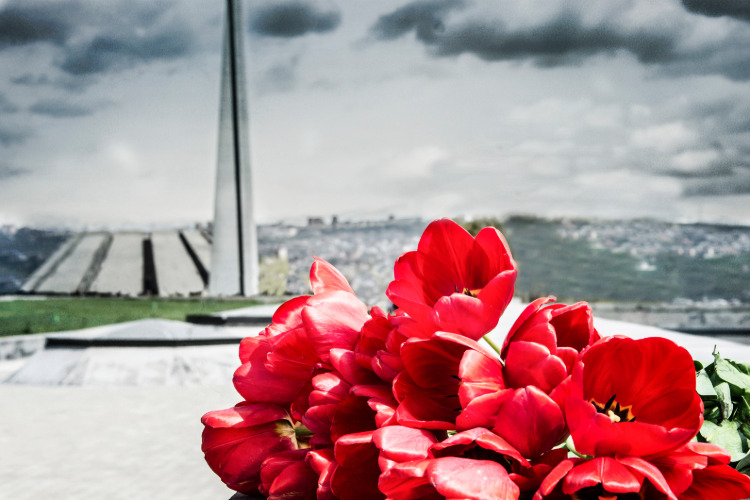
Beyond ANZAC: Remembering the Forgotten Christians of 1915
As Australians honour the ANZACs each April, this piece calls for remembering another World War I-era tragedy — the Armenian Genocide — and the Christian duty to remember all who suffer.
Every year, Australians gather at dawn services across the nation to remember the sacrifice of the ANZACs. We stand in silence as bugles sound, wreaths are laid, and stories of courage and loss are retold once more. It is one of the few moments in modern Australian life where the nation pauses collectively to reflect on suffering, sacrifice, and memory. And rightly so. Nations that forget sacrifice often lose part of their moral foundation.
Yet while Australians remember the tragedies of Gallipoli and the horrors of the First World War, another catastrophe unfolding during that same period remains far less understood within the modern Western world: the destruction of Armenian Christians within the collapsing Ottoman Empire in 1915.
The Armenian Genocide remains one of the most overlooked tragedies of the twentieth century. Historians estimate up to 1.2 million Armenian Christians perished through mass deportations, starvation, executions, forced marches, and systematic violence carried out during the final years of the Ottoman Empire. Entire villages disappeared. Families were torn apart. Ancient churches and monasteries that had stood for centuries were emptied or destroyed.
The First Christian Nation
Armenia itself held a unique place within Christian history, becoming the first nation in the world to officially adopt Christianity as a state religion in the early fourth century. Long before much of Europe became Christian, Armenian believers had already built a civilisation deeply shaped by faith. Yet during the chaos and nationalism surrounding the First World War, these Christian communities faced devastation on a horrifying scale.
For many people today, the Armenian Genocide occupies only a small space within public historical consciousness. Unlike other defining tragedies of the twentieth century, it is rarely discussed in depth within popular culture, media, or education. Political sensitivities surrounding international recognition have also contributed to the tragedy fading from broader public discussion.
Yet beyond debates over terminology and diplomacy lies a simple human reality: over a million Christians were killed, ancient communities were uprooted, and countless people suffered because of their identity, ethnicity, and faith.
History often remembers wars through borders, treaties, and military campaigns, but behind every historical event are ordinary human beings — mothers, fathers, children, priests, families — whose suffering can slowly disappear into silence as generations pass.
“The righteous perish, and no one takes it to heart.”
— Isaiah 57:1
For Christians, remembrance is not merely political; it is spiritual. Scripture repeatedly calls believers to remember those who suffer and to remain conscious of persecution experienced by others across the body of Christ.
The Armenian Genocide, therefore, carries significance beyond history alone. It forms part of the long and painful story of Christian persecution that stretches across centuries and continents. In remembering the Armenian Christians of 1915, believers are reminded that faith has often survived not through comfort or political power, but through endurance amidst suffering and hardship.
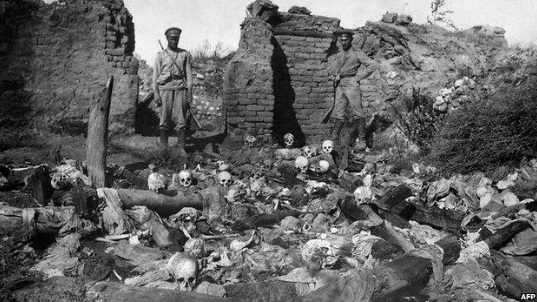
The story of Armenia also serves as a warning about how easily civilisations can lose their moral bearings during periods of instability, fear, and extreme nationalism. The Ottoman Empire was not uniquely evil in human history; rather, the tragedy reflects a darker truth about humanity itself.
Throughout history, societies under pressure have often searched for scapegoats, enemies, and groups to blame for political decline or national insecurity. Once human beings are stripped of dignity and viewed as obstacles rather than neighbours, cruelty becomes easier to justify. The twentieth century repeatedly demonstrated how quickly modern societies could descend into mass violence when fear and ideology overcame moral restraint.
Remembrance as a Spiritual Duty
Remembering the Armenian Christians of 1915 should not be about fuelling hatred toward modern nations or peoples, nor should remembrance become an exercise in political tribalism. Rather, remembrance should cultivate humility, compassion, and historical awareness.
A healthy civilisation remembers not only its victories and heroes, but also the suffering that shaped humanity’s moral conscience. Australians rightly honour the ANZAC tradition because remembrance carries meaning. Yet perhaps remembrance should also extend beyond our own national story toward those tragedies the modern world no longer speaks about often.
The forgotten Christians of 1915 may be distant from modern Australia geographically, but the moral lesson remains close to home. Civilisations preserve part of their humanity through memory. And perhaps one measure of a compassionate society is whether it is willing to remember even the suffering that history has allowed to fade into silence.
“Remember those who are mistreated as if you yourselves were suffering.”
— Hebrews 13:3
___
Republished with thanks to the Young Conservatives for Christ Substack. Featured image courtesy of Adobe.
3 Comments
Leave A Comment
Recent Articles:

21 August 2026
2.9 MINS
Ardie Savea and Siya Kolisi, rival captains united in faith, worshipped together ahead of Rugby's Greatest Rivalry — revealing how Christ grounds each of them on and off the field.
21 August 2026
1.8 MINS
Archbishop Fisher accuses ABC of bias in voluntary assisted dying coverage, demands formal investigation into impartiality breaches over telehealth ban debate.

21 August 2026
2.9 MINS
An Australian-designed nuclear microreactor, built in just 150 days, has been sold to a US firm after federal and state bans blocked its development at home — the latest in a long line of missed Australian innovations.

21 August 2026
2.9 MINS
When five men are accused, "all men" bear the guilt — but when a woman errs, she's just an individual. This piece asks why identity logic only turns rigid on demand.

21 August 2026
4.4 MINS
I have been researching and studying the biomechanics of the human body for over 30 years, and have seen firsthand how modern scientific discoveries have confirmed that the human body is a design masterpiece.

20 August 2026
4 MINS
Young Australians face a housing crisis decades in the making. This piece argues political choices—not fate—locked a generation out of the Australian Dream, and calls for national renewal.

20 August 2026
3.1 MINS
The ABC surprises with a balanced report on Gym Church, a Melbourne-born Christian fitness ministry now spreading nationally — exploring why Gen Z men are turning to faith.



The genocide pf the Armenian Christians in 1915 is one of the horror stories of Muslim oppression
For those who can the Film the Promise with Christian Bale acting depicts events of the Armenian Genocide 1915…a history portayed well ..My step mother an Armenian was born after her Armenian parents were among the thousands that miraculously escaped to the Holy Land ..
I don’t agree. In 2025 I visited Azerbaijan, Georgia and Armenia. It was an eye-opener and I lost all sympathy for Armenia. The Christian Kingdom of Albania ( in what is now Muslim Azerbaijan) disputes Armenia’s claim to be the first Christian country. During rule of both countries by Tsarist Russia, the tiny Albanian native church ceased to exist as an independent church because it was forcibly placed under /merged with the Armenian church which was granted possession of its churches. Since Azerbaijan defeated Armenia in the recent war, a couple of churches have been returned to the ancient Albanian Church. I had the great privilege, a part-Albanian, to attend in 2025 one of its Services in a reclaimed church where I was warmly welcomed. In WW1 Armenians were Communists , fighting Turkey which was anti- Communist. It massacred thousands of Muslims in what is now Azerbaijan, so, Armenians were massacred in turn by the Turks in WW1 . In the entrance to the Armenian National Art Gallery in Yerevan therestill are great posters glorifying Armenia’s love of Communism, of Stalin , and how they proudly fought as Communists in WW2 in my native country where the Armenians they would have killed my family and I, if they had caught us !