


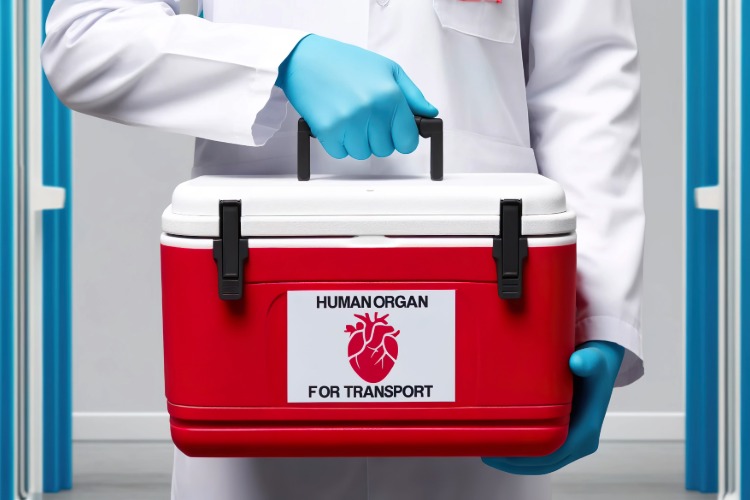
Organ Harvesting: Beijing Commits Unspeakable Crimes and the West Responds With a Whimper
By Owen Webb
The People’s Republic of China (PRC) has faced increased international suspension and criticism over the past two decades, on accusations of forced organ transplants performed on prisoners of conscience, Falun Gong practitioners, and religious and ethnic minorities.
Accusations of forced organ transplants from living people, or transplants conducted without the consent of the deceased or their family, have been levied against multiple governments and regimes over the last 30 years, ranging from Islamic State to Kosovo. But these sporadic, decentralised operations are in no way comparable to the scale and consistency of the industry in China.
In countries with advanced voluntary donor systems (such as Australia and the United States), patients typically wait several months to years for a matching organ. Chinese transplant websites – many of which remained accessible until the late 2000s – have historically guaranteed matching organs within weeks. Such rapid, scheduled wait times are statistically impossible under a voluntary system.
In cases where a person dies by natural causes, the window of time to remove their organs before lack of oxygen and rapidly dropping body temperature renders them useless is less than 30 minutes, with the exception of the kidney, which can last up to 60 minutes. From there, doctors have between for and eight hours to transfer the organ to the new host (again with the exception of the kidney, which can survive up to 36 hours).
These times can be slightly extended by using an extracorporeal membrane oxygenation (ECMO) machine. Such machines were introduced to China in the early 2000s.
History of Organ Harvesting in China
The consistency of the industry in the PRC relies on a large, relatively defenceless group of people able to be exploited without raising domestic or international opposition. Initially this could be found in the approximately 8,000 prisoners executed in China every year (more than the rest of the world combined).
Additionally, the Chinese Communist Party (CCP) has found a “killable cast” in the millions of Falun Gong practitioners, who have suffered under state persecution since 1999. The Falun Gong spiritual movement’s ideological differences to the Party’s have made its members a common target for arrests and detention, with the 2006 report by the UN Special Rapporteur on Torture estimating that Falun Gong practitioners constituted 67 per cent of all prisoners in Chinese detention facilities.
In 2001, Dr Wang Guoqi, a former Chinese military surgeon, testified before the U.S. Congress that he personally extracted tissue from executed prisoners, including one who had not yet died. The Chinese Ministry of Foreign Affairs issued an angry rebuttal with officials labelling the testimony “sensational lies”. This denial was reversed in 2005 when Vice-Minister of Health Dr Huang Jiefu acknowledged that up to 95 per cent of all organs used for transplantation in China came directly from executed prisoners.
In 2007, the CCP implemented various regulatory policies, codifications and bans around organ transplantation, though the actual effectiveness – or intended effectiveness – of many of them remains ambiguous.
China officially banned all harvesting of organs from executed prisoners on January 1, 2015, when it announced that the country was relying entirely on a newly launched voluntary public donation system. However, no laws were actually rewritten to make prisoner harvesting illegal and it would be just as easy to re-categorise the practice as “voluntary donations” under state registries.
Publicly, China has very few official figures on transplants. For this reason, this article will have to rely on international investigations.
In 2006–07, Canadian human-rights activist and politician David Kilgour and international human-rights lawyer David Matas published their “Report into Allegations of Organ Harvesting of Falun Gong Practitioners in China”, in which they made the claim that “the source of 41,500 transplants for the six-year period from 2000 to 2005 is unexplained”. Their 2016 joint update with American journalist Ethan Gutmann expanded this to an infrastructure capacity of 60,000 to 100,000 transplants annually.
According to Gutmann, the average age for forced organ transplants is 28. In his 2026 book, The Xinjiang Procedure, Gutmann estimates that the organs from one person, including corneal tissues, and assuming distribution to foreign organ tourists at the going rate, are worth from $US600,000 to $US700,000.
Most investigations have primarily focused on the roughly three million Falun Gong practitioners who have passed through Chinese detention since 1999. But other groups of people, ethnic and religious, have been sucked into this vortex, including Uyghurs, as well as smaller numbers of Kazakhs, Kyrgyz and Hui. Evidence of this has been increasing over the last eight years.
Western Response
Although there have been endless strongly worded condemnations of the persecution of the Falun Gong, the response of Western human rights institutions, medical associations and governments has been markedly muted compared to similar crises of lesser scale. American legal scholar and bioethicist Wesley J. Smith suggests that there are two simultaneous causes of this silence: finance and access. Tackling an industry of such scale, in a country usually very hostile to international criticism and on which the majority of Western economies rely heavily, would be counter-productive for any multinational corporation and extremely dangerous for any government.
In August 2020, the U.S. government announced sanctions on Hong Kong’s chief executive, Carrie Lam, as well as 10 other senior Chinese and Hong Kong officials connected to the mass detention and surveillance of Uyghurs and other Muslim minorities in Xinjiang, freezing any U.S.-based assets and barring travel to the United States.
China responded by imposing their own sanctions on 11 U.S. citizens, including Secretary of State Marco Rubio, New Jersey representative Chris Smith and the heads of the National Democratic Institute for International Affairs, the National Endowment for Democracy, the International Republican Institute, Human Rights Watch and Freedom House.
For U.S. politicians, being placed under Chinese sanctions is generally more amusing than damaging since very few personally own assets in mainland China. But for international medical societies and human rights associations, losing access to China is a real problem.
Cooperation between the American and Chinese medical spheres has grown substantially since the early 2000s. Open criticism of Chinese medical ethics, whether mainstream or fringe, always risks prompting fallout from both sides. This is a risk few institutions or academics are willing to take, given that it almost never amounts to the improvement of ethical standards within China.
In 1983, for example, Stanford University expelled doctoral student Steven W. Mosher after he published a controversial article in Taiwan based on his research in rural China in relation to the one-child policy, which included forced abortion and forced sterilisation. Contemporary academics have suggested that Stanford acted under pressure from the CCP, which threatened to withhold permission for Stanford researchers to visit China.
Outside of the medical and academic spheres, mainstream Western media has all but ignored the crisis, and when they do address it, it is rarely serious. When author Daniel Asa Rose published Larry’s Kidney (2009) – a memoir detailing his journey to secure a black-market organ transplant in Beijing – The Washington Post reviewed it as the “stuff of slapstick comedy”, effectively sanitising a severe transnational crime.
This is not to say there has been no response internationally. As early as 2006, the World Medical Association (WMA) issued a formal declaration demanding that China stop harvesting organs from prisoners. The same year, the Transplantation Society (TTS) imposed an academic embargo on Chinese transplant physicians unable to demonstrate that their organs were ethically sourced.
Independent human-rights coalitions such as the International Coalition to End Transplant Abuse in China (ETAC) have successfully pressured top-tier medical journals into issuing mass retractions. More recently, in 2023, the International Society for Heart and Lung Transplantation announced an academic boycott of China citing “the body of evidence that the Government of the People’s Republic of China stands alone in continuing to systematically support the procurement of organs or tissue from executed prisoners.”
The pushback has not been confined to the academic sphere. The U.S. House of Representatives overwhelmingly passing the Stop Forced Organ Harvesting Act of 2025 (H.R. 1503), 406 votes to one in May 2025. The bill, introduced by New Jersey representative Chris Smith (one of the politicians Beijing placed under sanction in 2023), imposes criminal fines of up to $US1 million, civil fines up to $US250,000, and jail sentences of up to 20 years for anyone knowingly complicit in international organ trafficking.
“The brokers and the facilitators all over the world could find themselves the subject of prosecution here (in the United States),” Smith told the Heritage Foundation forum. “And we also would impose a number of sanctions on the Chinese officials, who never leave (China), but they wouldn’t be able to do business here and they would never get a visa.”
Foreign Input
It may seem strange to tackle Chinese human-rights abuses through American legislation, but the reality is that the practice of organ trafficking within China relies heavily on international “organ tourists”. According to one 2013 journal article in Voices in Bioethics from Columbia University, over half of the 900 kidney and liver transplants performed in one major transplant centre in China during 2004 were for non-Chinese citizens, and from 19 different countries.
Although precise statistics for the proportion of foreign to national customers are hard to come by (the University of Columbia article merely cited “circumstantial evidence”), as are the exact financial figures, on the basis of 60,000 transplants per year (the most conservative estimate from the Kilgour-Matas-Gutmann 2007 paper) and Gutmann’s $US650,000 retail price for a single organ, these 30,000 foreign transplants would be worth $US19.5 billion (132 billion yuan) to the industry annually.
Practices such as this rely on a form of utilitarian bioethics (the greatest good for the greatest number), which could not be more foreign to the Hippocratic-esque practice of medicine most people still expect from their own doctors – in which each individual is assessed as a complete entity, with no consideration of their status, perceived capabilities or usefulness.
Utilitarian medical practice neither originated in China nor is its practice confined to it. In one 2023 case in Belgium, a teenage girl diagnosed with brain cancer undergoing euthanasia – and intent on having her organs donated – was placed in an induced coma while matching was arranged for her organs.
According to an article in Belgian newspaper Le Soir, the euthanasia process lasted 36 hours. Eva (a pseudonym) was first anaesthetised, then intubated and ventilated. Her organs were examined, then matched on the European donation network, Eurotransplant. Finally she received a lethal injection, a few days after her 16th birthday.
Aside from the disagreements around euthanasia, the case has raised some very serious concerns from medical ethics bodies. If the euthanasia process can be altered to ensure the success of a medical operation on a separate patient, medical professionals are no longer treating individual patients; rather, a collective body of patients within which they are expected to economise.
“We’re beginning to turn people who are suicidal, and qualified to be killed, into a killable cast,” Wesley Smith said about the case. “Once you create a killable cast you begin to instrumentalise people.”
Conclusion
Given that China seems to be in no hurry to do away with organ harvesting, and that the West seems to be adopting forms of their illicit practices — and is certainly taking advantage of the service that China offers – this is a discussion Western academia will only be able to ignore for so long.
___
In April 2026, the Heritage Foundation in Washington DC hosted a forum MC’d by Jay W. Richards and featuring U.S. Republican Congressman Chris Smith, bioethicist Wesley J. Smith, and author Ethan Gutmann. Gutmann’s latest book, The Xinjiang Procedure, is reviewed in this edition of News Weekly.
The topic was a dark one: “Organ Harvesting: Communist China’s Hideous Shop of Horrors”. The following article is based heavily on the discussion that ensued in that forum.
The forum is preceded by a “Fireside Chat” between Jan Jekielek, senior editor of The Epoch Times and author of Killed to Order: China’s Organ Harvesting Industry and the True Nature of America’s Biggest Adversary and Dr Bob Moffit, senior Research Fellow at the Grover M. Hermann Center for the Federal Budget. We hope to have a review of Jekielek’s book in a future edition of News Weekly.
View the entire discussion here.
___
Republished with thanks to News Weekly. Originally titled, “Beijing Commits Unspeakable Crimes and the West Responds With a Whimper”.
Image via Adobe.
One Comment
Leave A Comment
Recent Articles:

24 September 2026
3 MINS
The US warns that Labor’s Digital Duty of Care bill could see platforms suppress independent journalists and commentary on “sensitive or controversial topics”, and would encourage platforms to engage in “pre-emptive censorship to avoid the risk of liability”.

24 September 2026
3.6 MINS
All Blacks and Springboks players united in prayer after their Baltimore clash, while Christian captain Siya Kolisi and Ardie Savea continue to testify openly about Jesus.
24 September 2026
4.8 MINS
The Digital Duty of Care Bill claims to be about safety. But the actual wording allows the Minister for Communications to decide what "harm" means, and a senator has already confirmed who that power is really meant to silence.
24 September 2026
6.3 MINS
True redemption is far more than a public comeback or second chance. Scripture points to Christ’s costly sacrifice, repentance, surrender and resurrection.

23 September 2026
4 MINS
A renewed petition targets pro-life law professor Dr Joanna Howe, as she and husband James fight back against claims they say have damaged their careers and reputation.

23 September 2026
6.6 MINS
Government-funded research on boys, masculinity and the manosphere deserves rigorous scrutiny, especially when contested theories begin shaping education, regulation and public policy.
23 September 2026
4.2 MINS
For too long, maintaining regional Victoria’s crumbling roads has been an issue of “out of sight, out of mind” for the state’s incumbent Labor government.



Well done, to The Canberra Declaration. The vast, depraved nature of these Crimes Against Humanity, now approaching its 4th decade, attract global Civil Society’s organised consideration of excluding the CCP’s administration, the “People’s Republic”, from international forums of many kinds, and to as far as possible freeze many kinds of transactions with PRC-linked entities, just as apartheid South Africa was excluded from the family of nations. To the extent that the CCP is seen as an illegitimate imposition on the people of mainland China [not to mention a cruel imperial genocidal coloniser of peoples like the Tibetans and Uyghurs], global Civil Society may investigate the need for “debtors” to repudiate “debts” [eg Belt& Road financial entrapment] engineered by, and “owed” to entities under the direction of the CCP – under the theory and practice of the CCP, every entity, whether a person or the “judiciary”, police or secret security agencies,all must serve the orders of the Party dictatorship.