


Former South Korean President Sentenced to Life in Prison
South Korea’s jailing of former president Yoon Suk Yeol marks a dramatic political turning point, raising concerns about democratic backsliding, religious liberty, and the nation’s accelerating leftward shift.
A court in Seoul sentenced former South Korean President Yoon Suk Yeol to life in prison after he was found guilty of insurrection for briefly declaring martial law in 2024. The prosecution of a right-wing president by his left-wing successor bears striking parallels to the prosecutions the Biden administration brought against President Donald Trump — except that they succeeded. “History will exonerate Yoon Suk Yeol,” declared Asia expert Gordon Chang, adding that his conviction “will be seen as the end of South Korea’s democracy.”
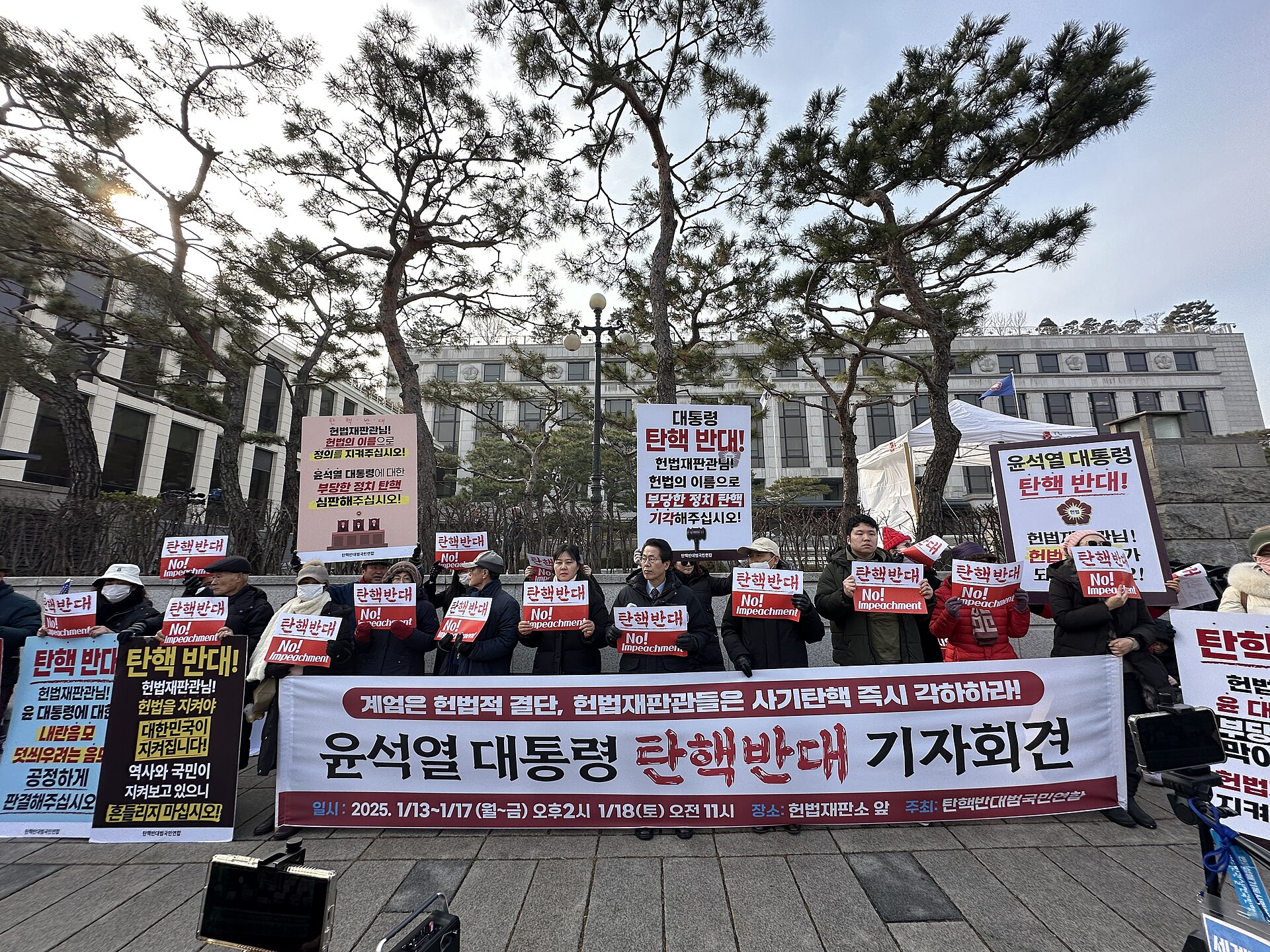
On 3 December 2024, then-President Yoon declared martial law due to the opposition party’s “anti-state” activities that favored North Korea. His far-left opponents, however, controlled the National Assembly and voted hours later to void his declaration. Yoon later withdrew the declaration, but the National Assembly voted to impeach him on December 14. In January 2025, he became the first South Korean president to be arrested and imprisoned while in office.
“One can argue whether it was a politically smart thing to do,” declaring martial law, Chang reasoned, “but he had reason to do so because the national assembly, through successive impeachments, had paralysed the government. And he certainly did not commit insurrection, which is what he’s being charged with now.”
However, that did not prevent public opinion from swinging against Yoon, propelling a far-left party led by Lee Jae Myung to an overwhelming victory. President Lee’s government then proceeded to prosecute Yoon vigorously, even seeking the death penalty for the insurrection charge, and throwing his wife in prison, too. The last South Korean leader to receive a death sentence was General Chun Doo-hwan, who led a coup in 1979 and slaughtered thousands of protestors (his sentence was later commuted).
In the final event, the South Korean court did not impose a death sentence, opting instead for life imprisonment — hardly a light sentence. The court also sentenced Kim Yong-hyun, Yoon’s defence minister who mobilised the military, to a 30-year sentence.
Political Retribution or Rule of Law?
South Korea has a troubling history of vindictive political recriminations. Since the country’s independence in 1948, one former president was sentenced to death, another to life imprisonment, two more to prison, and one committed suicide (although some of the sentences were later commuted). Two more saw their children prosecuted.
President Lee’s administration has only extended that history. Not only has he overseen the prosecution of Yoon and his close associates (including former Prime Minister Hwang Kyo-ahn and Yoon’s intelligence chief Cho Tae-yong), but he has also overseen a crackdown on Christians without precedent in recent Korean history.
As The Washington Stand reported in November, the Lee regime has arrested a number of prominent Christian leaders, “including Pastor Son Hyun-bo of Segero Presbyterian Church, Hak Ja Han Moon of the Family Federation for World Peace and Unification, Pastor Lee Younghoon of Yoido Full Gospel Church, and Pastor Jang Hwan ‘Billy’ Kim, a former translator for Billy Graham and chairman of the Far East Broadcasting Co.”
America’s own history provides abundant proof that pastors can commit crimes, and they should not have immunity for doing so. But the nature of these prosecutions suggests the real motive is political.
Chance Son, son of arrested pastor Son Hyun-bo, explained that his father is “facing 16 lawsuits right now for simply holding worship during COVID restrictions [and] opposing anti-biblical homosexuality laws, the comprehensive anti-discrimination law, and also opposing the tyranny that the Democrats are doing in Korea right now.” He believes his father was targeted simply for being an outspoken Christian conservative.
“This is a culmination of the long march through the institutions. That is the normal process for communist revolutions and is the culmination of it,” argued Morse Tan, who served as Ambassador-at-Large for Global Criminal Justice during the first Trump administration. “There have never been raids on churches, never been arrests of pastors. … This is unprecedented in South Korean history.”
“You have the communisation of South Korea going on and the rise of a communist dictatorship happening in South Korea,” Tan continued. “I don’t say that lightly or forcefully or with any exaggeration. Violations of religious liberty and persecution of Christian leaders and the church — this is standard fare when it comes to communist revolution.”
In fact, the Lee administration’s politicised prosecution recalls the reason why former President Yoon declared martial law in the first place. He was concerned that a far-left party that was suspiciously friendly with North Korea had already targeted 29 conservative members of Parliament with corruption accusations or other attempts at political assassination.
Kowtowing to North Korea
Since taking executive power, Lee has shown his friendliness toward North Korea by shutting off loudspeakers that broadcast anti-communist messages across the border, as well as 80% of South Korean radio broadcasts into North Korea. Many of these broadcasts are from Christian stations and are likely the main way North Koreans have of hearing the Gospel.
Family Research Council President Tony Perkins interpreted South Korea’s leftward slide towards its communist neighbour as a consequence of a church that has grown complacent. He noted that South Korea has been “a very prosperous country in the last 50 years,” in large part due to “a praying church that was engaged and was evangelistic.” But he suspected that “the church [has] become complacent.”
Washington-based Korean Pastor Kyung Won Song agreed, “[C]hurch growth has completely stopped, and it’s pretty much downhill at this point.” In fact, “part of the reason is because of … all the materialism and secularism [that’s] kicked in,” which has led to a loss of “fervency in terms of prayer.”
It’s likely impossible to prove a connection between the vitality of Korean churches and the health of Korea’s democratically elected government. But it is undoubtedly true that God listens to the prayers of His people.
Speaking of prayer, in Ephesians 6:19, the imprisoned Apostle Paul urges a church half a continent away to pray “also for me, that words may be given to me in opening my mouth boldly to proclaim the mystery of the Gospel, for which I am an ambassador in chains, that I may declare it boldly, as I ought to speak.” This is a biblical precedent for us. As the Korean church faces dark days ahead, American Christians can still pray for their faithful witness and endurance, even if their pastors are all thrown in prison. Communists and other leftists believe in the power of government, but Christians know the power of the Gospel.
___
Republished with thanks to The Washington Stand. Image courtesy of Wikimedia Commons: Pro-Yoon protestors at the Constitutional Court, the afternoon before his arrest, 14 January 2025.
Recent Articles:
14 October 2026
6.7 MINS
A national poll challenges claims that pro-life Australians are extremists, revealing broad support for abortion restrictions, protections for unborn babies and safeguards for vulnerable women.

14 October 2026
2.8 MINS
Queensland recorded 1,082 assisted suicide and euthanasia deaths in 2025–26, as the review board called for consultation on potentially widening eligibility criteria.
14 October 2026
5.5 MINS
As Christianity fades from public life, Marxism or Communism offers a substitute faith built on oppression, liberation and political salvation — but at what cost?
14 October 2026
5.3 MINS
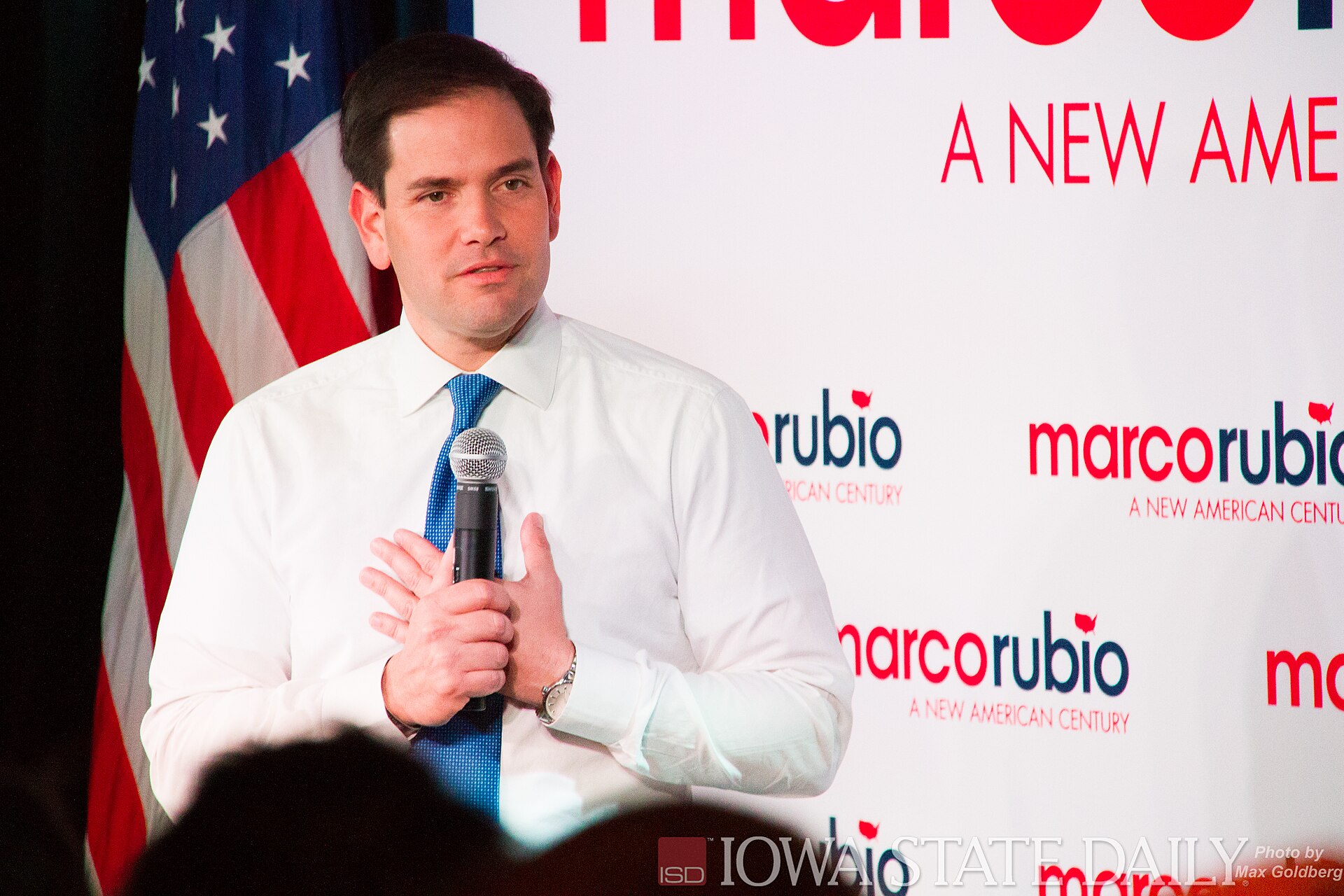
Marco Rubio’s Athens speech celebrates the Greek, Roman and Christian foundations of Western civilisation, warning that cultural self-loathing and radical ideologies threaten its future.

14 October 2026
2.1 MINS
The first reported case of euthanasia under the Netherlands’ expanded rules for children under 12 has reignited ethical concerns about disability, suffering and the protection of vulnerable lives.
14 October 2026
2.8 MINS
Australia needs a courageous Church that never separates courage from Christian love — the courage of Peter and John, who, when ordered to cease speaking about Jesus, responded: “We can't stop.”
13 October 2026
2.6 MINS
Allegra Spender’s proposed bill reignites debate over discrimination protections, religious freedom and the right of faith-based schools to uphold their beliefs and values.


