



The Communist Connection: The Khmer Rouge, COVID, and Cancel Culture
An American refugee has likened COVID-19 restrictions and cancel culture to her experiences in Cambodia under the Khmer Rouge.
Channy Chhi Laux was only 13 years old when she escaped the Communist killing fields, along with a small number of family members.
Laux made the Marxist, COVID-19, and cancel culture connection during a recent livestream event hosted by the Victims of Communism Memorial Museum.
Total Control
When asked why she named her 2017 book Short Hair Detention, Laux explained that the Khmer Rouge mandated that all girls must have short hair.
“[The communists] controlled every aspect of my life. I had no hopes and rights,” she said.
Laux added,
“I want to communicate to all children in this country that [under communism] even the length of your hair is being controlled by government. That’s how much freedom you don’t have.”
An accomplished university graduate, mum, author and chef, Laux expressed concern over the younger generation’s flirtation with Marxism, stating,
“At the same time, look at what [is] happening today. Our government want[s] to control so much of our lives.”
Laux argued, “maybe, if I tell the children, [that under communism] even the length of your hair is controlled by government,” they’ll ask, “what’s the difference between that and [being told to] wear a mask?”
“It’s so close to my experience,” Laux told Ashley Davis, VOC’s Director of Public Affairs.
“This is almost like an analogy. What is happening here, is what happened there; we allow the [government] to continue getting into our life.”
This is why, Laux explained,
“I’ve helped my own kids understand freedom is not free. You have to work hard for it. I just want my children, and our children to have the freedom that we have.”
Killing Fields
The victim of one of the 20th Century’s worst exhibitions of murderous Marxism unpacked the rationale,
“When I talk about genocide in Cambodia, I also bring up the fact about who’s doing it. It’s not a random regime or random ideology, it’s specifically Marxism that is responsible for all this killing.”
As a witness to the grotesque consequences of government overreach, Laux also talked about how her grandfather, Yong Hao Chhi, had fled to Cambodia after the Maoist cultural revolution ransacked China — only to meet death by another Communist regime.
The Khmer Rouge, she recalled, “killed over two million of my fellow Cambodians. My father and my youngest brother did not survive the killing.”
By Force
On cancel culture, the star of the interview commented,
“The Khmer Rouge killed because they wanted to enforce the ideology of communism into our culture, into our lives.”
“To do so they started by destroying family, religion, and education. The fabric of our culture. Not very much different than the cancel culture we see right now in the United States.”
Moving on, Laux fielded a question about whether she saw a similarity between Pol Pot’s reign of terror and the Chinese Communist ethnic cleansing (particularly their bloody campaign against the Uyghurs).
“I see the similarity,” she declared,
“Not so much that the killing is being done right now, but also, what are we doing to help those people? They need help and they are being abandoned by the world. The killing needs to be stopped.”
Laux’s experience amplified this lament,
“It also makes me angry. What is the purpose of [the] United Nations if they don’t stand up for human rights and protect human [rights] around the world?”
Bystanders and Blind Obedience
From her comments, it seems the main nexus between the Khmer Rouge era and today is spectators and servants: those who fall back on, “I was only following orders,” and those who said nothing in protest against those giving the orders.
Considering the similarities between cultural Marxism, medical conscription, censorship and the removal of fundamental rights, such as informed consent and freedom of speech, Laux said,
“I don’t see any difference. [Especially when,] if you express yourself, you’re gonna be executed, ostracised, or [made] to feel like you are not part of the country; not part of community. I don’t see any difference. Killing is killing.”
For Laux, the glue joining what she fled, to what’s happening in the country she fled to, is the acceptance of totalitarianism:
“The other thing I fear and see, is that it’s almost… acceptable to some people.”
It shouldn’t be acceptable, Laux protested.
“From my experience, what’s not acceptable is when the law enforcer follows instruction without question. I see some of that happening. It’s just reminded me of what happened in Cambodia too much; and if it keeps happening similar to Cambodia, what do you think our future’s going to be?”
It’s easy to see how fresh her traumatic memories of life under Marxism still are, and how much those memories ground her views on COVID, cancel culture, and the Chinese Communist Party.
We do a great disservice to the victims of communism and ourselves, if we, through disinterest, disavow voices like Laux’s.
Although a bit dated, Horowitz’s words in Reality and Dream still bite:
“Every Communist revolution begins as a rape of the present and continues as a cannibalisation of the past. Every Communist Party is the coloniser of its own country, and the Soviet Empire is the coloniser of them all.”
Recent Articles:

15 October 2026
7.2 MINS
A man’s death in a tiger enclosure sparks chilling online reactions, exposing a growing willingness to judge human worth by usefulness, behaviour and ideology.
14 October 2026
5.5 MINS
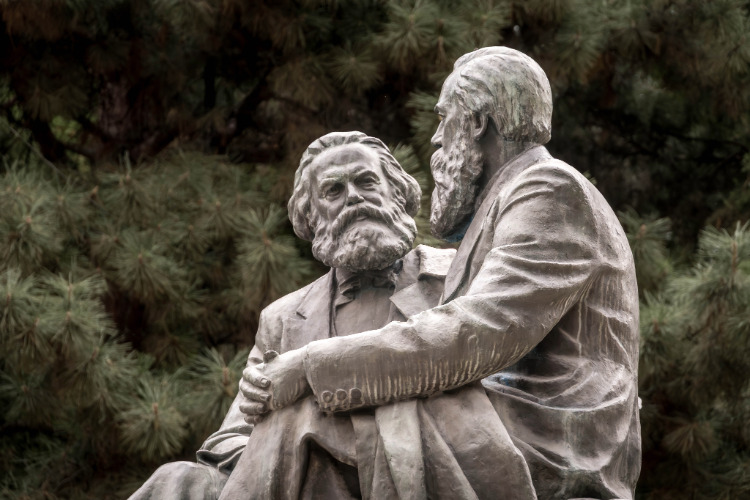
As Christianity fades from public life, Marxism or Communism offers a substitute faith built on oppression, liberation and political salvation — but at what cost?

14 October 2026
5.3 MINS
Marco Rubio’s Athens speech celebrates the Greek, Roman and Christian foundations of Western civilisation, warning that cultural self-loathing and radical ideologies threaten its future.

13 October 2026
2.6 MINS
Allegra Spender’s proposed bill reignites debate over discrimination protections, religious freedom and the right of faith-based schools to uphold their beliefs and values.

13 October 2026
3.9 MINS
Tasmania’s proposed conversion practices law raises serious concerns for churches, parents and faith-based schools, with broad definitions, severe penalties and uncertain protections for religious freedom.
9 October 2026
5 MINS
During a recent dialogue between high profile legal experts, a top Australian constitutional law expert was asked if Australia should have a Bill of Rights. His answer may surprise you.

9 October 2026
3.3 MINS
New South Wales healthcare workers who object to abortion and voluntary assisted dying face growing pressure, raising serious questions about conscience rights, employment and moral injury.


